Clear Sky Science · en
Avoidance of rejuvenation: a stress test for evolutionary theories of aging
Why turning back the clock on aging is not so simple
Many people hope that future medicine will not just slow aging, but actually make old bodies young again. This paper asks a surprisingly tough question behind that dream: if nature already knows a few tricks for rejuvenation, why hasn’t evolution made them common? By looking at insects that can change how fast they age, the authors use simple mathematics and ecology to test which ideas about why we age can really explain what we see in nature.
Strange cases of animals that grow young again
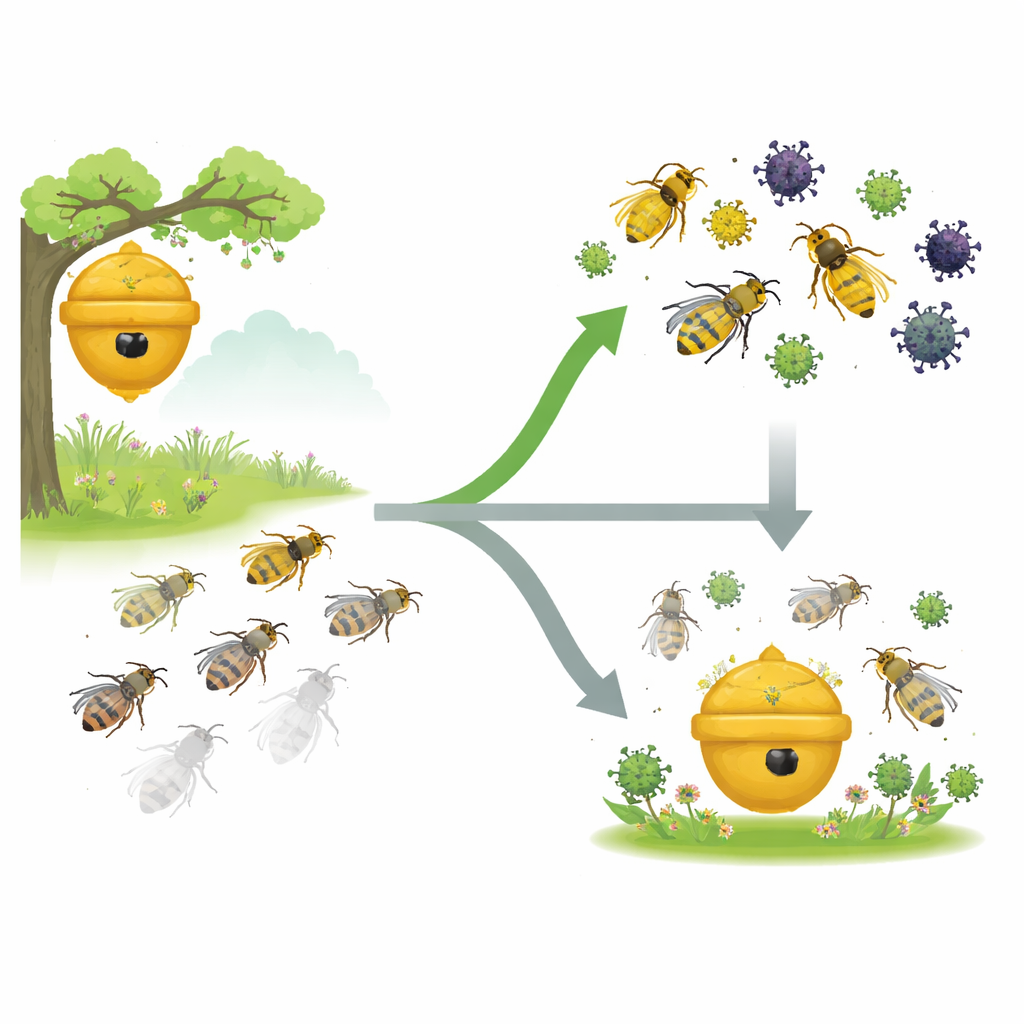
Biologists have found scattered examples of rejuvenation in the wild. Some jellyfish and comb jellies can reverse their life cycle under stress, slipping back from an adult form to a younger stage instead of dying. Certain termites can molt “backwards” into earlier larvae. Honeybee workers can also show a kind of adult rejuvenation: when older foragers are forced to return to caregiving inside the hive, many of their molecular and immune traits shift back toward those of young nurse bees, and their risk of death drops. Even so, these abilities are used sparingly and mostly under stressful or unusual circumstances, not as a routine way to extend life.
Classic ideas about aging fail a simple test
The authors next ask whether standard evolutionary explanations for aging can account for this odd pattern. These classic views see aging as either the buildup of unavoidable damage or a byproduct of genes that help early-life success at the expense of late-life decline. Using honeybee colonies as a model, the researchers build mathematical descriptions of how food, worker effort, and repair of bodily damage trade off against one another. When they assume bees cannot change how much they invest in repair over their lives, the model can produce a finite optimal lifespan, matching the idea that some aging is tolerated because replacing workers is cheap.
When aging becomes flexible, long life should win
The story changes when the model allows workers to adjust how much energy they spend on bodily maintenance as they age. Under these conditions, the best strategy for the colony is to skimp on repair in young workers but dramatically increase repair in the few that reach older ages, effectively pausing their aging. In such a world, any mechanism that can extend lifespan—even without fully reversing age—should always be switched on in older individuals because it boosts the colony’s overall success. This directly conflicts with observations: in real honeybees and other eusocial insects, aging still occurs, and built-in mechanisms that could extend life or rejuvenate workers are not routinely used.
Germs change the rules for how long it is best to live
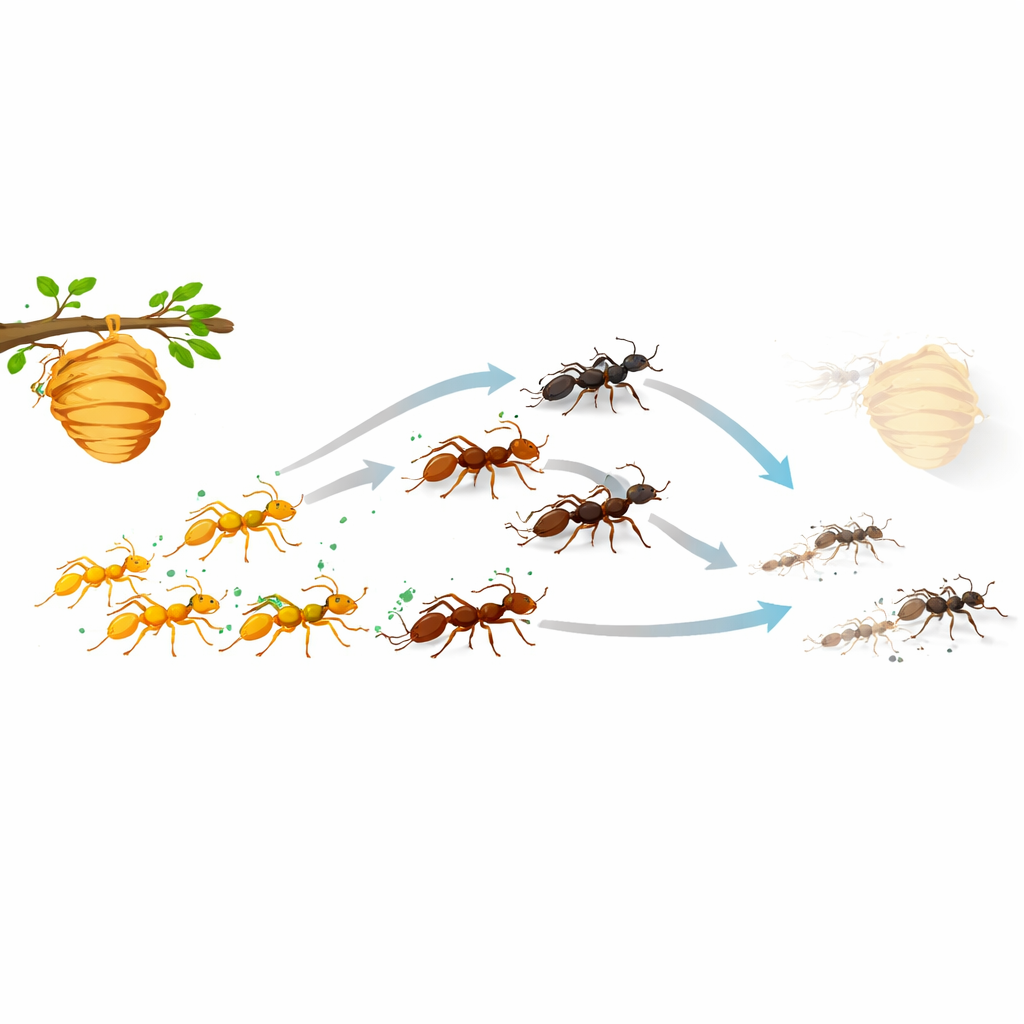
To resolve this mismatch, the authors turn to a different family of ideas in which aging itself is an adaptation. They focus on the “pathogen control” hypothesis, which proposes that limited lifespan helps contain chronic infections by removing older, more infectious individuals from a group. The team extends their honeybee model by adding a long-lasting parasite that spreads between workers and stops infected individuals from contributing to the colony. Now, the equations reveal an optimal lifespan: living too long allows infections to build up and can even collapse the colony, while dying somewhat earlier keeps epidemics in check. Under these conditions, turning on rejuvenation or halting aging in older, possibly infected workers would be harmful, not helpful, for the colony.
What this means for the dream of rejuvenation
From this analysis, the authors conclude that standard “wear and tear” and “trade-off” theories of aging cannot easily explain why evolution tends to avoid rejuvenation, especially in species where the machinery for flexible aging clearly exists. In contrast, models where aging is part of a built-in defense against disease can naturally account for the rarity and cautious use of rejuvenation in nature. For humans hoping to engineer youthfulness, this suggests that simply borrowing ideas from classic aging theories may be misleading. A deeper understanding of how aging, immunity, and infection have co-evolved—especially in species that can partially turn back their biological clocks—will be crucial for designing safe and realistic rejuvenation therapies.
Citation: Aisin, S.I., Lidskii, B.V. & Lidsky, P.V. Avoidance of rejuvenation: a stress test for evolutionary theories of aging. npj Aging 12, 64 (2026). https://doi.org/10.1038/s41514-026-00365-x
Keywords: evolution of aging, rejuvenation, eusocial insects, pathogen control, lifespan plasticity