Clear Sky Science · en
Ordinal GWAS analysis of the frailty phenotype identified a novel locus at 12q22 that underscores the role of the neurological and immune systems
Why some older adults stay strong while others become frail
As the global population grows older, many people wonder why some seniors remain active and independent while others become weak, tired, and vulnerable to illness. Doctors call this vulnerable state “frailty.” This study digs into our DNA to ask a simple but powerful question: are there specific genetic signals that make some people more likely to become frail as they age?
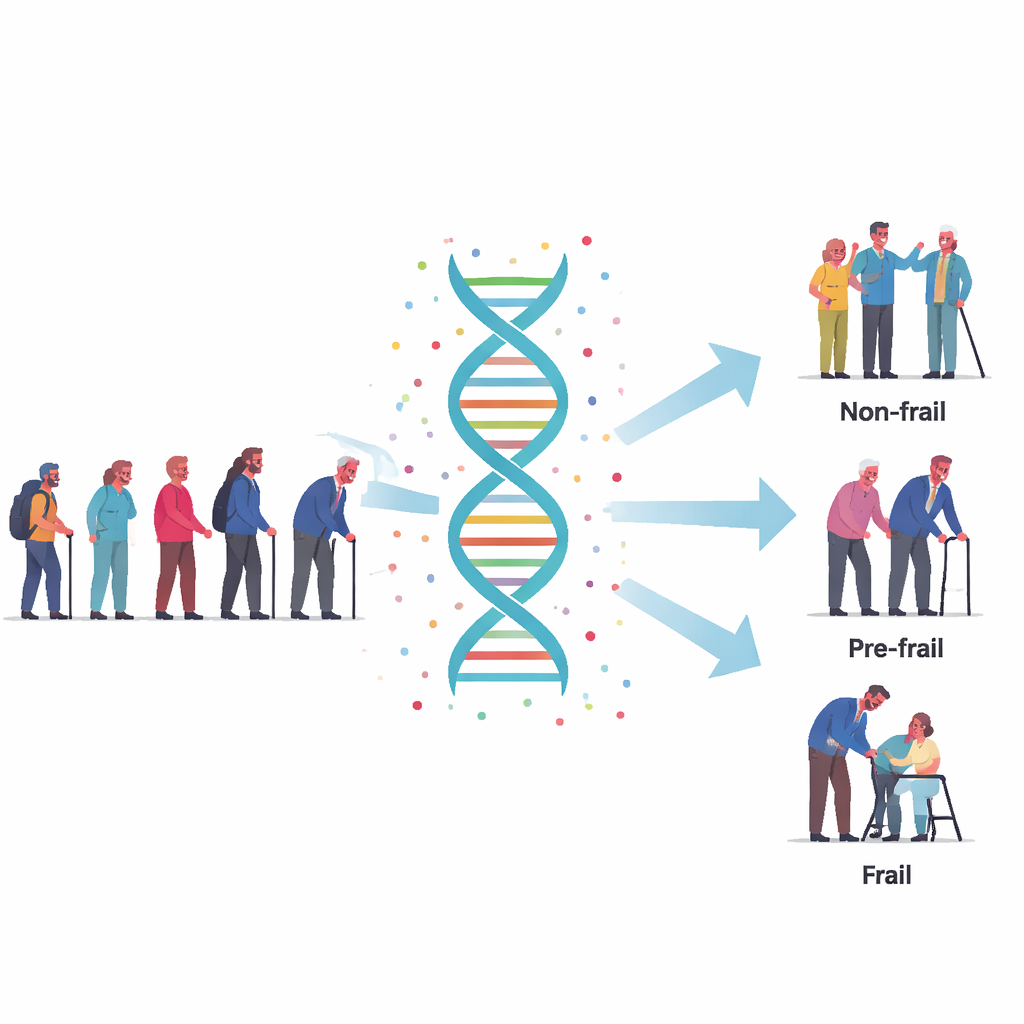
Looking for frailty clues in thousands of Canadians
The researchers used data from over 23,000 participants in the Canadian Longitudinal Study on Aging, all between 45 and 85 years old. Each person was classified into one of three groups based on a widely used checklist: non-frail, pre-frail, or frail. This checklist includes five everyday signs: unintentional weight loss, feeling exhausted, slow walking, weak grip strength, and low physical activity. By treating these three frailty levels as an ordered scale, the team could use a specialized form of genetic analysis to search millions of spots in the genome for differences between people who were robust and those who were frail.
Finding a new genetic signal on chromosome 12
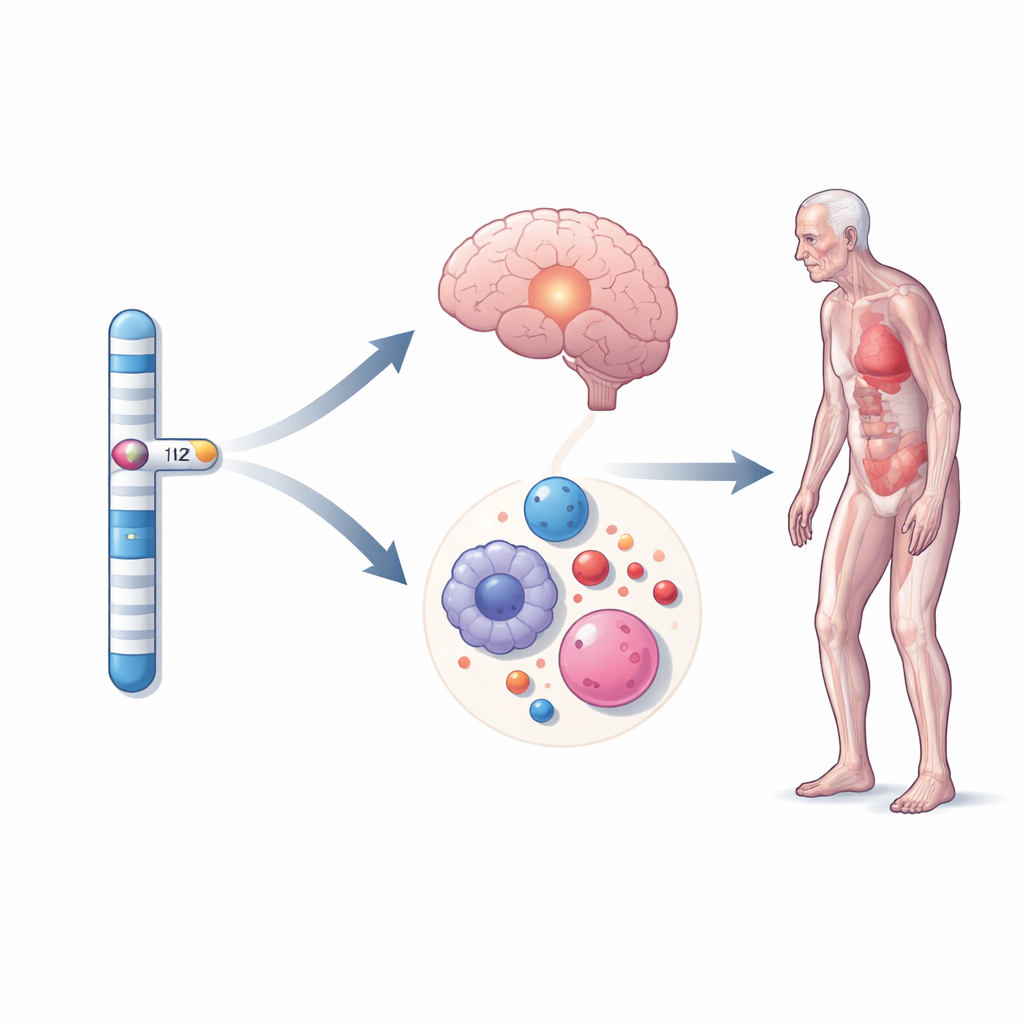
After carefully filtering more than eight million genetic markers, the team found a new location in the genome that stood out. This signal lies on chromosome 12, near a gene called PLXNC1. Although this stretch of DNA does not directly code for a protein, it sits in a region that can influence how nearby genes behave. The finding suggests that subtle differences in how PLXNC1 works may change a person’s long-term risk of becoming frail. Importantly, this signal had not been picked up in earlier large genetic studies of frailty, likely because this study used a slightly different way of defining and analyzing frailty.
Brain and immune systems in the spotlight
To understand what this new genetic signal might be doing, the researchers examined how it relates to gene activity in different tissues. They found evidence that nearby variants are linked to a second gene, SOCS2, which helps regulate growth hormones, immune responses, and nerve cell development. Both PLXNC1 and SOCS2 have roles in the brain and in the immune system, and both have been connected to changes in body weight, muscle, and bone—key features of frailty. Additional analyses hinted that heart tissue, certain brain regions, muscles, and parts of the digestive and hormone systems may also be involved, though these tissue signals did not reach strict statistical cutoffs.
Zooming in on weight loss and weak grip
The team also asked whether any genes related to single pieces of the frailty checklist rather than frailty as a whole. They found one genetic region linked to grip strength and three regions linked to unintentional weight loss. These regions sit near genes that influence body build, muscle mass, and nerve and muscle function. Some of them, like SCN8A on chromosome 12, are known to affect the nervous system and movement. Even though these results did not overlap directly with the main frailty signal, they pointed to similar themes: the health of muscles, nerves, and body weight regulation all matter for how frailty shows up.
What this means for aging well
Taken together, the study supports the idea that frailty is not just “getting old” but the result of many interacting systems, including the brain, immune defenses, heart, muscles, and metabolism. The newly discovered genetic signal near PLXNC1 and SOCS2 suggests that small inherited differences in how our nervous and immune systems operate can tilt the balance toward strength or vulnerability in later life. While these findings are not yet ready for use in the clinic and were limited to people of European ancestry, they add an important piece to the puzzle of why some older adults become frail. In the long run, understanding these biological pathways could help doctors spot at-risk individuals earlier and design more targeted strategies—such as tailored exercise, nutrition, or medications—to help people stay strong and independent as they age.
Citation: Borhan, S., An Nguyen, L.M., Pigeyre, M. et al. Ordinal GWAS analysis of the frailty phenotype identified a novel locus at 12q22 that underscores the role of the neurological and immune systems. npj Aging 12, 55 (2026). https://doi.org/10.1038/s41514-026-00363-z
Keywords: frailty, aging, genetics, brain and immune pathways, genome-wide association study