Clear Sky Science · en
Hydroxychloroquine alleviates cyclophosphamide-induced premature ovarian failure by attenuating granulosa cell senescence and modulating the mtDNA-cGAS pathway
Why this research matters for women’s health
Cancer drugs can save lives, but they often carry a hidden cost: long‑term damage to fertility and hormone health. This study explores whether an old, widely used medicine, hydroxychloroquine—best known for treating autoimmune diseases—might help protect the ovaries from a common chemotherapy drug called cyclophosphamide. The work, done in mice, cell cultures, and human clinical data, points to a possible way to preserve fertility and delay age‑related decline in the ovaries and other organs.
Cancer treatment and the threat to the ovaries
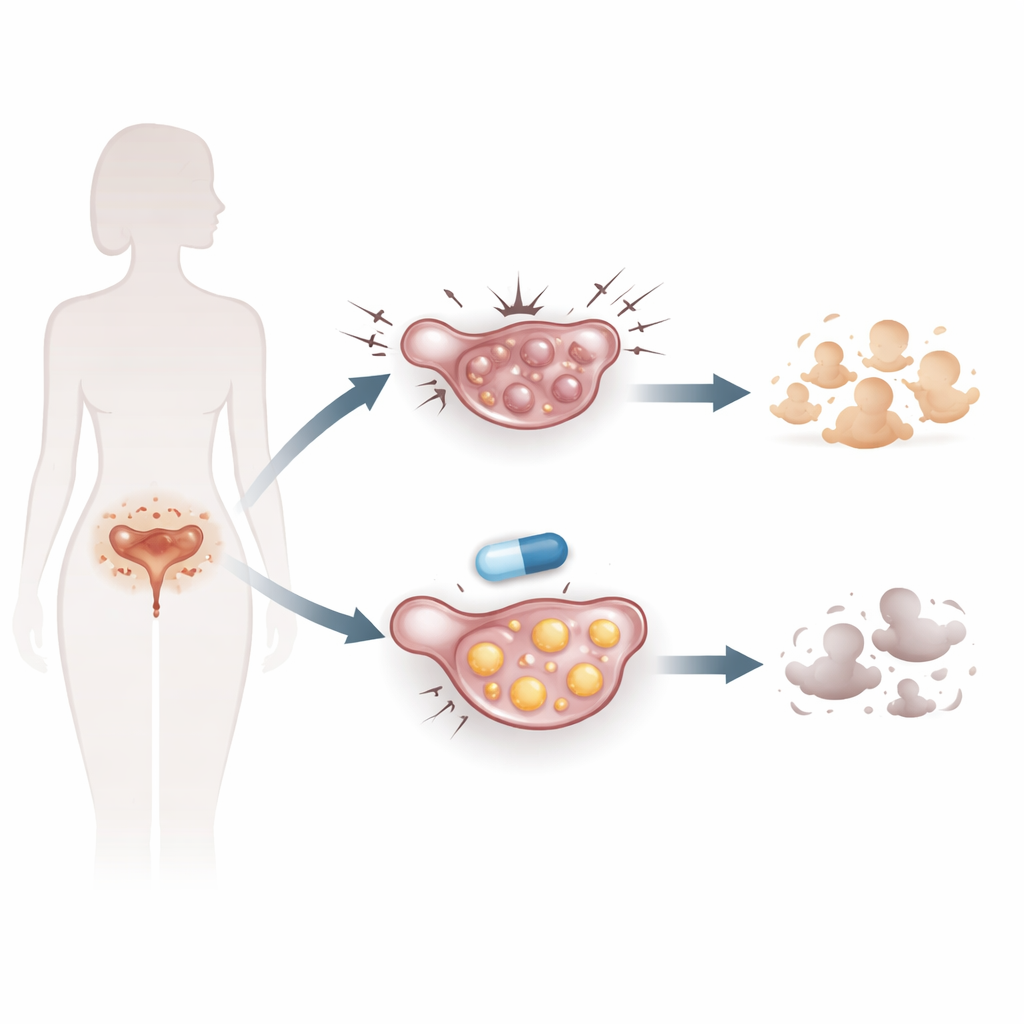
Cyclophosphamide is a mainstay treatment for cancers and autoimmune diseases such as lupus and rheumatoid arthritis. Unfortunately, it can trigger premature ovarian failure, in which the ovary’s store of eggs is depleted too early. Women may experience irregular periods, infertility, and low levels of hormones that support bone, heart, and overall health. The drug harms both egg cells and the surrounding granulosa cells that nourish them, causing DNA damage, cell death, and an accelerated form of cellular aging known as senescence. Senescent granulosa cells stop working properly and release inflammatory molecules that further damage ovarian tissue.
Repurposing a familiar drug as a shield
The researchers first looked at existing clinical studies of women with lupus who received cyclophosphamide with or without hydroxychloroquine. A network meta‑analysis combining eight studies suggested that women who took both drugs tended to maintain higher levels of anti‑Müllerian hormone, a blood marker of ovarian reserve, than those on cyclophosphamide alone. This clue from real‑world data led the team to test hydroxychloroquine directly in a mouse model of chemotherapy‑induced ovarian failure and in a human granulosa cell line exposed to cyclophosphamide’s active breakdown product.
Protecting follicles, hormones, and future offspring
In mice, cyclophosphamide disrupted normal reproductive cycles, shrank ovaries and uteri, reduced key reproductive hormones, and caused extensive scarring and loss of follicles at all stages of development. When hydroxychloroquine was given before and after the chemotherapy, many of these changes were partially reversed. The treated mice kept more follicles, showed less ovarian fibrosis, and had healthier expression of hormone receptors and follicle‑supporting proteins. Even more striking, their pups survived better and tended to be more numerous, indicating that the drug did not simply preserve tissue appearance but helped maintain real reproductive capacity.
How the drug calms stressed cells
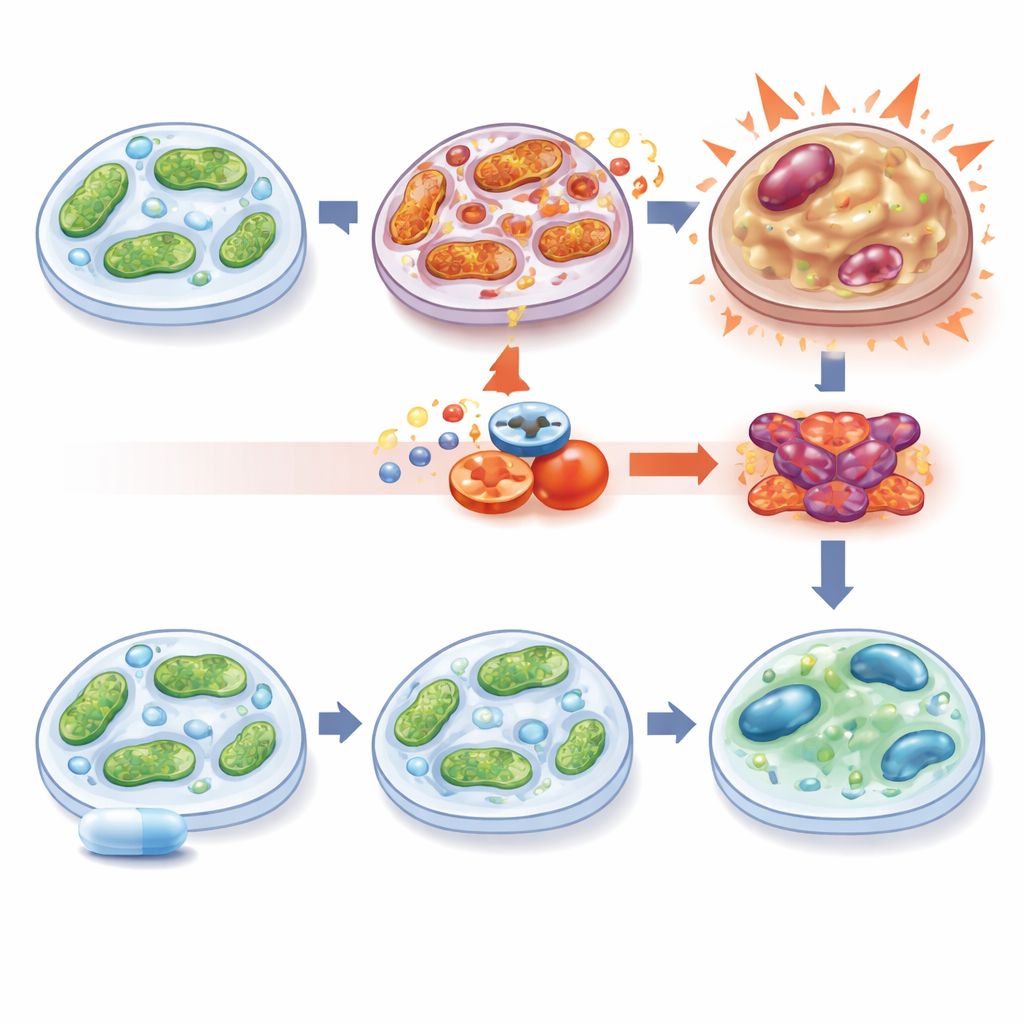
To understand how hydroxychloroquine works, the team zoomed in on granulosa cells. Cyclophosphamide exposure pushed these cells into deep senescence, marked by classic aging signals (such as the proteins p16, p21, and p53), DNA damage, and loss of cell division. It also drove mitochondria—the cell’s power producers—into dysfunction. Damaged mitochondria leaked fragments of mitochondrial DNA into the cytoplasm, activating a danger‑sensing pathway called cGAS‑STING. Once switched on, this pathway amplified inflammation and the so‑called senescence‑associated secretory phenotype, a cocktail of cytokines that spreads damage to neighboring cells. Hydroxychloroquine stabilized mitochondrial membranes, lowered reactive oxygen species, reduced mitochondrial DNA leakage, and dampened cGAS‑STING activity. As a result, granulosa cells showed less DNA damage, fewer aging markers, and lower levels of inflammatory secretions.
Hints of broader anti‑aging effects
Because hydroxychloroquine’s cousin chloroquine has been reported to extend lifespan in rodents, the researchers also tested long‑term hydroxychloroquine in naturally aging female mice. Compared with untreated age‑matched animals, treated mice maintained larger ovaries, more follicles, and higher levels of anti‑Müllerian hormone, and their reproductive cycles stayed more regular. Other organs—including lung, liver, and kidney—showed milder age‑related tissue changes, and treated mice had less hair loss. These findings suggest that calming mitochondrial stress and the cGAS‑STING pathway could have system‑wide benefits for aging tissues, not just the ovaries.
What this could mean for patients
Overall, the study supports the idea that hydroxychloroquine can soften the blow that cyclophosphamide deals to the ovaries by slowing granulosa cell aging and silencing a key inflammatory alarm system triggered by leaking mitochondrial DNA. While these are preclinical results and long‑term safety, dosing, and side‑effect risks must be carefully weighed—especially for women of reproductive age—they open the door to using an already familiar drug to protect fertility and possibly slow broader aging processes. Future clinical trials will be needed to confirm whether this strategy can safely safeguard ovarian function in patients undergoing harsh but life‑saving therapies.
Citation: Su, D., Ma, R., Su, H. et al. Hydroxychloroquine alleviates cyclophosphamide-induced premature ovarian failure by attenuating granulosa cell senescence and modulating the mtDNA-cGAS pathway. npj Aging 12, 63 (2026). https://doi.org/10.1038/s41514-026-00359-9
Keywords: premature ovarian failure, chemotherapy and fertility, hydroxychloroquine, granulosa cell aging, mitochondrial DNA cGAS-STING pathway