Clear Sky Science · en
Epigenetic aging and cancer incidence in a German cohort of older adults
Why your body’s “true age” matters
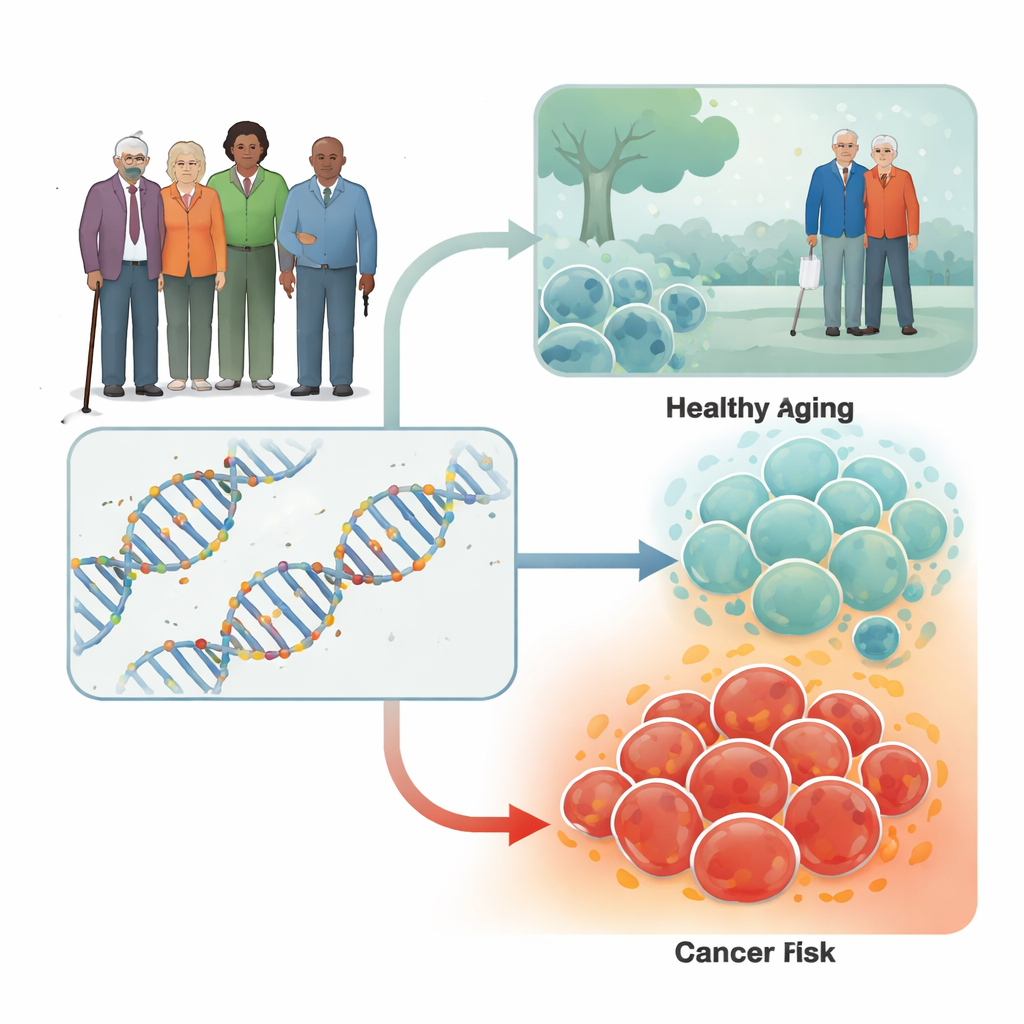
Many people know their birthday age, but scientists are discovering that our cells tell a different story. This study followed older adults in Germany for more than two decades to ask a pressing question: does the body’s internal "biological age" help predict who will develop cancer better than the calendar on the wall? By tracking subtle chemical marks on DNA over time, the researchers explored whether people who are aging faster at the molecular level are also more likely to face cancer later on.
A closer look at aging from the inside
Instead of counting birthdays, the team measured biological age using DNA methylation, small chemical tags that sit on our genetic material and change in patterned ways as we grow older. Sophisticated “epigenetic clocks” read these patterns to estimate how old a person’s body appears on the inside. The study drew on a large community group of 1916 adults aged 50 to 75 at the start, all part of the long-running ESTHER study in Saarland, Germany. For nearly half of them, the researchers repeated the DNA measurements eight years later, giving a rare window into how quickly each person’s biology was aging across time.
Who was studied and what was tracked
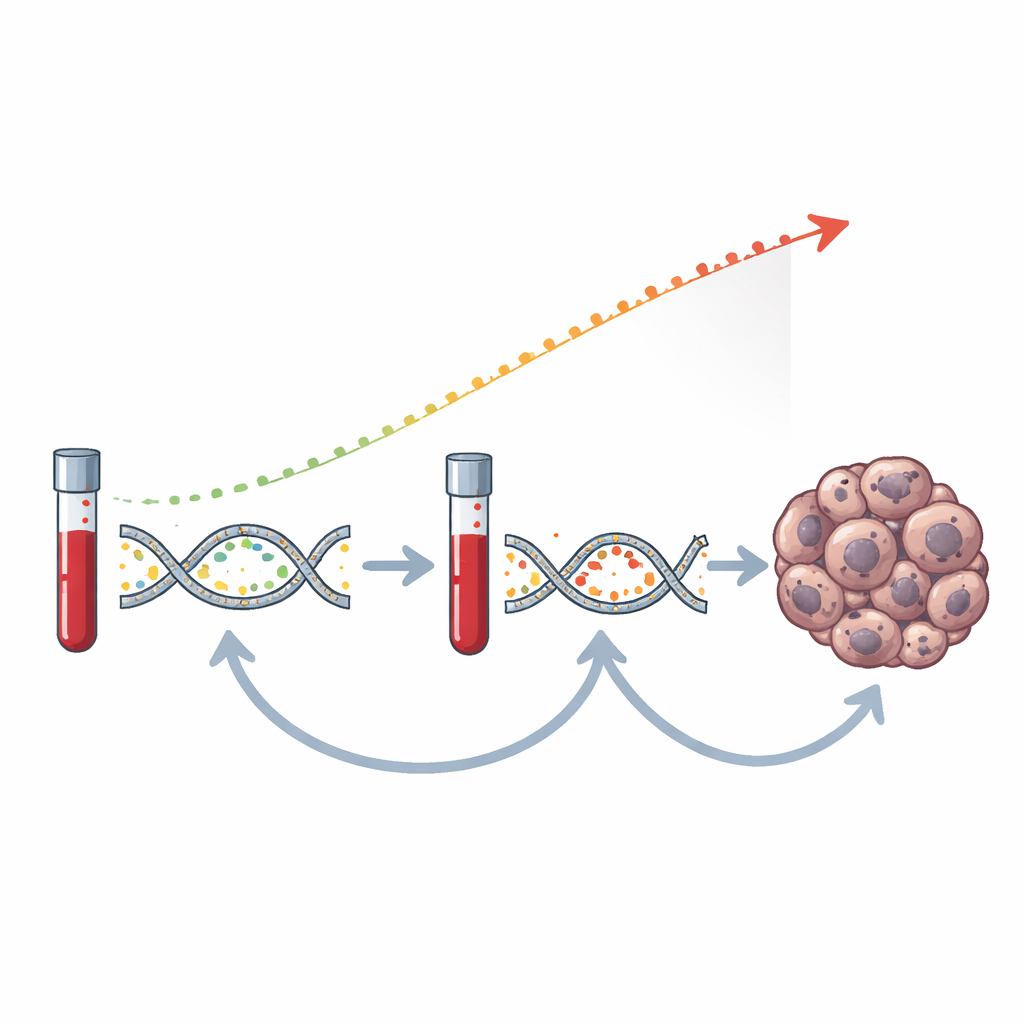
Participants were typical older adults: average age around 61, slightly more women than men, and many living with common risk factors such as overweight, past smoking, or low physical activity. At the beginning, 99 people already had a history of cancer; over the next 21 years, another 513 developed invasive cancers of various types. The scientists calculated several versions of epigenetic clocks, including newer forms that are more stable over long periods. They looked not only at how old these clocks said a person was at baseline, but also at the “slope” of change—how many biological years each person was aging per calendar year between the two blood draws.
Faster internal aging, higher cancer odds
The results painted a consistent picture. People who already had cancer before the study tended to show older biological ages at baseline than cancer‑free peers, especially on two of the clocks designed to capture disease‑related risks. More importantly, participants whose biological age was higher than expected for their actual age faced a greater chance of being diagnosed with cancer later on. This link was strongest for cancers that appeared long after the first measurement, suggesting that the clocks may be capturing deep‑seated processes that build up over years. For those with repeated measurements, a steeper rise in biological age over eight years—meaning they were aging faster at the molecular level—was tied to about one‑third higher cancer risk for each step up in the slope.
Patterns across men, women, and families
When the researchers split the data into subgroups, the associations largely held. Both men and women with steeper biological aging slopes faced higher cancer risk, though some particular clocks were more clearly linked in men. The connection was stronger in people older than 60 at the start, matching what we know about cancer becoming more common with advancing age. Interestingly, faster biological aging predicted cancer especially well in people without a family history of the disease, hinting that these molecular measures may be capturing risks related to lifestyle or environment that are not obvious from genetics alone.
What this means for the future
To everyday readers, the message is that how quickly our bodies age on the inside may matter as much as how many candles are on the cake. This study cannot prove that accelerated biological aging directly causes cancer, but it shows that people whose DNA markers age faster are more likely to develop cancer later, even after accounting for smoking, weight, and other known risk factors. With further research in larger groups and across specific cancer types, epigenetic clocks and their trajectories might one day help doctors tailor screening, prevention, and follow‑up care—catching cancer earlier or guiding efforts to slow harmful aspects of aging itself.
Citation: Yin, Q., Stevenson-Hoare, J., Holleczek, B. et al. Epigenetic aging and cancer incidence in a German cohort of older adults. npj Aging 12, 41 (2026). https://doi.org/10.1038/s41514-026-00356-y
Keywords: biological age, epigenetic clock, cancer risk, DNA methylation, aging research