Clear Sky Science · en
Antioxidant vitamin index and risk of age-related macular degeneration: multicenter validation and clinical translation
Why vitamins and vision matter as we age
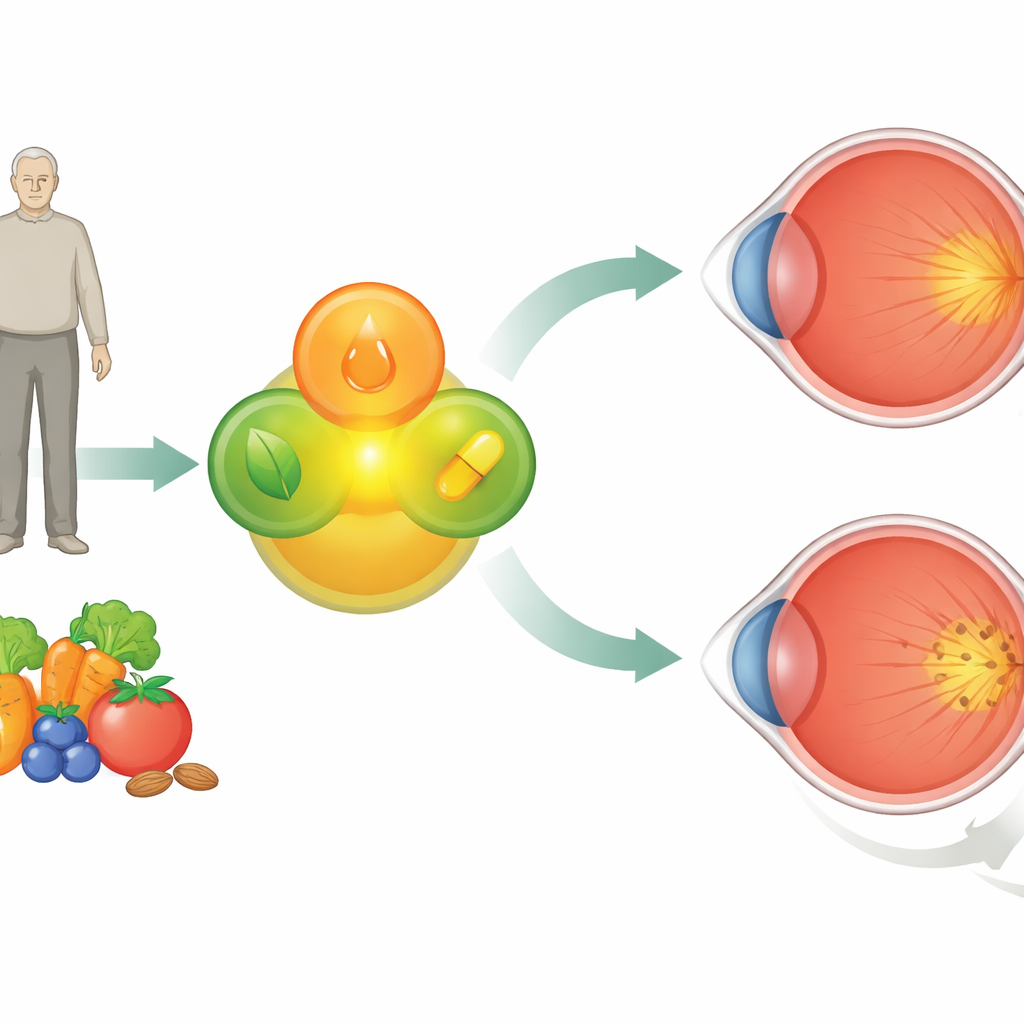
Many older adults worry about losing their central vision to age-related macular degeneration, a disease that can blur or erase the sharp sight needed for reading, driving, and recognizing faces. This study asks a simple question with big practical consequences: can the everyday vitamins in our diet, taken together, help protect the back of the eye from damage over time? The researchers introduce a new way to measure the body’s supply of three key antioxidant vitamins and test whether this score tracks with a person’s chance of developing macular degeneration.
A new score for protective vitamins
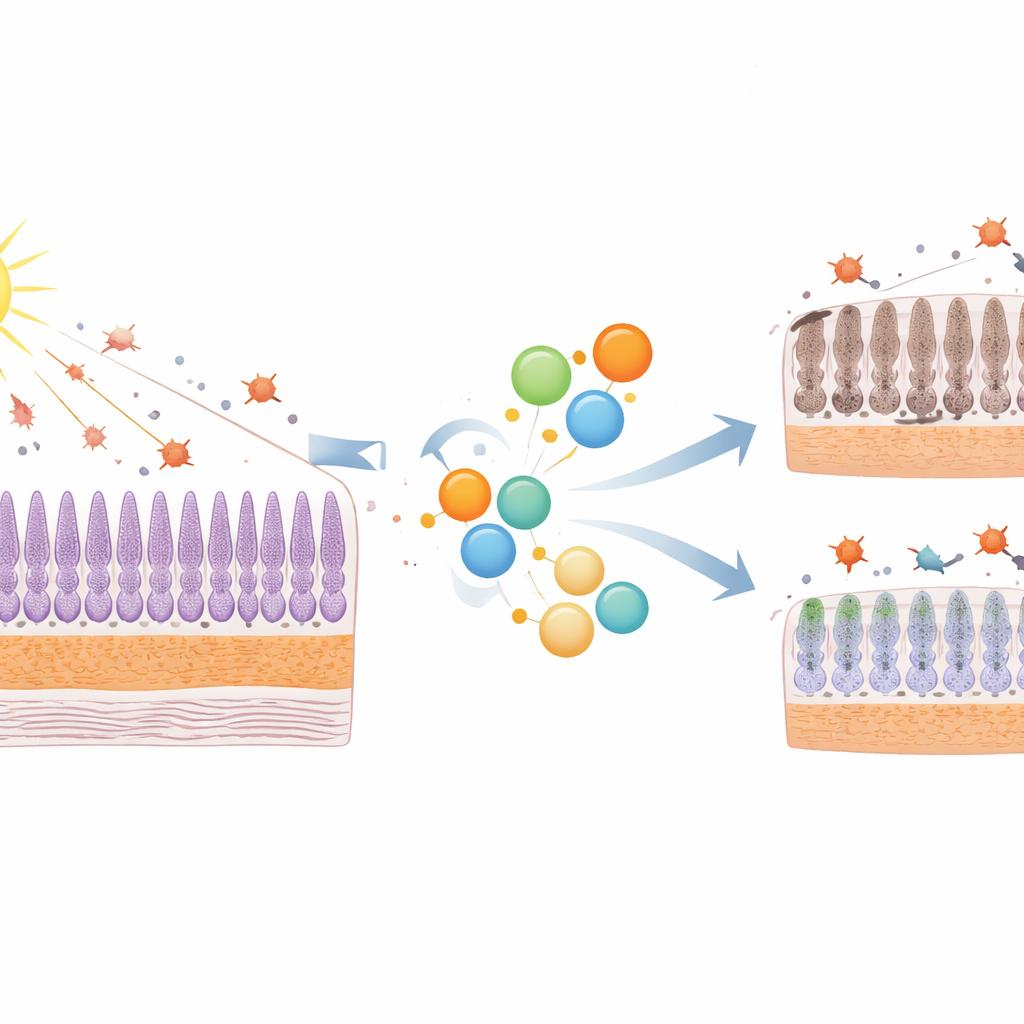
The authors focus on vitamins A, C, and E, which together form a natural defense team against the wear and tear caused by light and oxygen in the eye. Vitamin A supports the light-sensing cycle and the health of the cells that nourish the retina. Vitamin C works in watery parts of the body and helps renew vitamin E, which sits in fatty membranes and stops damaging chain reactions in lipids. Because these vitamins cooperate and recycle one another, the researchers argue that looking at any single vitamin alone misses the real picture. They therefore created the Antioxidant Vitamin Index, or AVI, which averages a person’s intake of vitamins A, C, and E relative to standard recommended amounts, providing a single, easy-to-interpret value for overall antioxidant vitamin status.
Testing the index in three very different groups
To see whether this new index truly reflects macular health, the team turned to three large datasets from different countries and settings. The first was the UK Biobank, a long-term study that followed tens of thousands of adults over many years to see who went on to develop macular degeneration. The second was the US National Health and Nutrition Examination Survey, which combines dietary records, eye photographs, and medical exams in a nationally representative sample. The third was a clinical group from Tianjin Eye Hospital in China, where patients with confirmed macular degeneration were compared with people who had other eye conditions but healthy retinas. Across all three, detailed diet questionnaires were used to estimate vitamin intake and calculate each participant’s AVI.
Higher vitamin scores, lower vision risk
Across these diverse populations, the pattern was strikingly consistent. People with macular degeneration were older, more likely to smoke, and more likely to have diabetes, but they also had lower intakes of vitamins A, C, and E and lower AVI scores. When the researchers used statistical models that adjusted for age, smoking, weight, income, and many blood markers, they found that a higher AVI was linked to a lower chance of having the disease and, in the UK Biobank, a lower chance of developing it in the future. The relationship was not simply on-or-off: as AVI rose from low to moderate levels, the risk of macular degeneration fell steeply, then declined more gently at higher levels. Models that included AVI predicted who had the disease better than models that omitted it, and computer learning methods repeatedly identified age and AVI as the top two predictors across all three cohorts.
Why combining vitamins beats focusing on one
Earlier research looking at single vitamins often produced weak or mixed results, raising doubts about whether diet can really influence this complex eye disease. This study helps resolve that puzzle by showing that what matters is the combined strength of the antioxidant system rather than any lone nutrient. When the authors tested vitamins A, C, and E one at a time, each did a poor job of distinguishing between people with and without macular degeneration. In contrast, the composite AVI captured the synergy among them and clearly separated higher-risk from lower-risk individuals. The index worked similarly well in European, North American, and East Asian groups despite major differences in diet and lifestyle, suggesting it taps into a basic biological link between antioxidant supply, oxidative stress, and retinal resilience.
What this means for everyday eye care
The findings do not prove that raising vitamin intake will prevent macular degeneration, but they strongly suggest that maintaining at least recommended levels of vitamins A, C, and E, preferably through a balanced diet, is part of a protective strategy for aging eyes. The AVI offers doctors and public health planners a simple, biologically grounded number that can be added to age, smoking history, and other routine information to flag people who might benefit from closer monitoring or nutritional counseling. Future clinical trials will be needed to test whether deliberately increasing AVI can slow or prevent vision loss, but this work lays the groundwork for using a straightforward vitamin score as a tool for early screening and personalized prevention in macular disease.
Citation: Cui, X., Hui, J., Han, Z. et al. Antioxidant vitamin index and risk of age-related macular degeneration: multicenter validation and clinical translation. npj Aging 12, 48 (2026). https://doi.org/10.1038/s41514-026-00348-y
Keywords: age-related macular degeneration, antioxidant vitamins, vitamin A C E, eye health nutrition, oxidative stress