Clear Sky Science · en
Unraveling the role of polyamine metabolism in postoperative delirium: insights into biochemical mechanisms and biomarker potential
Why this matters for surgery and brain health
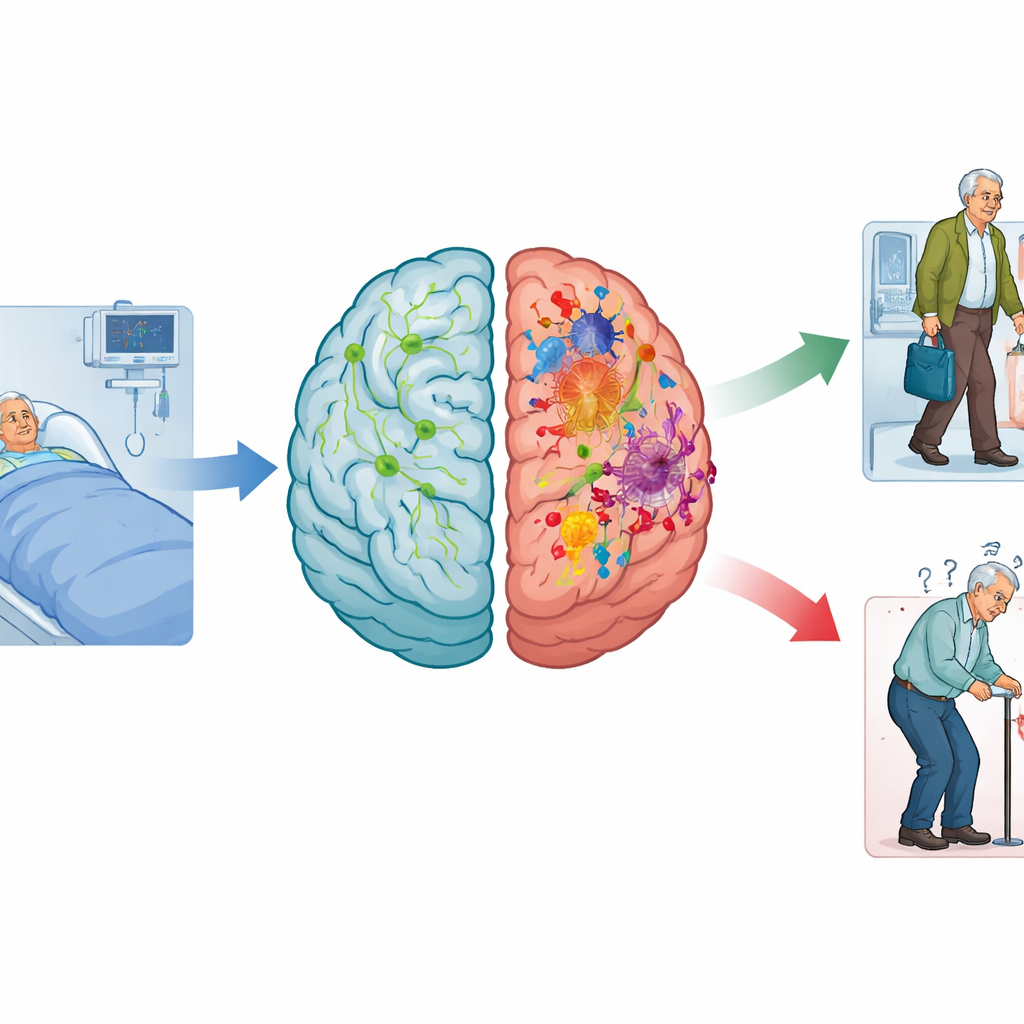
Many older adults wake from surgery feeling confused, disoriented, or seeing things that are not there—a condition called postoperative delirium. This temporary brain disturbance is more than just a rough recovery; it is linked to later memory problems and even dementia. This study asks a practical question with big consequences: can we detect hidden chemical vulnerabilities in the brain before surgery that tell us who is at higher risk, and do these clues reveal new ways to protect long‑term brain health?
Hidden brain chemistry behind a common complication
Delirium after surgery affects at least one in five high‑risk older patients and is costly in terms of hospital care, loss of independence, and higher mortality. Yet doctors still lack reliable tools to predict who will develop it. The researchers focused on a family of small molecules linked to the amino acid arginine. These compounds help manage waste nitrogen, control blood vessels, and support brain signaling. By analyzing the clear fluid that bathes the brain and spinal cord—cerebrospinal fluid—from 248 older adults having planned operations, they searched for patterns in these molecules that distinguished patients who later developed delirium from those who did not.
Following the trail of polyamines and brain signals
The team used highly sensitive mass spectrometry to measure 18 arginine‑related chemicals, and also checked the activity of five genes involved in the same pathways. They then applied advanced statistics and machine‑learning methods to pick out the most informative features. Even though no single chemical cleanly separated the groups, a combination of molecules gave a strong predictive signal. In particular, glutamine, glutamic acid, and several “polyamines” (putrescine, spermidine, spermine, and N1‑acetylspermidine) repeatedly emerged as key markers. A computer model using these measures could correctly classify patients with or without postoperative delirium more than 77 percent of the time.
When waste handling and calming signals go off balance
Beyond prediction, the study explored how entire networks of brain chemicals behaved differently in vulnerable patients. In people who did not develop delirium, the data suggested that nitrogen waste was mainly handled through the classic urea cycle—a pathway that safely converts toxic ammonia into urea for removal. In contrast, patients who went on to experience delirium showed a shift toward tight coupling between polyamine production and the brain’s main calming messenger, GABA. At the same time, molecules such as citrulline, ornithine, and glutamine—important for detoxifying ammonia—were more strongly linked with delirium, hinting at strained waste‑clearing capacity.
From chemical stress to vulnerable neurons
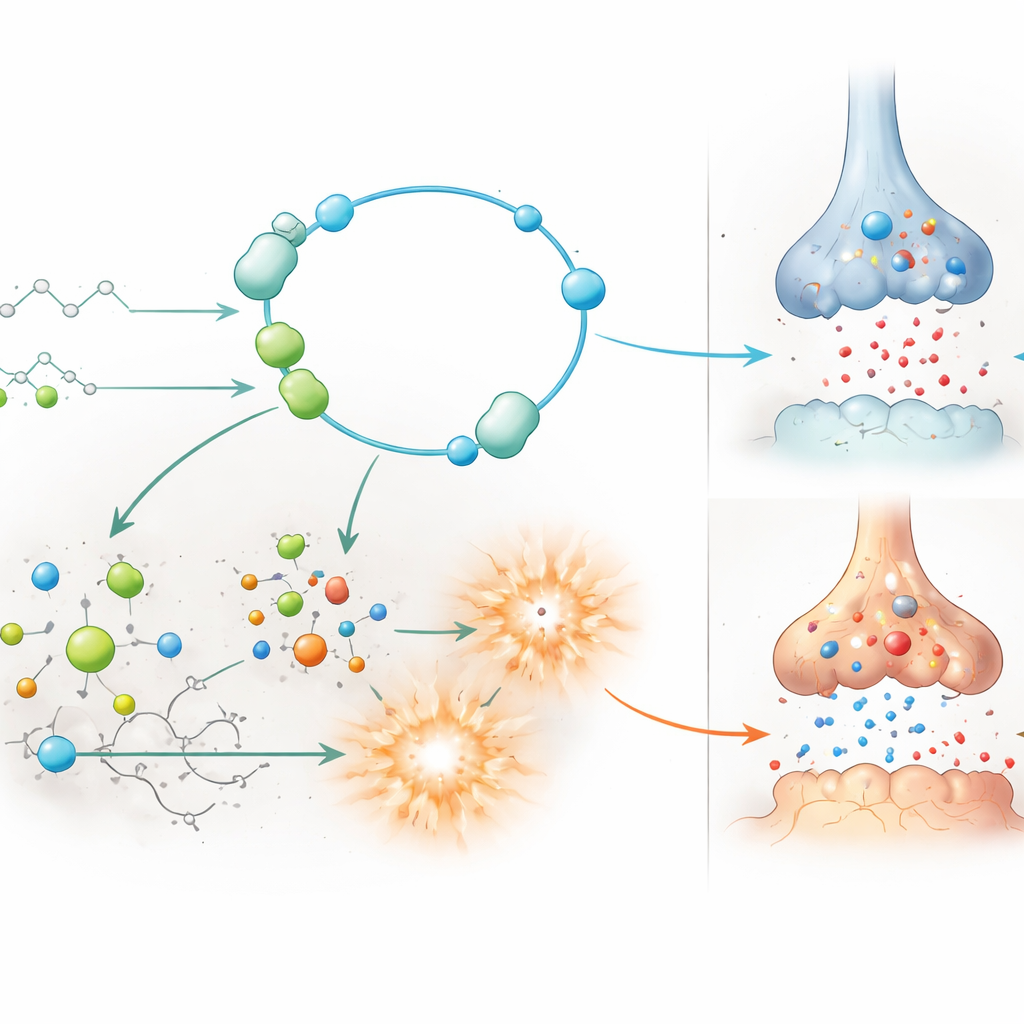
Polyamines are essential for normal cell function, but in excess they can be harmful. The authors propose that, in susceptible brains, more arginine is shunted toward polyamine production and away from efficient ammonia removal. Extra polyamines and their breakdown products can generate reactive chemicals that damage cell membranes, weaken the blood–brain barrier, and fan the flames of inflammation. At the same time, disturbed polyamine and glutamate handling may upset the delicate balance between calming and exciting brain signals, leading to episodes of hyperactive, confused brain activity characteristic of delirium. Lower levels of the Alzheimer’s‑related protein fragment Aβ42, also linked to disrupted nitrogen handling, reinforced the connection between this chemistry and longer‑term neurodegeneration.
What this means for patients and future care
To a non‑scientist, the main message is that there are early warning signs in brain chemistry—especially involving polyamines, waste‑handling molecules, and key messengers like GABA and glutamate—that signal who is more fragile before surgery. This work suggests that postoperative delirium is not just a random reaction to anesthesia or pain, but the tipping point of a stressed system already struggling with inflammation and toxic by‑products. If future studies confirm these findings, simple spinal‑fluid tests—or eventually blood tests tied to the same pathways—could help identify high‑risk patients in advance. More importantly, drugs or lifestyle strategies that gently steer polyamine metabolism and ammonia detoxification back toward balance might one day reduce delirium and, in turn, lower the risk of later dementia.
Citation: Saiyed, N., Pandya, V., Pan, X. et al. Unraveling the role of polyamine metabolism in postoperative delirium: insights into biochemical mechanisms and biomarker potential. npj Aging 12, 47 (2026). https://doi.org/10.1038/s41514-025-00324-y
Keywords: postoperative delirium, polyamine metabolism, cerebrospinal fluid biomarkers, nitrogen and ammonia detoxification, aging and dementia risk