Clear Sky Science · en
Cuproptosis inducers mediate cold lethality via SLCR-46.1 in C. elegans
When Cold Turns Deadly for Tiny Worms
Most of us think of copper as a harmless metal in pipes and coins, but inside living cells it can be both vital and dangerous. This study asks a surprising question: can a natural chill in the environment turn copper into a killer, even in a simple animal like the microscopic worm Caenorhabditis elegans? By watching how worms survive or die in the cold, the researchers uncover a new way that temperature and a common metal team up to damage cells.
Why Copper Matters in Living Bodies
Copper is a key ingredient that helps cells breathe, move energy around, and clear toxic byproducts. To stay healthy, cells must keep copper levels tightly balanced, tucking extra ions into safe storage compartments and shuttling them to where they are needed. When too much copper builds up in the wrong place, it can trigger a special form of cell death called cuproptosis, driven by stress in the cell’s power stations, the mitochondria. Until now, cuproptosis had been studied mostly in cultured human cells and cancer research, leaving its role in whole animals and natural conditions largely unexplored.
A Cold-Sensitive Worm and a Copper Gatekeeper
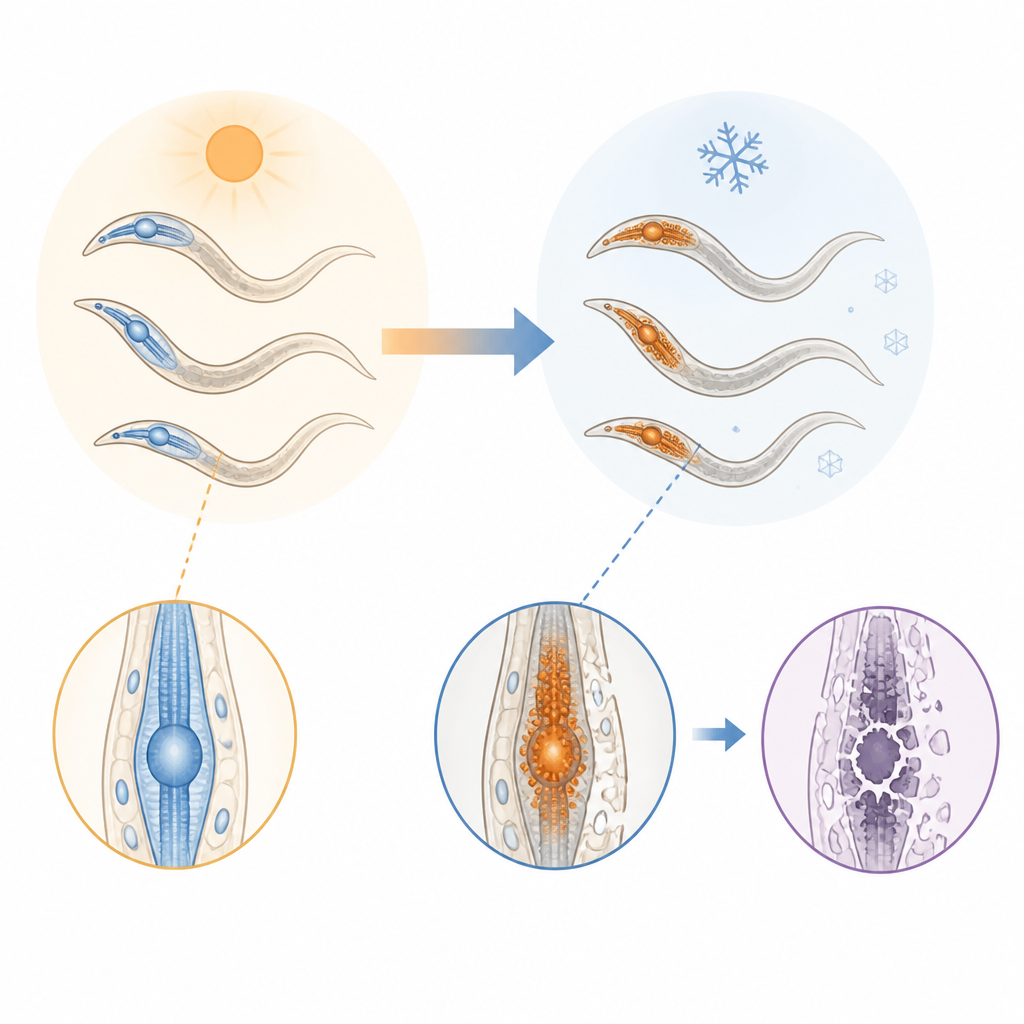
C. elegans is a tiny soil worm that can remember the temperature at which it was raised and adjust its ability to survive deep cold. Worms grown at cooler temperatures cope well with a sharp drop to near freezing, while those raised warmer often perish. The team screened for mutant worms that died more easily in the cold and traced the defect to a single gene they named slcr-46.1. This gene makes a transporter protein that sits on the membrane of lysosomes, small recycling sacs inside cells, in the worm’s feeding organ, the pharyngeal muscle. When slcr-46.1 was missing, worms looked normal at everyday temperatures but became unusually vulnerable when chilled.
Copper Piles Up in the Wrong Place
To see what was going wrong, the scientists used a fluorescent probe that glows in the presence of copper ions. In healthy worms grown at a cool temperature, copper in the pharyngeal muscle rose briefly after cold exposure and then settled back to baseline, suggesting a controlled response. In the slcr-46.1 mutants, however, copper became abnormally concentrated at specific parts of the pharyngeal muscle, especially in animals that later died from the cold. Experiments in insect cells engineered to produce the worm SLCR-46.1 protein showed that this transporter helps stock lysosomes with copper, supporting the idea that it normally keeps copper safely stored away. When this system fails, cold seems to drive copper out of balance in the worm’s throat muscles.
From Copper Imbalance to Cell Death
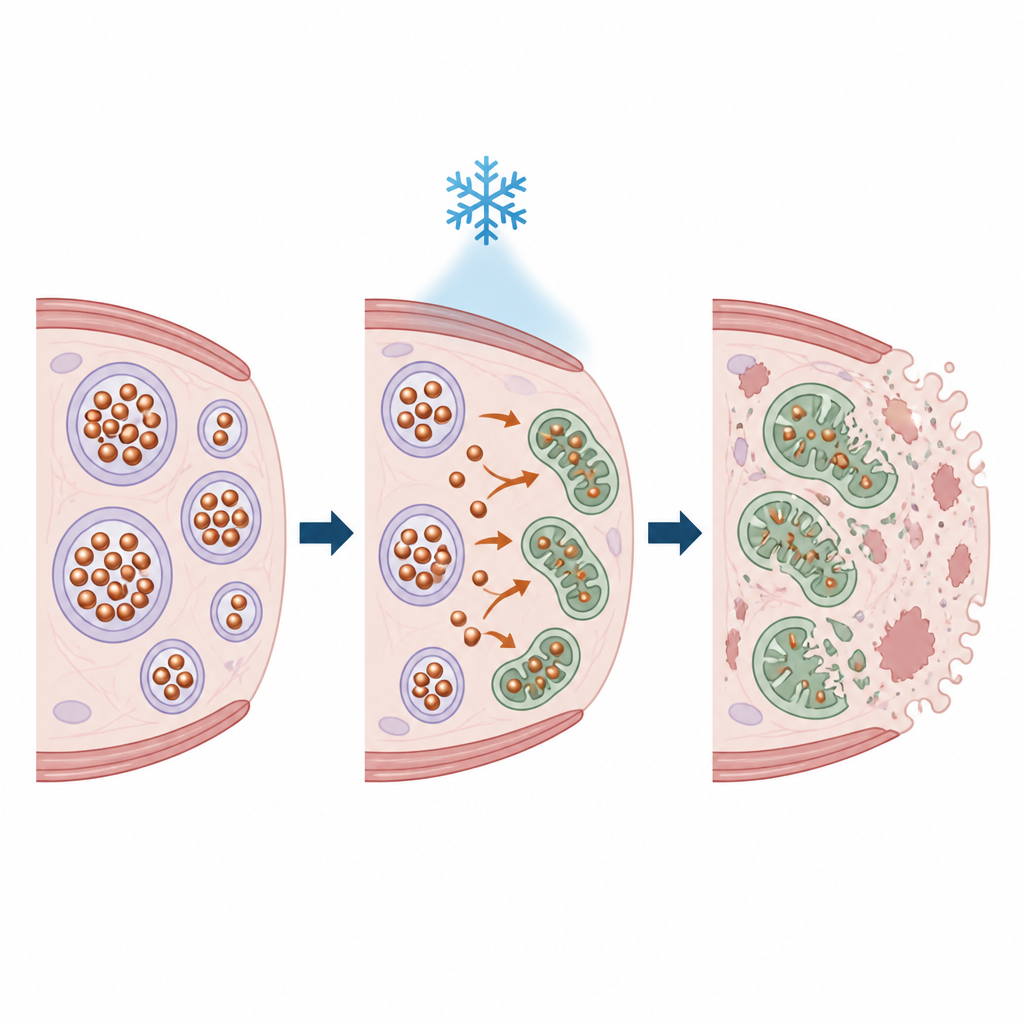
The researchers then asked whether cuproptosis explains why these worms die. They reduced the activity of worm genes that correspond to known cuproptosis regulators in mammals, which help modify mitochondrial enzymes that interact with copper. Dialing down these genes protected the sensitive mutants from cold and even made normal worms hardier at low temperatures. Blocking the delivery of copper into mitochondria had a similar protective effect. A copper-chelating compound that soaks up copper ions also improved survival in the mutant worms, although less strongly, indicating that both the amount of copper and how cells handle it matter. Under the microscope, cold-stressed mutant worms showed piled-up and distorted mitochondria in their pharyngeal muscles, consistent with a copper-driven collapse of cellular power systems rather than a different metal-based death route known as ferroptosis.
What This Means Beyond Worms
Together, these findings reveal that cuproptosis is not just an oddity of lab-grown human cells but can shape how a whole animal responds to its environment. In C. elegans, a single lysosomal copper transporter in the pharyngeal muscle can spell the difference between surviving a cold snap and dying from it. By tying cold exposure to copper handling and mitochondrial failure, the study offers a new way to think about how temperature stresses interact with metal metabolism. This worm model may help scientists probe the same basic process in other animals, and perhaps understand conditions in which copper buildup and low temperature jointly threaten cell health.
Citation: Yamashiro, S., Mizuno, S., Motomura, H. et al. Cuproptosis inducers mediate cold lethality via SLCR-46.1 in C. elegans. Nat Commun 17, 4511 (2026). https://doi.org/10.1038/s41467-026-73498-y
Keywords: cuproptosis, copper metabolism, cold tolerance, Caenorhabditis elegans, mitochondria
See more on the researcher's website: http://kuharan.com/reserch1_en.html