Clear Sky Science · en
Minute-scale control of ubiquitin-mediated degradation reveals dynamics of bacterial secreted effector-functions
Why timing matters when germs hack our cells
Bacteria that live inside our cells often rely on secret tools, called effectors, to hijack the host and cause disease. Until now, scientists had no easy way to turn these tools on and off quickly inside infected cells, which made it hard to see what each one does at different moments of an infection. This study introduces a method that lets researchers erase selected bacterial proteins inside living human cells within minutes and then allow them to come back, revealing a detailed timeline of how these hidden tools help a major sexually transmitted pathogen survive and spread.
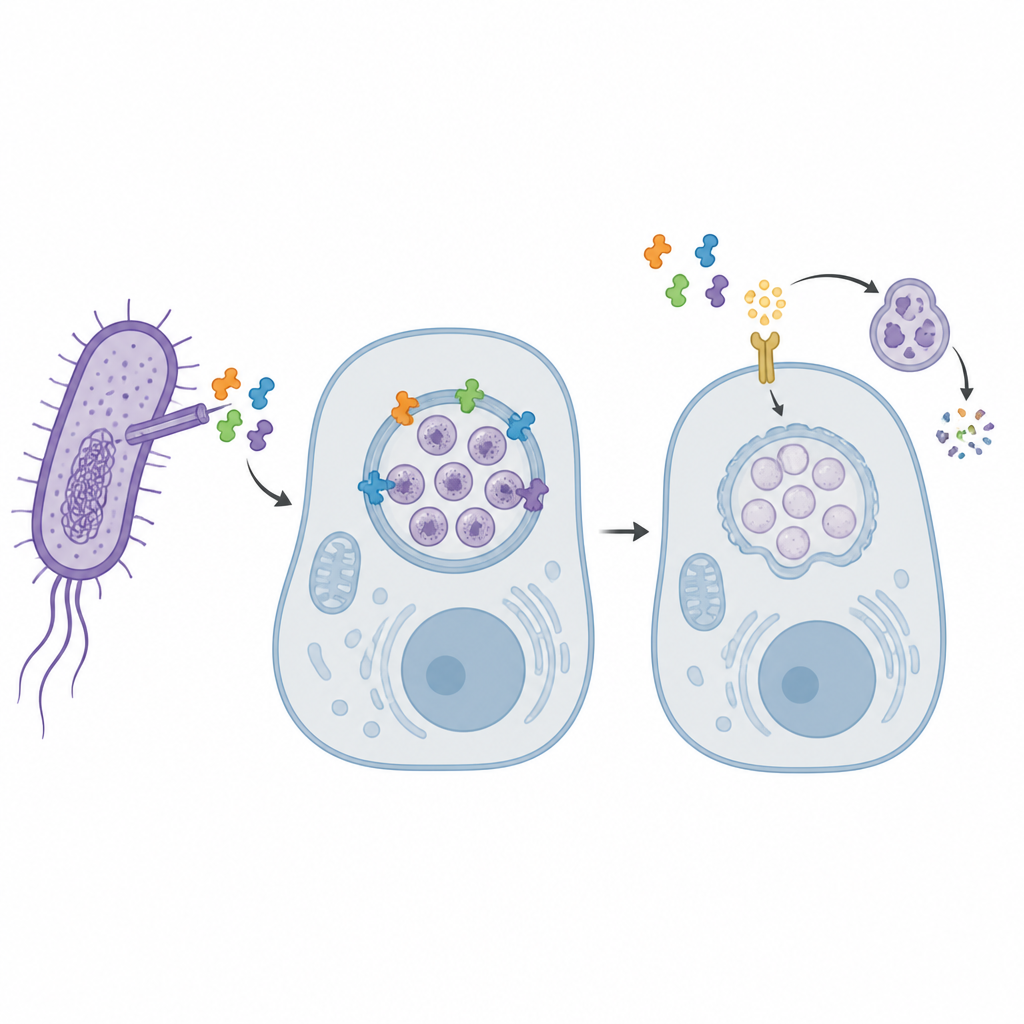
A host-side switch to erase bacterial tools
The authors focused on Chlamydia trachomatis, a bacterium that grows inside a bubble-like compartment in human cells. Chlamydia sends many effector proteins into the bubble membrane to shield itself from host defenses and to control its own growth cycle. Rather than re-engineering the bacteria’s entire protein system, the team built a host-directed platform called AIDE, for Auxin-Inducible Degradation of Effectors. They fused a tiny tag to chosen bacterial effectors and equipped host cells with a plant-derived receptor that recognizes this tag only when a small, harmless molecule is added. Once the molecule is present, the host’s own disposal machinery rapidly marks the tagged effector for destruction.
Fast, reversible and precise protein removal
By combining this tag with a precise genome-editing technique, the researchers inserted it directly into the bacterial chromosome at the natural effector gene sites. This preserved normal timing and amounts of effector production, avoiding artifacts from overexpression. When they added the small molecule, tagged proteins were pulled to the host’s ubiquitin-proteasome system, a cellular shredder for unwanted proteins. On membrane-bound effectors, an additional host factor called p97 helped extract them from the membrane so they could be destroyed. In human cancer cell lines and in mouse reproductive tract organoids, the system removed targeted effectors in as little as 15–60 minutes and allowed them to reappear once the molecule was washed away, without disturbing untargeted proteins.
Watching a bacterial bodyguard at work
The team first applied AIDE to Cdu1, a Chlamydia effector that both removes and masks molecular “tags” on proteins. Earlier work showed that Cdu1 helps the pathogen avoid a cell-cleaning pathway called autophagy and supports access to nutrients, but its timing was unclear. With AIDE, the authors could delete Cdu1 at exact hours during infection and then restore it. When Cdu1 was removed, a host stress marker gradually appeared on the bacterial compartment over several hours, suggesting that protective effects linger for a while after the protein itself is gone. Longer-term removal during the middle of the growth cycle reduced the bacteria’s metabolic activity, hampered their maturation into infectious forms, and led to fewer bacteria capable of starting a new round of infection, especially in primary reproductive tract cells.
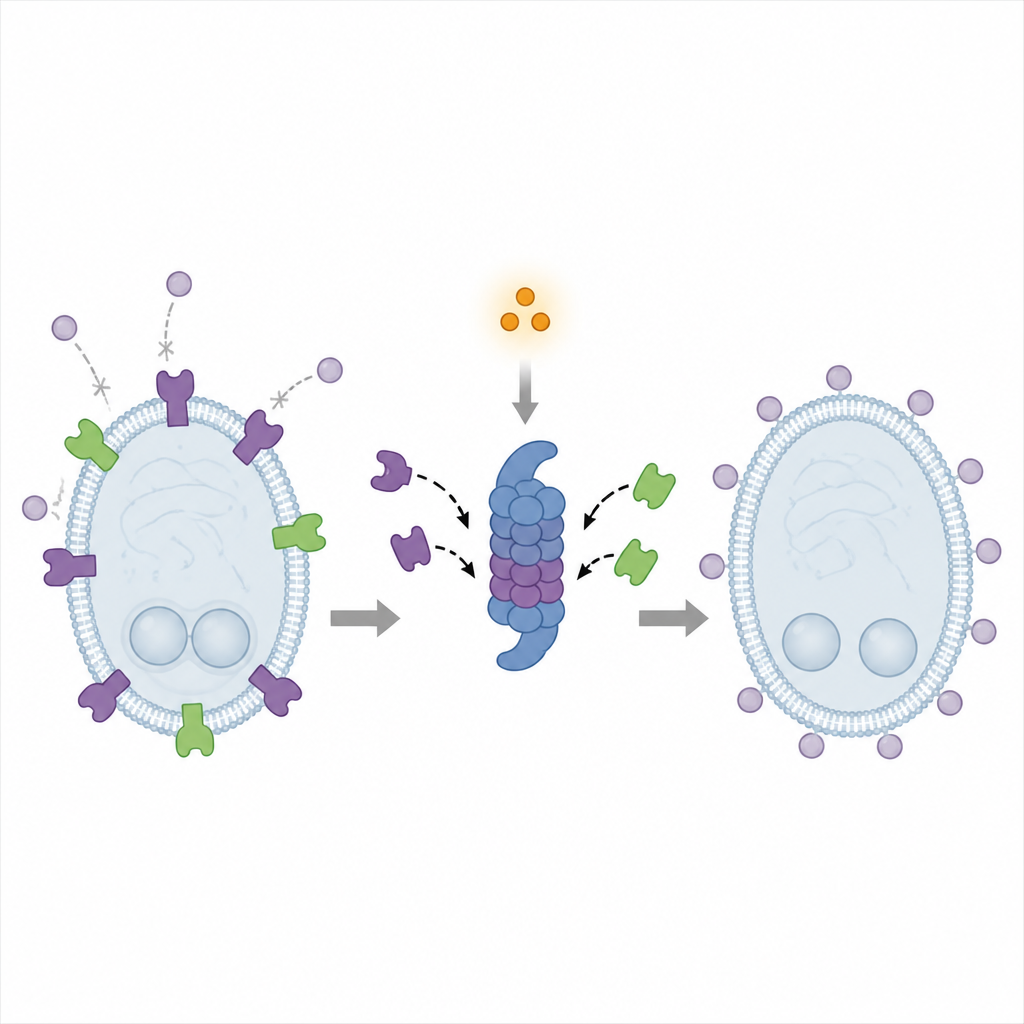
Keeping bacterial bubbles fused or letting them split
Next, the researchers turned to IncA, a protein that helps neighboring Chlamydia-filled bubbles inside a cell fuse into a single larger compartment. It was previously unknown whether IncA is needed only to start fusion or also to maintain it. Using AIDE, the team could either keep IncA present, remove it early, or remove it temporarily and then bring it back at chosen times. When IncA was degraded from the start, many infected cells developed several separate bacterial bubbles instead of one, confirming its role in fusion. Strikingly, when IncA was removed after fusion had already occurred, fused compartments began to split apart, showing that IncA activity is continuously required to hold them together. Restoring IncA partway through could reconnect some bubbles, but not completely, and in primary cells these changes were tied to lower bacterial fitness and fewer infectious offspring.
What this means for fighting infections
This study shows that host cells can be reprogrammed to act as remote controls for bacterial virulence proteins, turning them off and on within minutes at specific stages of infection. By applying this approach to two key Chlamydia tools, the authors reveal that one protein (Cdu1) quickly shields the bacterial niche from cleanup signals and supports later developmental shifts, while another (IncA) must work continuously to keep the pathogen’s protective bubble fused and productive. To a lay reader, the takeaway is that we can now watch, in real time, how individual bacterial tricks support infection and identify vulnerable time windows when disrupting these tricks could most effectively weaken the pathogen. Similar strategies may eventually guide precise, host-focused treatments for a wide range of bacteria that rely on secreted effectors.
Citation: Zhang, H., Guo, Y., Adhikari, B. et al. Minute-scale control of ubiquitin-mediated degradation reveals dynamics of bacterial secreted effector-functions. Nat Commun 17, 4420 (2026). https://doi.org/10.1038/s41467-026-73213-x
Keywords: Chlamydia trachomatis, bacterial effectors, targeted protein degradation, ubiquitin proteasome, host pathogen interaction