Clear Sky Science · en
Multivalent nanobodies for potent and broad neutralization of Staphylococcus aureus toxins
Why tiny antibody tools matter for stubborn infections
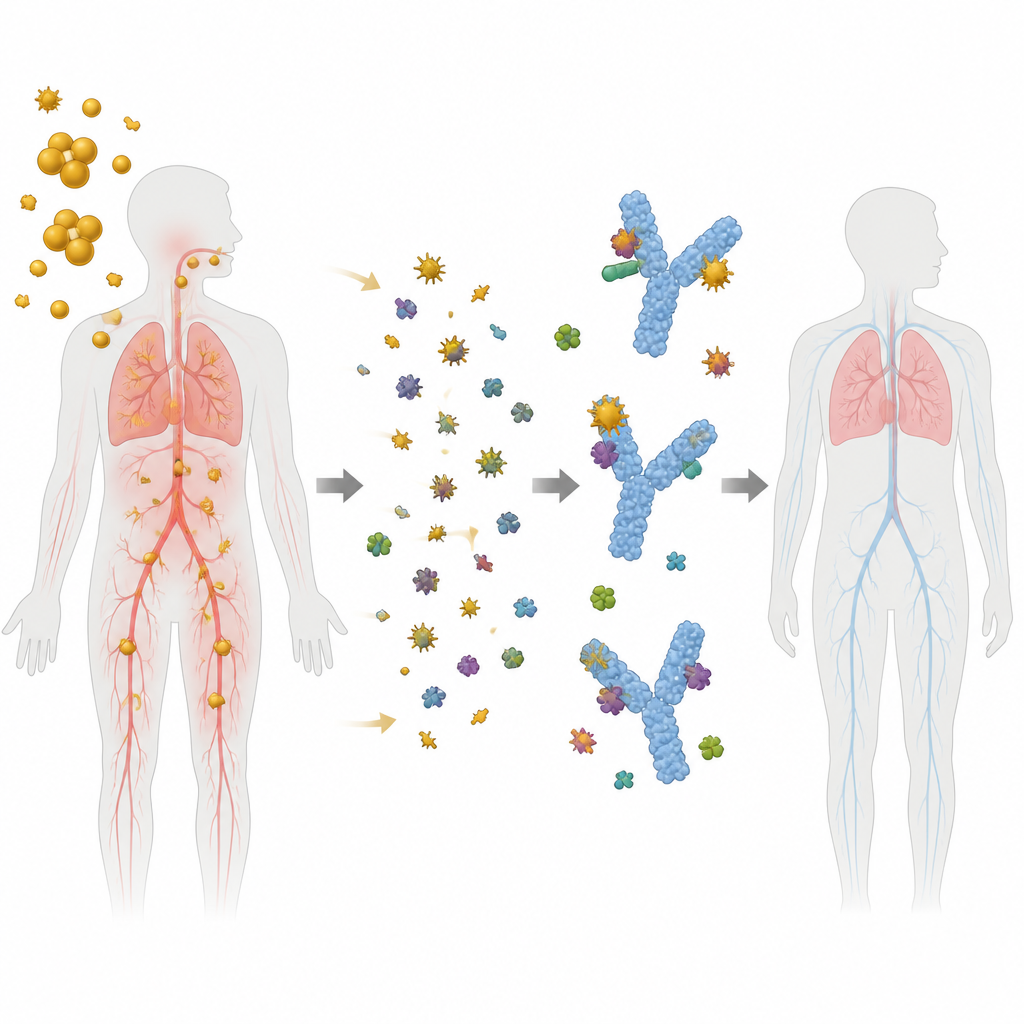
Staphylococcus aureus is a common bacterium that quietly lives on many of us, yet it can turn deadly when it invades the bloodstream or lungs. Doctors are running out of antibiotic options, especially against methicillin resistant strains. This study explores a different idea: instead of trying to kill the bacteria outright, it uses tiny engineered antibody fragments called nanobodies to block the powerful toxins that make S. aureus infections so dangerous.
How this germ turns everyday infections into crisis
S. aureus is responsible for a large share of serious bacterial infections worldwide, including pneumonia, sepsis, bone infections, and difficult skin infections. Its worst effects are driven not just by the bacteria themselves, but by toxins they release. Two especially important toxin groups are T cell superantigens and alpha hemolysin. Superantigens can overstimulate the immune system, triggering a cytokine storm, organ damage, and toxic shock like illness. Alpha hemolysin punches holes in cells, damaging the lungs, blood vessels, and platelets, and helping the infection spread throughout the body.
Why traditional vaccines and antibodies have fallen short
Attempts to stop S. aureus with vaccines or standard monoclonal antibodies have repeatedly stumbled. Vaccines tested in people have raised antibodies that did not give lasting or strong protection, and in some cases may have reinforced unhelpful immune responses. Single traditional antibodies tend to latch onto just one toxin or one site on a toxin, while S. aureus uses a mix of many different virulence factors. This mismatch limits their impact in real infections, where several toxins often act together to overwhelm the host.
Building a toolbox of smart nanobodies
To tackle this problem, the researchers immunized llamas with a cocktail of weakened versions of key S. aureus toxins, then used advanced proteomics and structure prediction to harvest hundreds of distinct nanobody candidates. From these, they selected potent nanobodies that tightly bind three major superantigens, SEB, SEC, and TSST 1, as well as alpha hemolysin. Structural work, including cryo electron microscopy and AlphaFold 3 modeling, showed exactly where each nanobody attached. The most effective ones blocked the very regions of the toxins that normally latch onto immune cell receptors, cutting off the trigger for extreme immune activation and tissue injury.
Combining multiple locks into one smart key
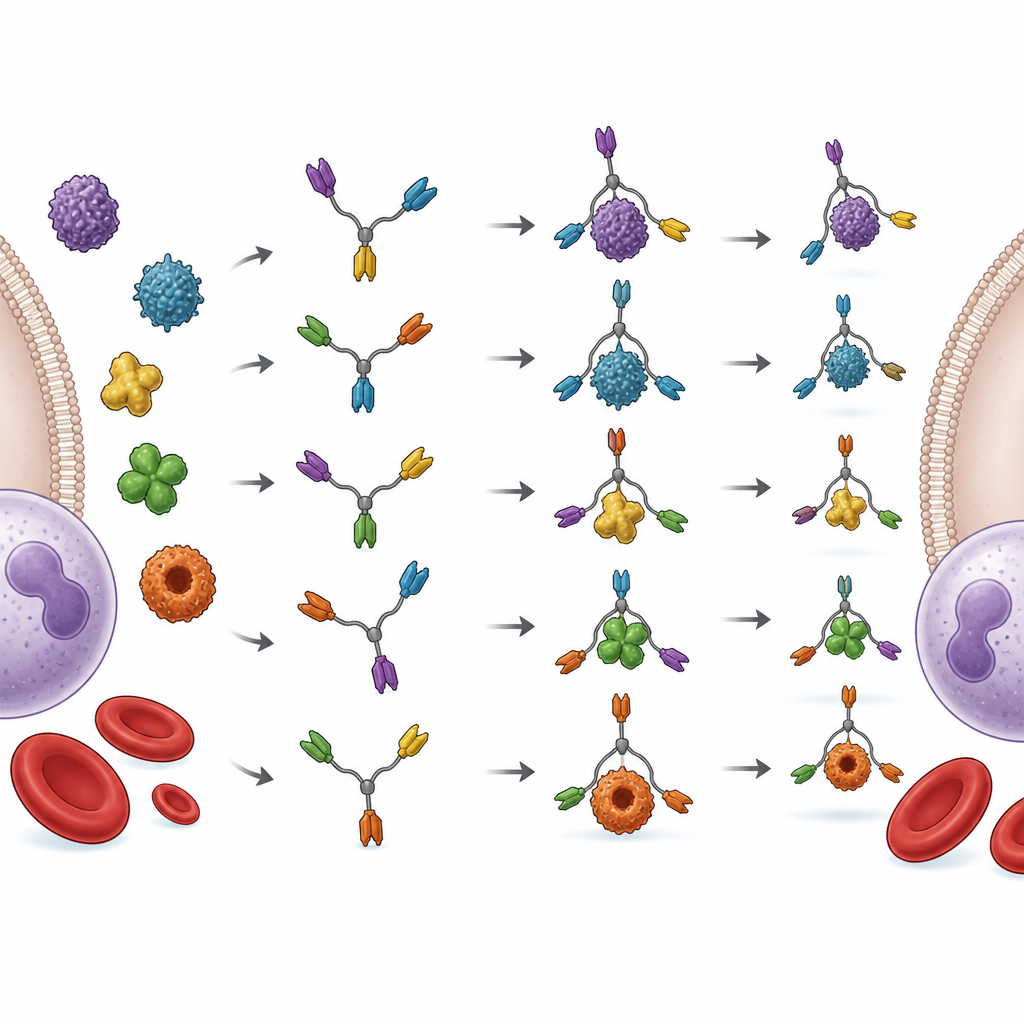
Armed with this map of vulnerable toxin sites, the team engineered multivalent nanobody constructs that combine several binding units into a single molecule. A trimeric design joined two nanobodies that recognize different parts of SEC with one that targets alpha hemolysin. This construct showed strikingly high binding strength and neutralized both toxins at extremely low concentrations in lab tests. Importantly, it remained stable after aerosolization, suggesting it could be delivered directly into the lungs as a mist. In mouse models of bloodstream infection and pneumonia, this trimer reduced bacterial burden, lung damage, and illness severity, even though it does not directly kill the bacteria.
Expanding protection with a multi headed antibody
To cover an even broader range of toxins, the researchers built a larger decameric nanobody fusion attached to a modified human antibody tail that extends its time in the body. This single construct carries binding units against SEB, SEC, TSST 1, and alpha hemolysin, giving it ten functional arms. In cell based tests and blood cell assays, it neutralized all four toxins with picomolar or better potency, far stronger than the individual nanobodies alone. It also blunted toxin activity in bacterial culture fluids from clinical S. aureus strains, hinting that it could handle the complex toxin mixtures found in real infections.
What this could mean for future treatments
For a layperson, the key idea is that this work turns nanobodies into a flexible, modular shield that soaks up multiple S. aureus toxins before they can damage organs. Rather than adding another antibiotic, these constructs disarm the weapons that make the bacterium life threatening. While more animal studies and eventually human trials are needed, the approach points toward precision immunotherapies that can be tuned to different toxin combinations, potentially helping protect high risk patients from severe sepsis and pneumonia where standard drugs often fail.
Citation: Kim, Y.J.J., Walton, N.R., Huang, W. et al. Multivalent nanobodies for potent and broad neutralization of Staphylococcus aureus toxins. Nat Commun 17, 4456 (2026). https://doi.org/10.1038/s41467-026-73120-1
Keywords: Staphylococcus aureus, nanobodies, bacterial toxins, sepsis, pneumonia