Clear Sky Science · en
Pangenome and resequencing analyses reveal flowering evolution and genetic control in Cerasus
Why cherry blossoms bloom at different times
Anyone who has watched cherry trees bloom knows that some explode into flowers while others stay in tight buds for weeks. This paper asks why. By reading and comparing the DNA of many cherry species, the researchers uncover how their genomes differ and pinpoint key genes that help decide when buds wake up and open. The work matters for gardeners and fruit growers trying to match trees to changing climates, and for anyone curious about how nature times one of spring’s most loved displays.
Building a shared DNA map for cherries
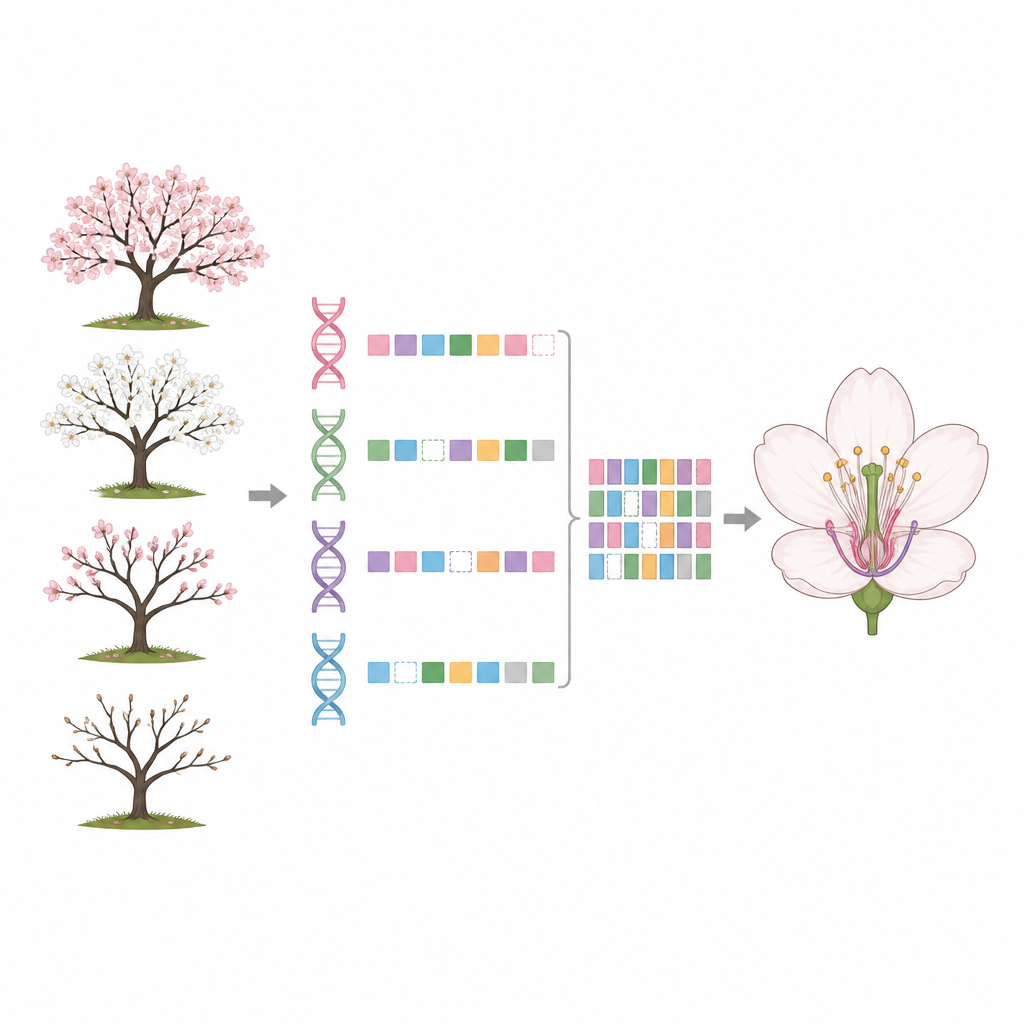
Cherry trees in the subgenus Cerasus include famous ornamental blossoms and important fruit crops such as sweet and sour cherries. Yet their DNA has been hard to study in detail. The team assembled eight new high-quality genomes from a mix of wild, ornamental, and edible cherries and combined them with 13 existing genomes. Together these 21 genomes form a “pangenome” – a shared reference that captures which genes are common to all cherries and which are only found in some. This framework lets scientists see not just single-letter changes in DNA, but also larger structural differences such as insertions, deletions, and rearrangements that can strongly influence traits.
Hidden DNA changes and shared genetic backbone
Using the pangenome, the researchers catalogued nearly half a million structural changes across the cherry genomes. They found that long repetitive DNA elements have expanded in different species and help explain why some genomes are larger than others. Even so, most genes fall into a conserved “core” set that all cherries share, forming a common genetic backbone. Around this backbone lies a large pool of more flexible genes that vary among species and may support differences in growth, stress tolerance, and fruit and flower traits. This balance of stability and diversity sets the stage for understanding how flowering times evolved.
Tracking why some cherries flower early and others late
To link DNA patterns to real-world trees, the team grew 21 cherry types side by side in Shanghai and recorded when their buds swelled, turned green, and reached full bloom. They then used genomic data from 219 cherry accessions to search for DNA regions that differ between very early, mid, and late flowering trees. Standard family-tree analyses showed only weak clustering of early or late bloomers, suggesting that flowering time is not tied to simple species boundaries. Instead, detailed scans across the genome highlighted specific regions under selection in early or late flowering groups, hinting that growers have indirectly favored certain variants while selecting trees for local climates and orchard needs.
A key gene that speeds flowering
One gene, called AGAMOUS-LIKE 9 (PavAGL9 in sweet cherry), stood out. Its activity rose sharply as buds moved from dormancy to open flowers, and its DNA sequence carried strong signals of past selection. When the researchers forced higher PavAGL9 activity in the model plant Arabidopsis, the plants flowered earlier. Transiently boosting PavAGL9 in cherry buds that had already received enough winter chill also sped their opening and increased the activity of other flowering genes. Together, these tests support PavAGL9 as an important driver of how quickly cherry buds progress to bloom once dormancy is released.
A molecular brake and growth partners
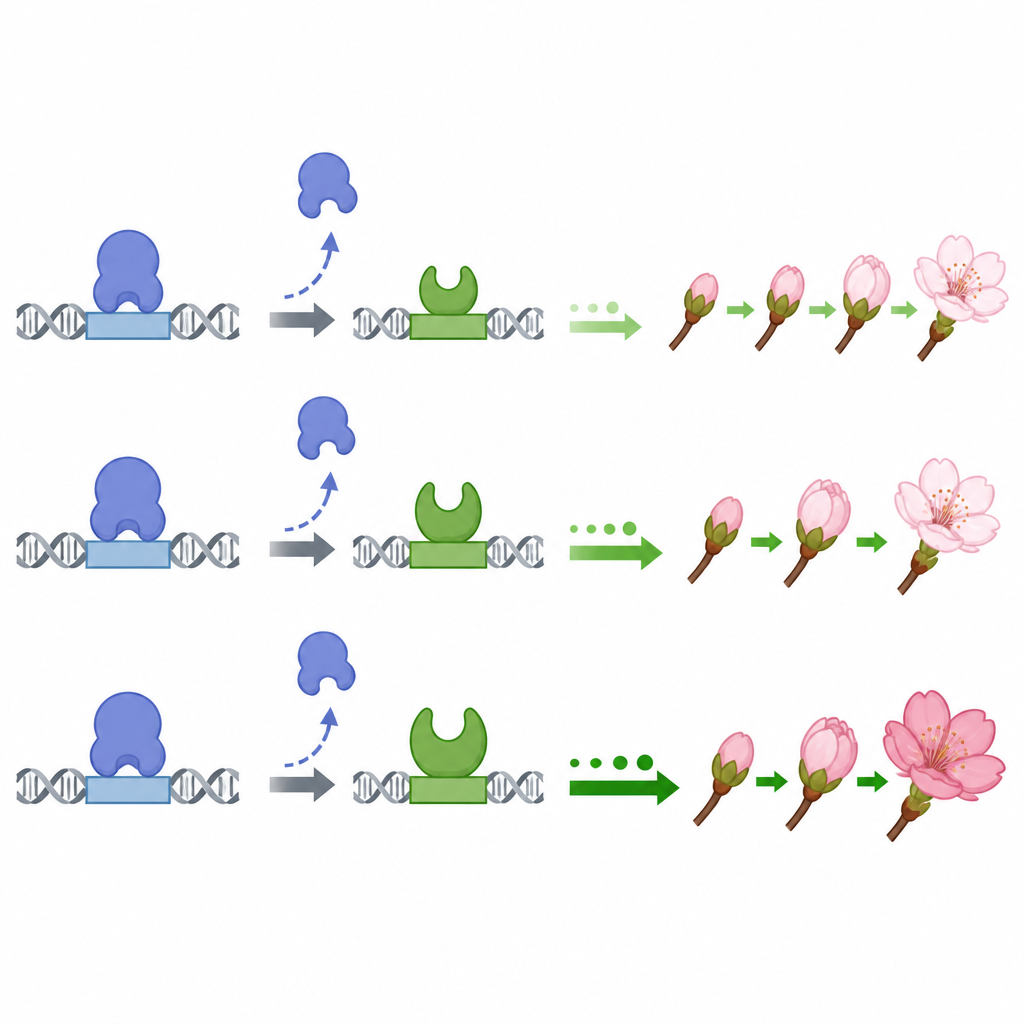
The study did not stop at a single gene. Using a mix of computational predictions and lab assays, the authors found that another protein, PavBPC6, binds directly to the PavAGL9 control region in DNA and shuts down its activity, acting as a molecular brake on flowering progression. When PavBPC6 was overproduced in cherry buds, flowering was delayed and PavAGL9 activity dropped. The team also showed that PavAGL9 physically interacts with two other flowering-related proteins, PavSEP1 and PavPMADS2, likely forming complexes that help shape floral organs. The DNA motif that PavBPC6 recognizes in AGL9-like genes is conserved across most cherries in the pangenome, suggesting that this regulatory switch is shared widely within the group.
What this means for cherry trees and their future
In everyday terms, the authors have built a shared DNA atlas for cherries and used it to uncover part of the timing circuitry that tells buds when to open. PavAGL9 acts like a gas pedal that moves buds from post-winter rest into full bloom, while PavBPC6 serves as a foot on the brake. Differences in these and related genes help explain why some trees burst into blossom early and others wait for warmer days. As climates shift and growers seek varieties that bloom at just the right time, this pangenome and its flowering markers offer a valuable guide for breeding cherries that keep pace with the seasons while preserving the beauty and harvests people depend on.
Citation: Jiu, S., Lei, Y., Fang, L. et al. Pangenome and resequencing analyses reveal flowering evolution and genetic control in Cerasus. Nat Commun 17, 4689 (2026). https://doi.org/10.1038/s41467-026-72832-8
Keywords: cherry flowering time, pangenome, plant genetics, gene regulation, Cerasus evolution