Clear Sky Science · en
DKC1 promotes colorectal cancer progression and therapy resistance by dysregulating sphingolipid biosynthesis
Why this research matters
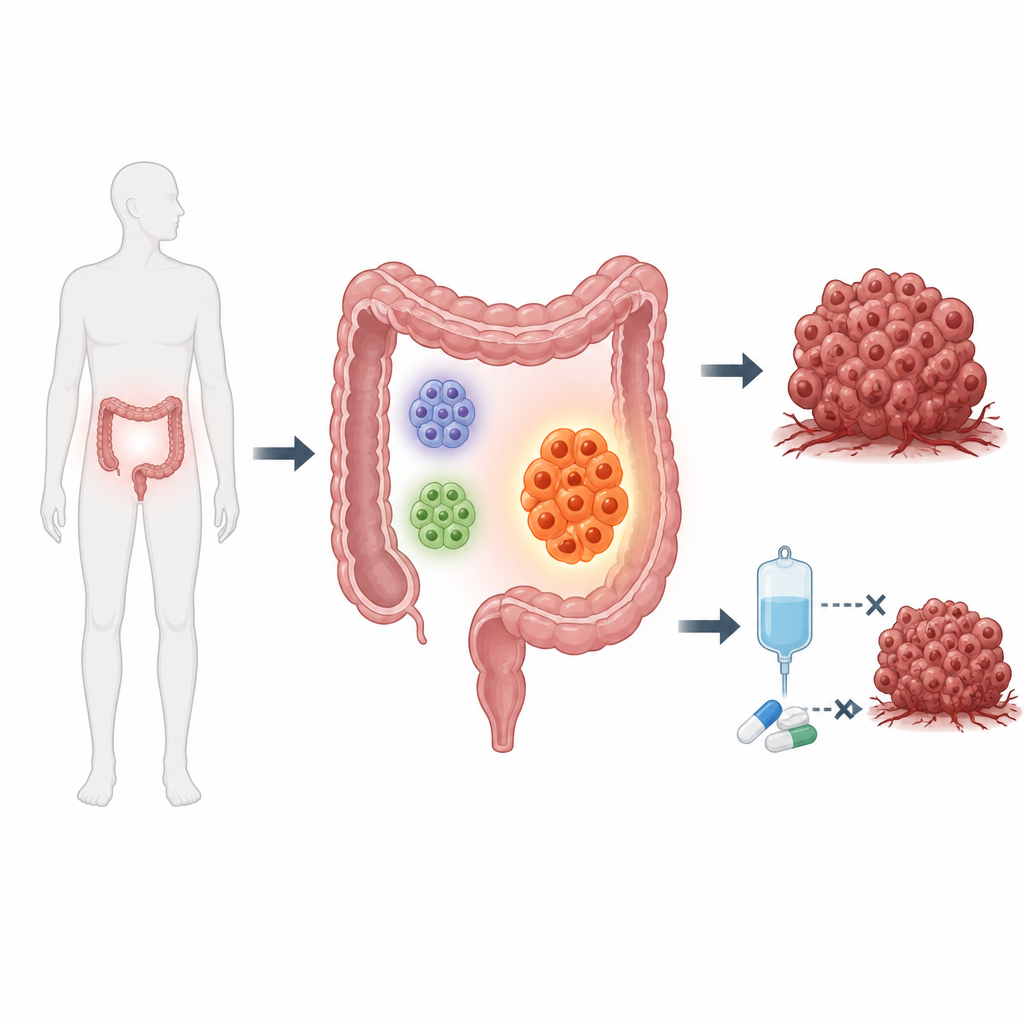
Colorectal cancer remains one of the leading causes of cancer death worldwide, in part because many tumors stop responding to standard chemotherapy. This study uncovers how a little-known cellular protein, DKC1, helps colon tumors grow, resist treatment, and leave telltale fat molecules in blood and tissue. Understanding this hidden control system could point to new drug combinations and simple blood tests to better track or treat the disease.
A cellular timekeeper gone rogue
DKC1 normally helps cells manage their genetic messages and protect chromosome ends, acting like a caretaker of basic cell functions. The researchers found that many colorectal tumors produce far more DKC1 than healthy colon tissue. Across several patient groups and ethnicities, high DKC1 levels were linked to faster tumor cell growth, fewer dying cells, and poorer recurrence-free survival. When DKC1 was switched off in colon cancer cells grown in dishes or implanted into mice, tumors grew much more slowly, formed fewer colonies, and showed signs of stalled cell division and increased DNA damage.
A feedback loop with a key growth signal
Colorectal cancer often depends on WNT signaling, a powerful growth pathway commonly activated by mutations in the APC gene. By mining large cancer databases and studying mouse models, the team showed that tumors with active WNT signaling also tended to have high DKC1. Laboratory tests revealed that WNT pathway components bind directly to the DKC1 gene and turn it on. In turn, when DKC1 was reduced, levels of major WNT signaling proteins dropped. This creates a self-reinforcing loop: WNT signaling boosts DKC1, and DKC1 helps keep WNT signaling switched on, driving continued tumor growth.
How altered fats fuel cancer survival
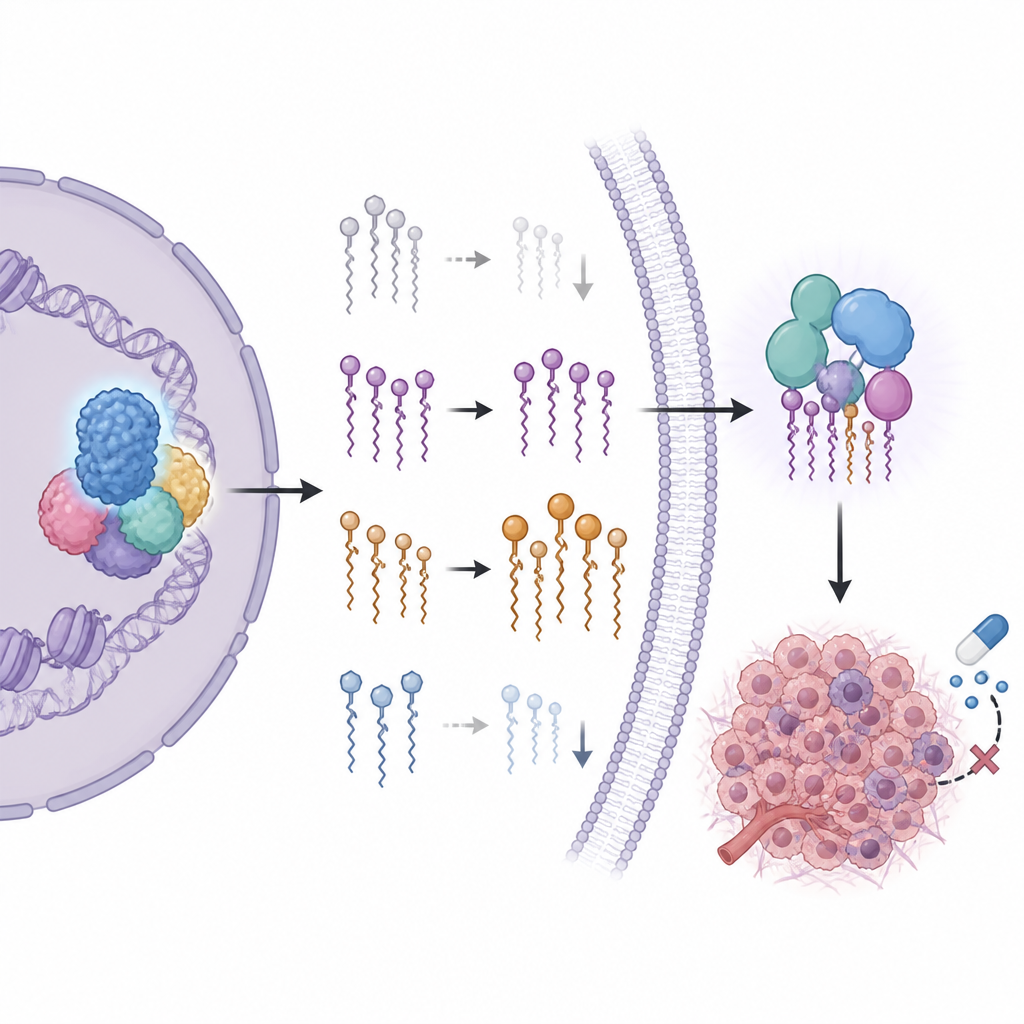
Beyond growth signals, the study highlights a surprising role for DKC1 in rewiring lipid metabolism, particularly a family of fats called sphingolipids. Using advanced lipid profiling, the authors showed that lowering DKC1 in cancer cells decreased several ceramides and related molecules while changing levels of other membrane lipids. In patient tumors, those with high DKC1 were enriched in very-long-chain ceramides, especially C23 and C24 species, which have been linked to cancer progression. The team traced this shift to a control chain in which DKC1 partners with the stem-cell factor SOX2 to boost SGPP2, an enzyme that channels sphingolipid metabolism toward these ceramides. In turn, the altered ceramides appear to support mitochondrial activity, reactive oxygen species production, and stronger WNT signaling, reinforcing aggressive behavior.
Clues in blood and routes around drug resistance
Because lipids circulate in the bloodstream, the researchers asked whether these ceramide changes could be detected in patient blood. Using targeted assays, they found that C24 ceramide was significantly higher in the serum of patients whose tumors had high DKC1 compared to healthy volunteers, suggesting a possible noninvasive marker for this tumor subtype. The team also showed that chemoresistant colon cancer cell lines and tumors from patients who had failed standard FOLFOX or FOLFIRI regimens often had elevated DKC1. Silencing DKC1 in resistant cells made them more sensitive to 5-fluorouracil and oxaliplatin, and reduced ceramide buildup. In mouse models and in patient-derived three-dimensional organoids, drugs that inhibit DKC1 and WNT signaling together were far more effective than either alone, even when combined with standard chemotherapy.
What this means for patients
This work positions DKC1 as a central switch that links growth signals, stem-like behavior, fat metabolism, and drug resistance in colorectal cancer. For patients, it suggests two practical possibilities: blood tests that track specific ceramides as markers of high-DKC1 tumors, and combination therapies that block both DKC1 and WNT signaling to re-sensitize resistant cancers to existing drugs. While more clinical testing is needed, the study maps a clear route from basic cell biology to strategies that might one day improve outcomes for people with hard-to-treat colon tumors.
Citation: Khan, U.K., Goel, A., Nigam, S. et al. DKC1 promotes colorectal cancer progression and therapy resistance by dysregulating sphingolipid biosynthesis. Nat Commun 17, 4406 (2026). https://doi.org/10.1038/s41467-026-72800-2
Keywords: colorectal cancer, DKC1, WNT signaling, sphingolipids, chemotherapy resistance
See more on the researcher's website: http://home.iitk.ac.in/~bushra/