Clear Sky Science · en
Long-duration electricity storage needs for coping with Dunkelflaute events in Europe
Why Calm, Cloudy Weeks Matter for Our Power
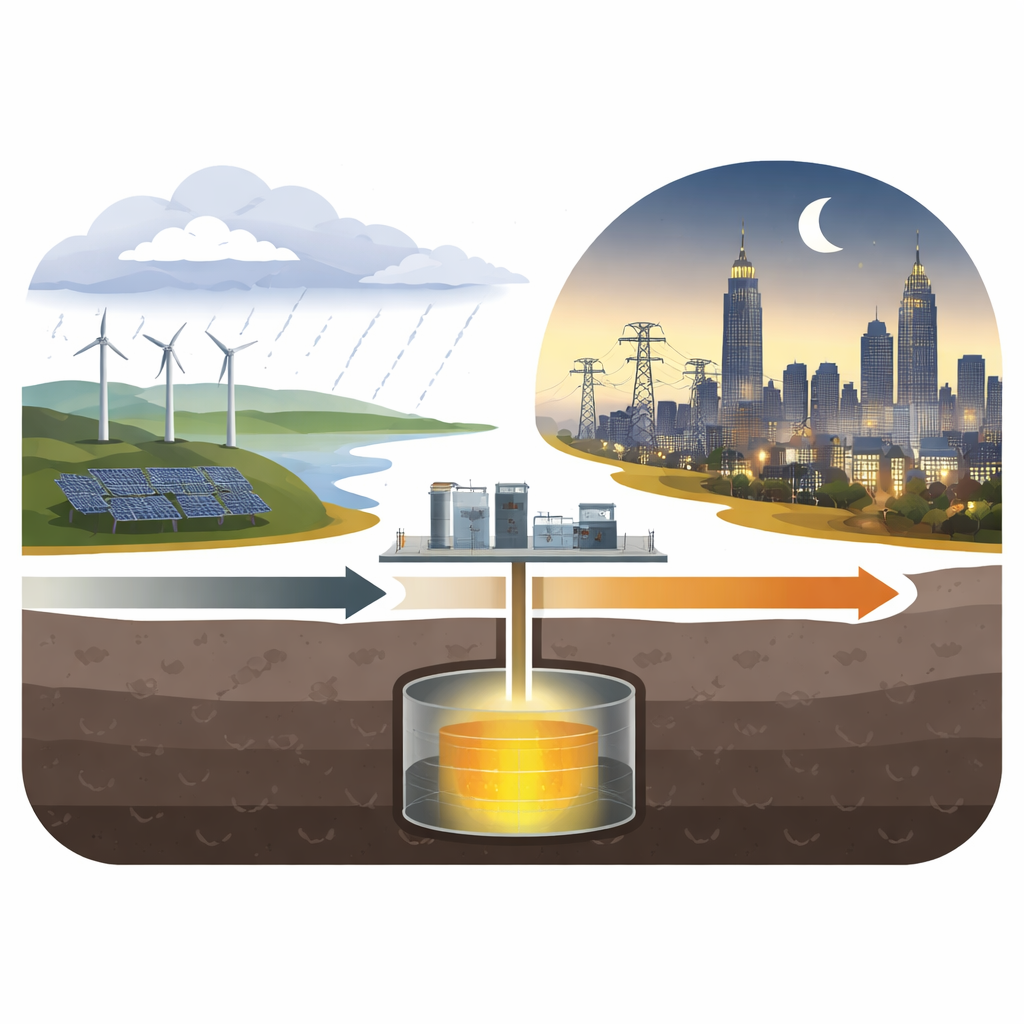
Europe is racing to run on clean electricity from wind turbines and solar panels. But what happens in a long stretch of gray, windless weather, when these sources barely produce? This study looks at those rare but dangerous spells—known in German as “Dunkelflaute,” literally “dark doldrums”—and asks how much long-lasting electricity storage Europe will need to keep the lights on without relying on fossil fuels.
Long Spells of Weak Wind and Sun
The authors analyze 35 years of historical weather data across Europe to find extended periods when wind and solar output are unusually low for many days or even months. These renewable “droughts” often occur in winter, when electricity demand is also high for heating and lighting. Although turbines and panels never drop to zero everywhere, the combined output can fall far below normal for a long time, forcing the system to draw heavily on backup options. The study shows that the worst winter event in their data—a continent-wide Dunkelflaute in 1996/97—largely determines how big long-duration storage must be in a fully renewable power system.
How Much Storage Europe Really Needs
To translate weather extremes into concrete system needs, the researchers run a detailed computer model of the European power sector. They let the model choose the cheapest mix of wind, solar, water power, bioenergy, nuclear (in some scenarios), and different types of storage, while still covering demand hour by hour with no fossil fuels. Short-term batteries handle daily ups and downs, but long-duration storage—modeled mainly as hydrogen stored underground and later turned back into electricity—covers the long dry spells of weak wind and sun. When they assume realistic future grid links between countries, the least-cost system capable of surviving the worst Dunkelflaute requires about 351 terawatt-hours of long-duration storage energy, roughly seven percent of Europe’s annual electricity use.
Sharing Power Helps, But Only So Far
Europe can soften the blow of bad weather by trading power across borders. When one region is cloudy and calm, another may still be windy or sunny. The model tests four levels of cross-border connection, from each country acting as an “energy island” to a hypothetical perfectly linked “copperplate” Europe. Stronger connections always reduce total storage needs, because electricity and hydrogen can flow from better-off to worse-off regions. Yet even with unlimited exchange, the minimum storage requirement is still about 159 terawatt-hours, around three percent of yearly demand. In real-world, policy-based grid plans, the authors find that geographical balancing helps only partly in the very worst events, because many countries are hit by the same winter Dunkelflaute at the same time.
Other Helpers: Dams, Nuclear Plants, and Fossil Backup
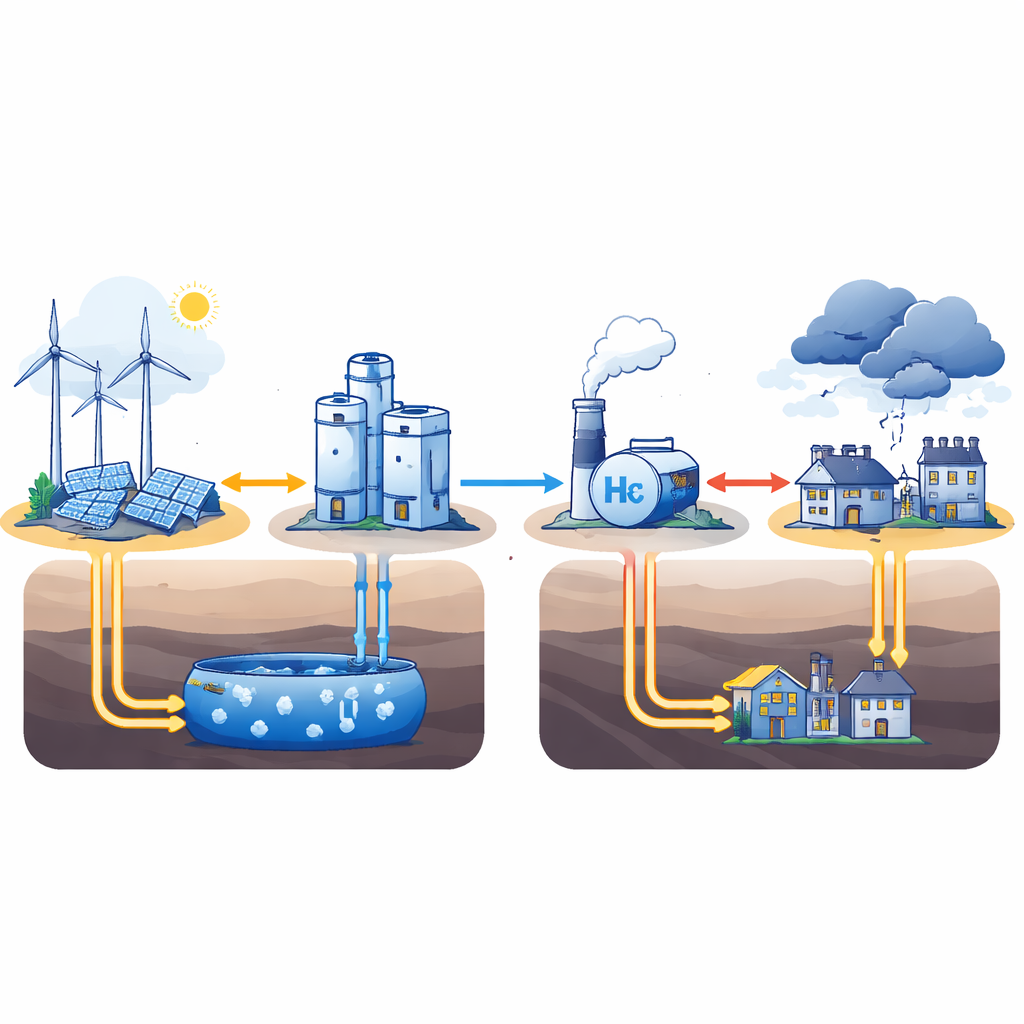
The study also explores how other technologies change the picture. Existing hydro reservoirs and pumped hydro plants already act as powerful long-duration storage in some regions, especially Scandinavia and Spain, and can replace part of the hydrogen storage there. Adding nuclear plants reduces storage needs more, particularly in scenarios with high nuclear capacity, because reactors can provide steady output during winter droughts and lower the amount of wind and solar capacity that must be backed up. However, even generous nuclear expansions still leave a substantial need for long-duration storage. The authors then test oil-fired backup plants combined with direct air carbon capture to cancel out emissions; this combination only replaces most storage if carbon removal can be done at unrealistically low costs, and even then, tens of terawatt-hours of storage remain necessary.
Planning for Rare but Crucial Events
One concern is that planners often design future power systems using only a few representative weather years, which may miss the most severe Dunkelflaute. Here, the worst winter in the dataset demands about 40 percent more storage than the next-worst year. Because such extreme events are rare, private investors may hesitate to build enough long-duration storage that will sit idle most of the time. The authors argue that public policies and market rules will likely be needed to ensure these safety reserves are in place. They also stress that building underground hydrogen storage and the associated equipment will take many years, so early action is essential if Europe is to reach its climate targets while keeping electricity reliable.
What This Means for Europe’s Energy Future
In simple terms, the study concludes that a clean, reliable European power system cannot rely on wind, solar, and short-term batteries alone. To ride out long, dark, and calm periods, Europe will need a large amount of long-duration storage—on the order of several hundred terawatt-hours—plus strong international connections and support from hydro, and possibly some nuclear power. While technically feasible, this will require major investment and careful planning. Preparing now for these Dunkelflaute events, the authors argue, is key to making the renewable energy transition both climate-safe and dependable for everyday life.
Citation: Kittel, M., Roth, A. & Schill, WP. Long-duration electricity storage needs for coping with Dunkelflaute events in Europe. Nat Commun 17, 4210 (2026). https://doi.org/10.1038/s41467-026-72681-5
Keywords: long-duration energy storage, renewable droughts, European power system, hydrogen storage, energy security