Clear Sky Science · en
Network topology of the gut microbiome associates with metabolic health in obesity
Why your gut’s social life matters
Obesity is usually framed as a problem of weight, but this study suggests we should also look at our inner “ecosystem” of gut microbes. The researchers show that it is not only which microbes are present that matters, but how well they connect and cooperate. By looking at the gut microbiome as a web of relationships, they find that people with healthier metabolism, even some with obesity, host more robust and tightly knit microbial networks than those with metabolic problems.
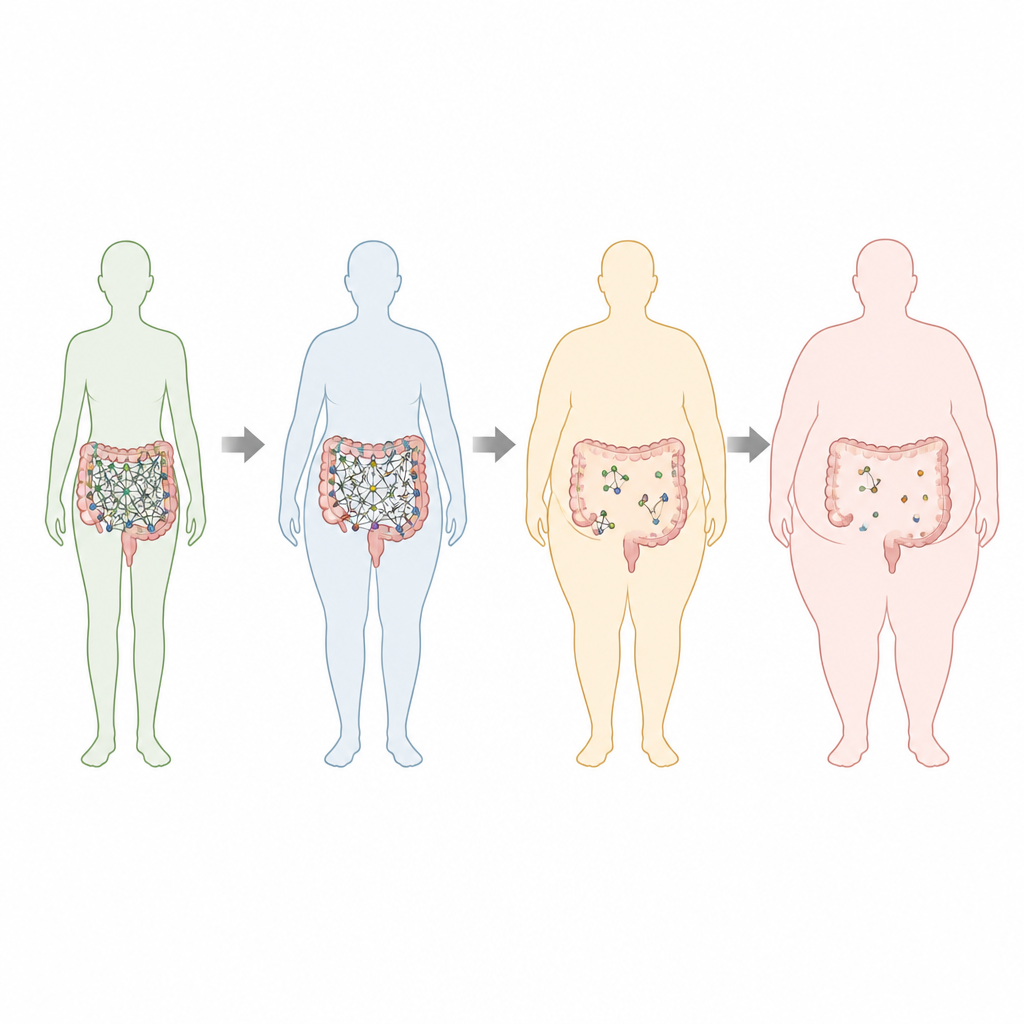
Different types of obesity and health
The team focused on four groups of adults: those with normal weight and good metabolic health, people with obesity but relatively healthy metabolism, and two groups with signs of metabolic trouble such as high blood sugar or abnormal fats in the blood, with and without obesity. This reflects the idea that obesity is not one uniform condition. Some people with obesity keep blood sugar and blood fats in check for a time, while others develop problems that raise the risk of heart disease and diabetes. The study confirms clear differences in waist size, blood pressure, and markers such as triglycerides and insulin among these groups.
The gut community as a web
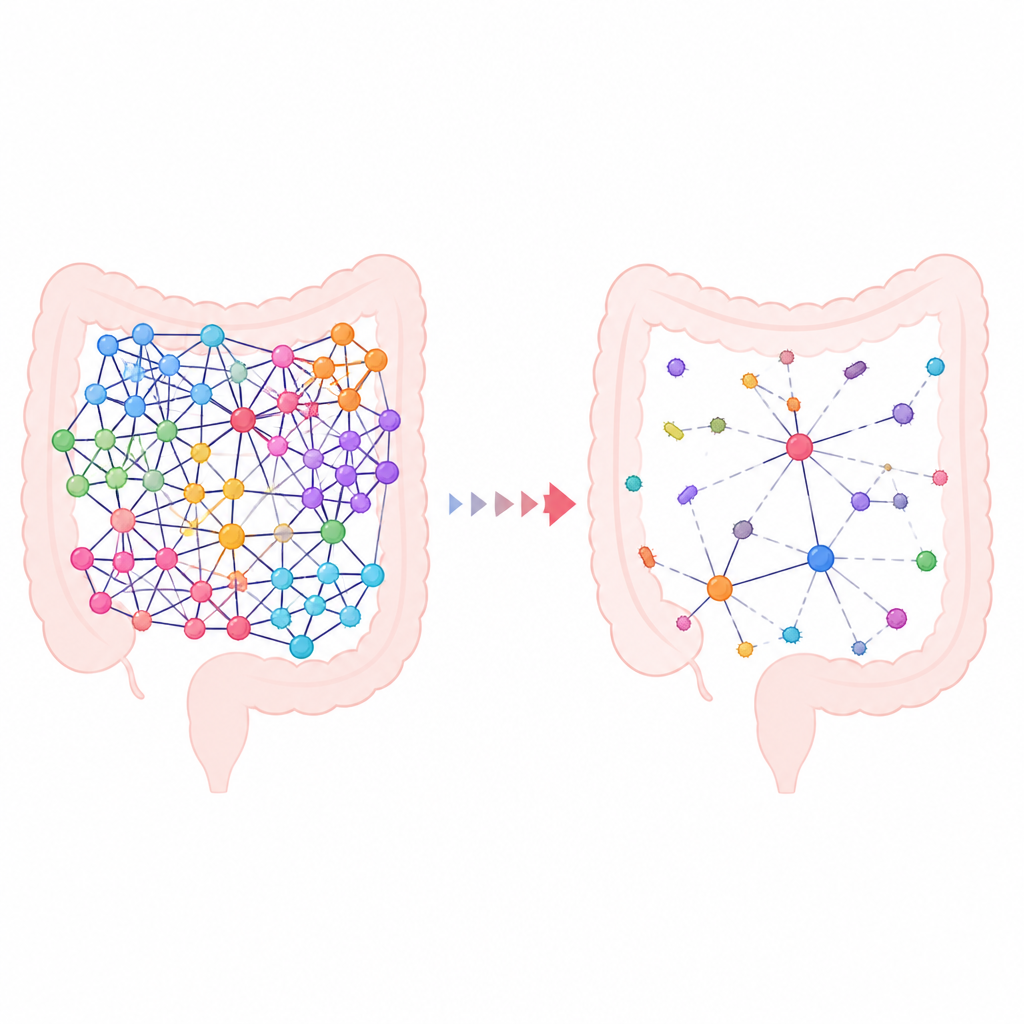
Instead of only counting which bacterial species were present, the researchers asked how these microbes were linked to one another. They used stool samples from 931 people and built “co-occurrence networks,” graphs in which each microbe is a dot and links represent likely interactions. In people with normal weight and good metabolic health, and to a lesser extent in people with metabolically healthy obesity, these networks formed large, well connected webs. Microbes were joined by many paths, suggesting a resilient community where information and metabolites can flow efficiently.
When the web starts to fray
In people with metabolic problems, especially those with both obesity and poor metabolic health, the gut networks looked quite different. They were more fragmented, with many small clusters and more isolated microbes. The overall connectivity was lower and the networks relied more heavily on a few central “hub” species. When the researchers simulated attacks on the network by removing microbes, these metabolically unhealthy webs collapsed more quickly, implying they are more fragile and less able to withstand stress. Some of the influential species in these fragile networks included microbes linked to gut barrier damage or inflammation, suggesting that changes in who “runs” the network may tilt the gut toward disease.
Key microbes and hidden helpers
Across the different groups, the team identified likely “keystone” microbes that, despite not always being abundant, sit in crucial positions in the network. Many of these produce short chain fatty acids, compounds known to support gut barrier integrity and help regulate immunity and metabolism. Others are associated with better blood sugar control or with protection of the gut lining. In metabolically unhealthy groups, keystone sets were more variable and included organisms with potential to harm, hinting that both the stability and the identity of these central players may change as metabolic health worsens.
Can gut networks rebound?
To see whether these patterns can shift, the researchers examined a smaller group of people with excess weight who went through a one month weight loss program. Even though participants lost only around two kilograms on average, their markers of metabolic health improved, and so did the structure of their gut networks. After the intervention, microbial webs became more connected and more robust in simulations, echoing the patterns seen in metabolically healthier groups.
What this means for everyday health
For a lay reader, the main message is that gut health is not just about having “good” or “bad” bacteria, but about how these microbes interact as a community. Strong, well connected microbial networks appear to go hand in hand with better metabolic health, while fragmented, fragile webs are linked with metabolic problems. Early changes in weight and diet may help nudge these networks back toward a more resilient state, suggesting that supporting the gut’s inner social structure could become an important part of managing obesity and related metabolic diseases.
Citation: Lacruz-Pleguezuelos, B., Pérez-Cuervo, A., Coleto-Checa, D. et al. Network topology of the gut microbiome associates with metabolic health in obesity. Nat Commun 17, 4113 (2026). https://doi.org/10.1038/s41467-026-72588-1
Keywords: gut microbiome, metabolic health, obesity, microbial networks, diet intervention