Clear Sky Science · en
Decoding coral resistance to eutrophication through the association of hyper‑efficient denitrifiers as key microbial allies
Why city reefs matter to us
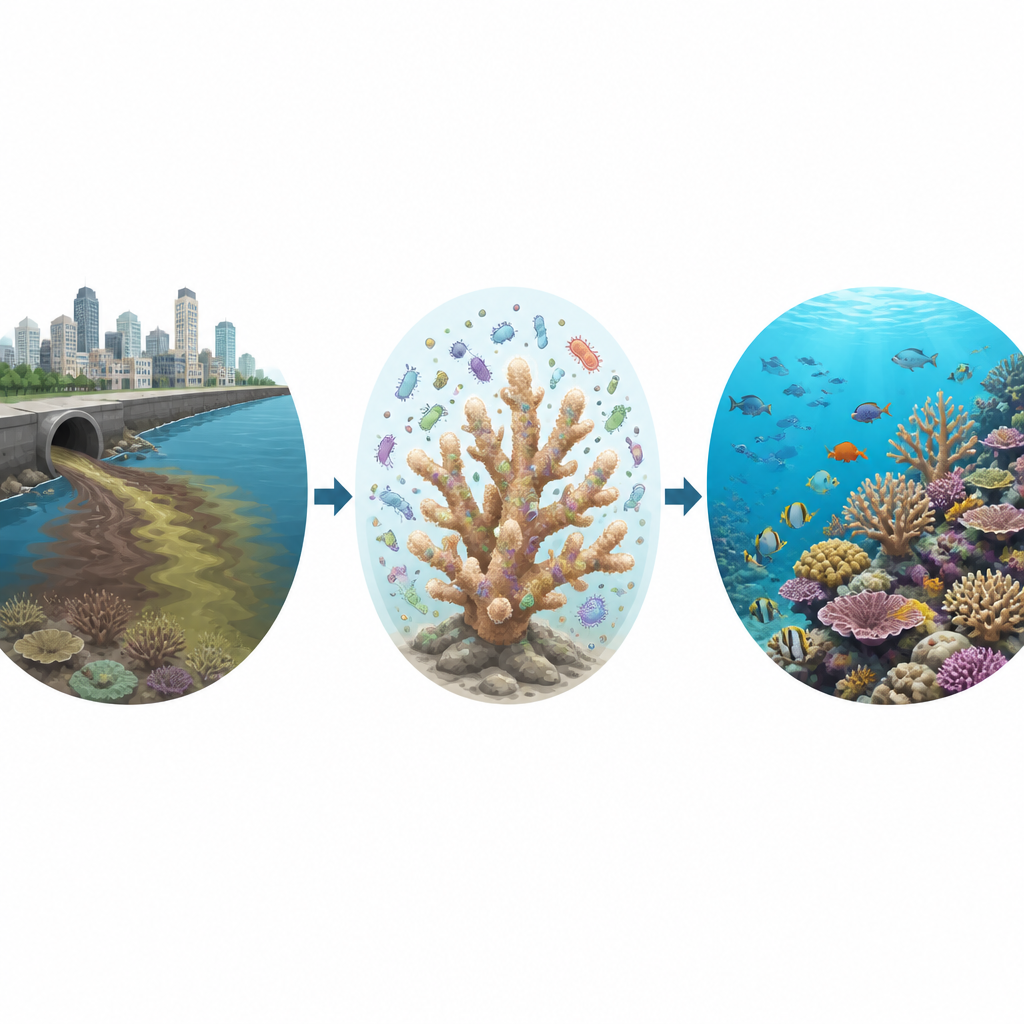
Many people imagine coral reefs as far from human influence, yet some of the most surprising reefs grow next to crowded cities and polluted coasts. This study explores how certain corals in Hong Kong manage to stay alive in waters overloaded with fertilizer-like nutrients that usually harm reefs. By uncovering the hidden help provided by their resident microbes, the work offers clues to how reefs might cope with human-made pollution and how we might better protect them.
When too much fertilizer hurts corals
Coastal pollution often brings large amounts of nitrate, a nutrient found in sewage and farm runoff, into the sea. In normal amounts nitrate helps fuel life, but in excess it throws coral partnerships out of balance. Their symbiotic algae grow too fast, keep more of the sugar they produce, and leave the coral animal short of energy. High nitrate also stresses corals, weakens their skeleton-building, and works together with heat to trigger bleaching. Around the world such nutrient pollution is pushing reefs toward algae-dominated, degraded states.
Polluted waters that still host thriving reefs
Hong Kong’s reefs are an exception. Despite being bathed in nitrate levels several times higher than those known to harm corals elsewhere, they still host rich coral communities. These “reef oases” sit along a natural gradient, with especially high nitrate in the western waters and lower levels to the east. Because the corals remain present across this entire gradient, the region serves as a natural experiment for asking what allows some corals to tolerate chronic nutrient overload while others usually fail.
Hidden helpers inside coral skeletons
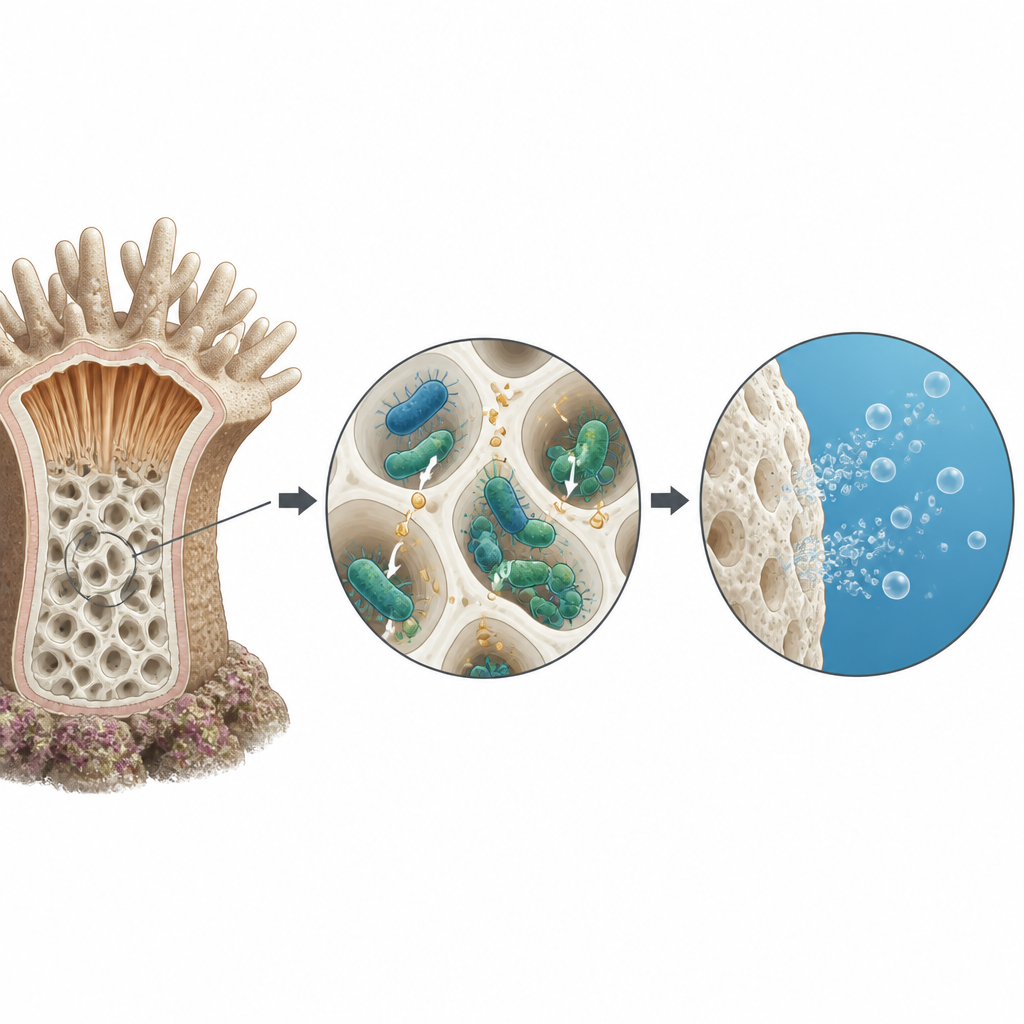
The researchers focused on denitrifying microbes, which can turn nitrate into harmless nitrogen gas that escapes to the atmosphere. Using genetic surveys, they found that the main denitrifying genera, including a group of bacteria called Ruegeria, were common in corals everywhere, not just in polluted sites. That meant simple counts of which genera were present could not explain why western corals coped so well. The team then isolated more than four hundred Ruegeria strains from coral mucus, tissue, and skeleton, and examined their genomes. Over eighty percent carried a full set of genes needed to perform the full stepwise conversion of nitrate all the way to nitrogen gas.
Specialist bacteria built for dirty water
Looking more closely, the scientists divided the Ruegeria into fine-scale populations, each representing a gene-sharing unit within the genus. By tracking subtle genetic markers in environmental samples, they discovered that a handful of these populations were consistently more common in corals from the most nitrate-rich western sites. These “denitrifying specialists” made up to ten percent of all Ruegeria there, but were only rare members in cleaner eastern reefs. When the team measured activity using nitrogen isotopes under very low-oxygen conditions, these specialists produced about ten times more nitrogen gas than their non-specialist relatives, showing that they were not just present but highly effective at stripping excess nitrate from their surroundings.
Microbial tuning to nutrient-rich seas
By comparing genomes, the authors found that specialist populations share sets of genes that appear tuned to life in nutrient-saturated waters. They tended to lose pathways for pulling in and assimilating extra nitrate and phosphorus, which would otherwise cost energy in an already nutrient-rich setting. At the same time, genes involved in denitrification and in coping with local nutrient conditions showed signs of being repeatedly gained through gene exchange. These patterns suggest that evolution favored Ruegeria strains that invest less in scavenging nutrients and more in burning off the surplus as nitrogen gas when living inside pollution-stressed corals.
What this means for future reefs
For a non-specialist reader, the main message is that coral survival in dirty coastal waters does not depend simply on which broad types of bacteria they host, but on particular lineages within those types that work as hyper-efficient nitrate removers. These tiny partners, often hiding in the coral skeleton, can help restore a more favorable nutrient balance and support the coral’s energy supply even under chronic pollution. The study shows that crucial defenses against human impacts may reside in these fine-scale microbial partnerships, pointing toward new ways to identify, monitor, or even one day bolster the microbial allies that help reefs endure in a changing ocean.
Citation: Xiang, N., Liao, T., Xie, M. et al. Decoding coral resistance to eutrophication through the association of hyper‑efficient denitrifiers as key microbial allies. Nat Commun 17, 3938 (2026). https://doi.org/10.1038/s41467-026-72571-w
Keywords: coral reefs, nutrient pollution, denitrifying bacteria, microbiome, Ruegeria