Clear Sky Science · en
Extensive variation between chromosomes of North American and European hop
Why hop genetics matter for your beer
Hops give beer much of its bitterness, aroma, and keeping quality. Most modern hops are mixes of European and North American plants, yet breeders have not fully understood how this blend of ancestries creates cones rich in bitter acids, the compounds that define many beer styles. This study decodes the full DNA of a popular brewing variety called Apollo to reveal how its chromosomes are arranged, how they differ between continents, and which pieces are linked to stronger bittering power. The findings could guide future hop breeding for taste, yield, and climate resilience.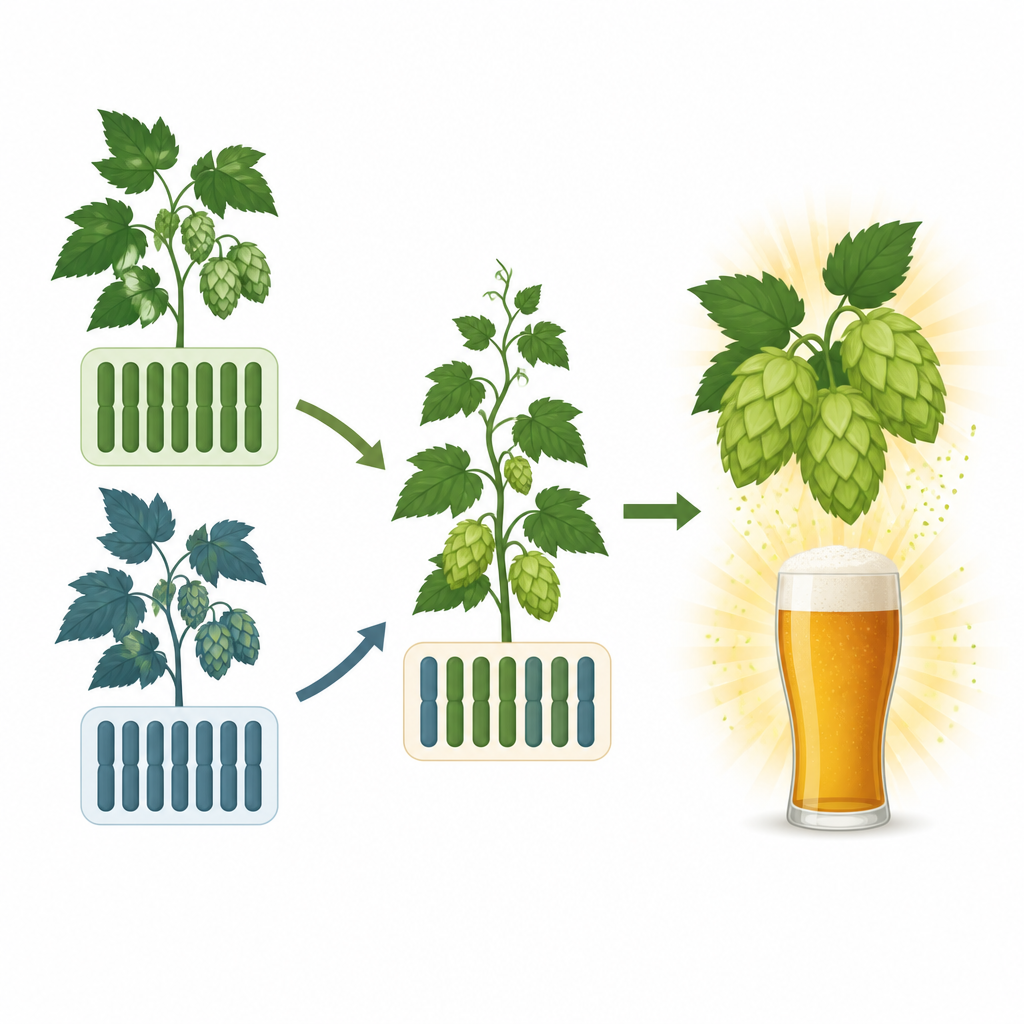
Two families of hops meet
Hops belong to the same plant family as Cannabis, and wild relatives grow across Europe, Asia, and North America. European hops were first cultivated for beer more than a thousand years ago, but when they were brought to North America, crosses with local wild hops produced offspring with far higher levels of bitter acids. Apollo is one such descendant, carrying a patchwork of European and North American heritage. By assembling both copies of each of its chromosomes at high resolution, the researchers could track exactly which stretches come from which continent and how these pieces line up.
Chromosomes that resist shuffling
When plants reproduce, paired chromosomes normally exchange segments, shuffling genes and creating new combinations. In Apollo and several related crosses, the team found that many European and North American chromosome pairs hardly exchange any pieces at all. Instead of a fine-grained mosaic, whole chromosomes from each lineage are passed on largely intact. This low level of reshuffling appears to be linked to unusual chromosome structures and irregular cell division in hops. As a result, breeding has mostly rearranged complete chromosomes between plants rather than mixing them at a fine scale, which makes it harder to pinpoint the exact genes behind useful traits.
Big genomes and active chemistry
By comparing hop DNA to that of hemp, a close relative, the scientists showed that hops have a much larger genome mainly because of repeated jumping DNA elements that have multiplied over the last few million years. Within this expanded genome they mapped thousands of genes involved in making terpenes, bitter acids, and related molecules that shape beer flavor and potential health uses. Many of these gene families are particularly rich in the hop and hemp group, helping explain the chemical complexity of hop cones. The team also tracked how these genes switch on during cone development and how that timing matches the rise of key aroma and bitter compounds in the glands that coat the cones.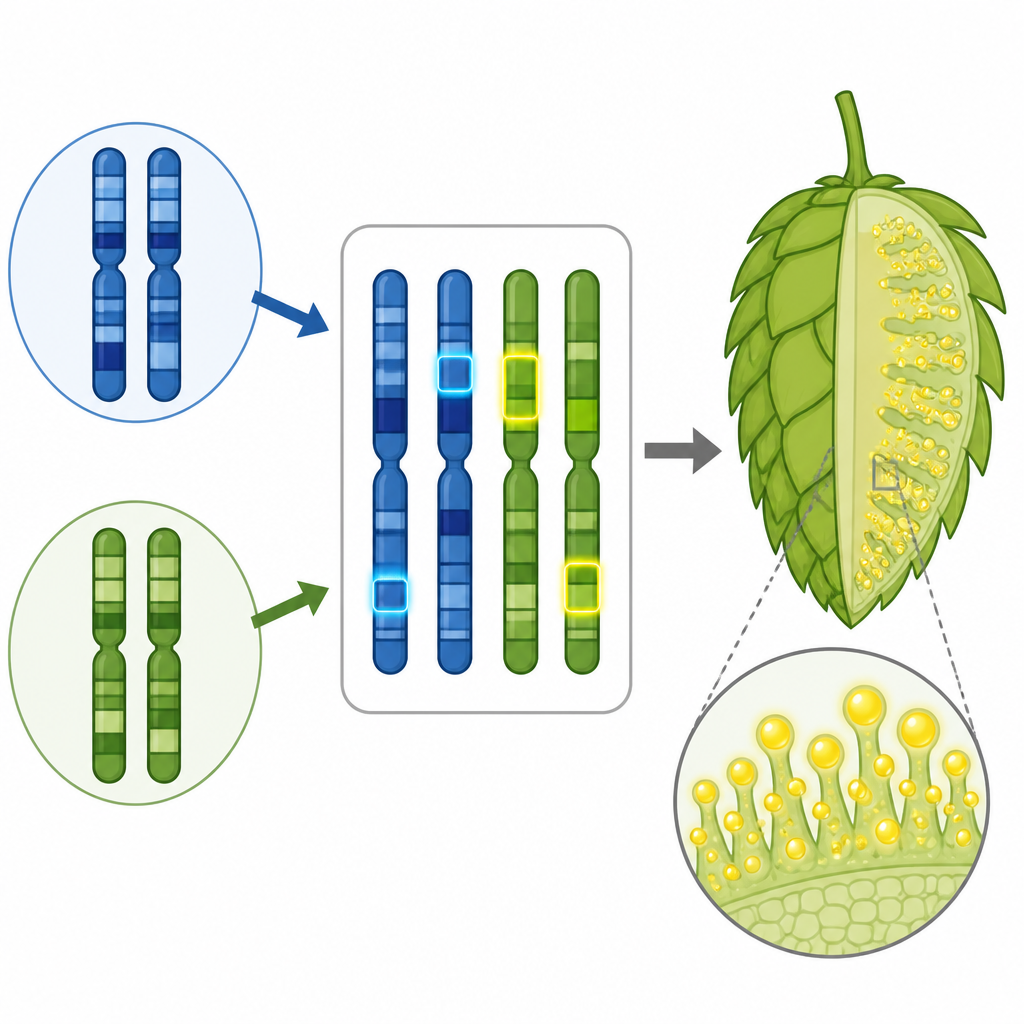
Finding the chromosomes that boost bitterness
Using Apollo as a detailed reference, the researchers studied a large family produced by crossing Apollo with a European hop. They measured bitter acid content and searched the genome for regions linked to higher levels. One especially important stretch on chromosome 8, originally from a European ancestor but sitting inside an otherwise North American chromosome, strongly increased bitter acids when present. This region contains a known “master switch” gene that turns on late steps in bitter acid and related pathways. Other helpful regions on chromosomes 5 and 9 come from North American ancestry and include enzymes that finish the bitter acid molecules or start their production. Plants that carried more of these beneficial chromosome versions had steadily higher bitter acid content.
What this means for future hops
The study shows that the standout bitterness of many modern hops comes from combining whole European and North American chromosomes rather than from heavy mixing at the gene level. Certain European segments and North American segments work together in an additive way to raise bitter acids, giving breeders clear targets to select. By tying specific chromosomes and gene variants to flavor chemistry, and by revealing hidden diversity in wild and cultivated hops, this work lays a roadmap for breeding varieties that keep their punch in a warming climate and perhaps serve new roles beyond brewing.
Citation: Kale, S.M., Gundlach, H., Gericke, O. et al. Extensive variation between chromosomes of North American and European hop. Nat Commun 17, 4110 (2026). https://doi.org/10.1038/s41467-026-72379-8
Keywords: hop genetics, bitter acids, hop breeding, beer aroma, plant genomics