Clear Sky Science · en
A rice ceRNA module suppresses Rhizoctonia solani–induced cross-kingdom RNAi to reduce fungal pathogenicity
Why this rice story matters to everyone
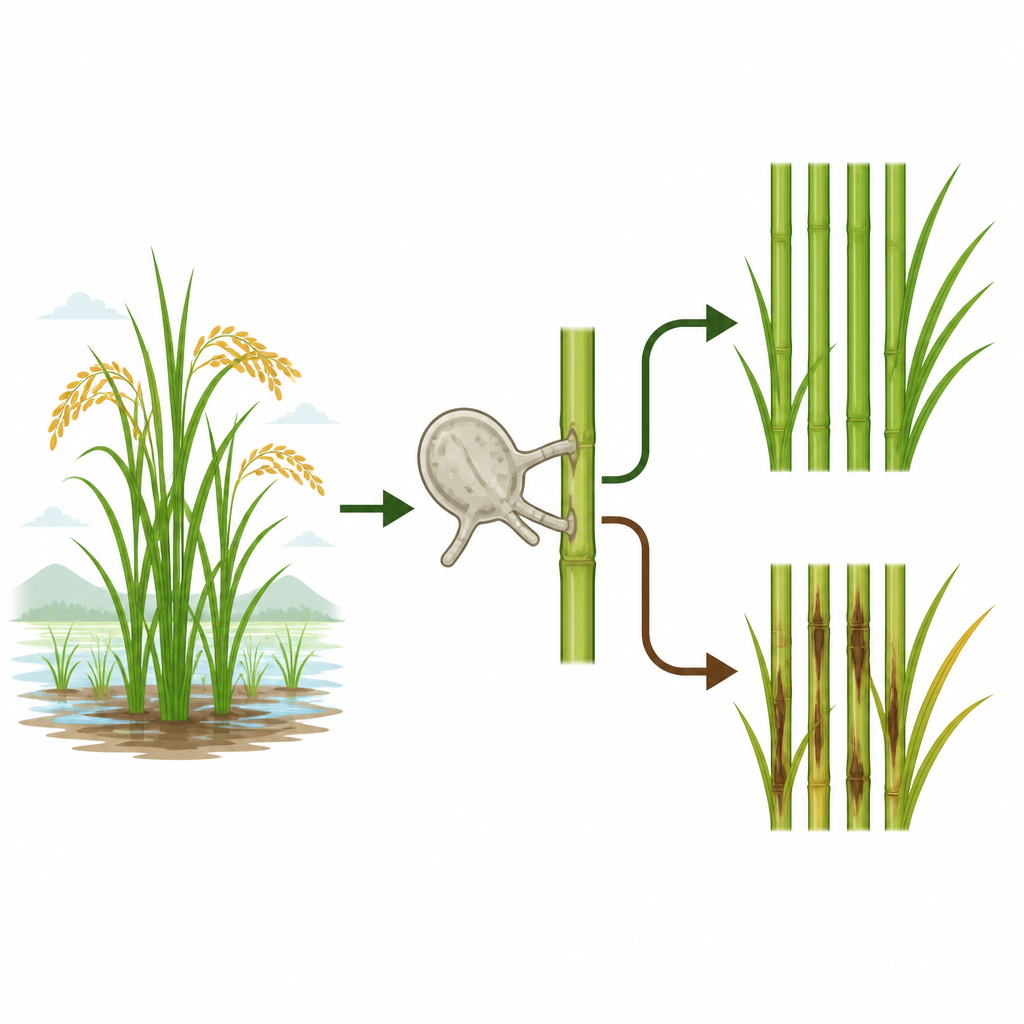
Rice feeds billions of people, yet a common soil fungus called Rhizoctonia solani can wipe out large portions of harvests by causing a disease known as sheath blight. This study uncovers a microscopic battle of genetic messages between rice and this fungus, revealing how each side uses tiny RNA molecules to attack or defend. Understanding this invisible tug-of-war suggests new, precise ways to protect crops without relying only on chemicals.
The fungus that talks to plant genes
Scientists have learned that some microbes send small RNA molecules into plant cells to quietly switch off the plant’s defense genes. This cross-kingdom RNA interference means the fungus can “reprogram” the plant’s biology in its favor. Until now, this trick was mainly described in model plants, not in major crops like rice. The authors set out to see whether R. solani uses a similar strategy when infecting rice, and if so, which plant components it hijacks to weaken the plant’s immune system.
How the fungus disarms rice defenses
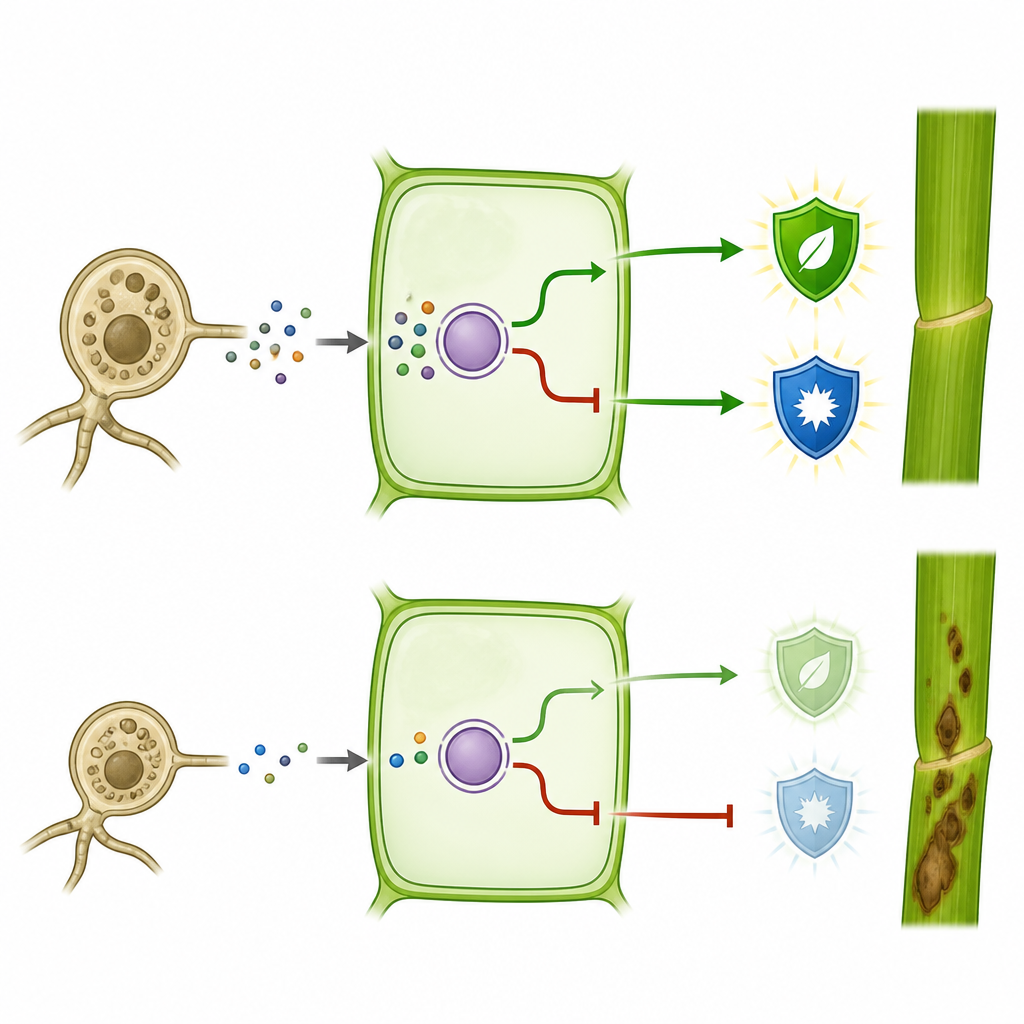
The team focused on proteins in rice called Argonautes, which act as central hubs for small RNA signals. During infection, several Argonautes changed in abundance, and when some of them were disabled by genetic methods, rice became less prone to disease. By pulling down Argonautes from infected plants and sequencing the attached small RNAs, the researchers discovered that R. solani sends specific fungal RNAs into rice cells, where they latch onto a rice Argonaute called OsAGO1. Two of these fungal RNAs then directly silence key rice defense genes, OsCYP98A1 and OsNEK6, which normally help strengthen cell structures and stress responses. When the fungus’s own RNA-cutting enzymes were reduced using a plant-based trick, these harmful fungal RNAs dropped and rice became more resistant.
Rice fights back with its own RNA network
Rice does not passively accept this attack. The authors found that the plant tunes the amount of OsAGO1 during infection, which in turn affects how effective the fungal RNAs are. A native rice microRNA called OsmiR168 can bind to the messages that produce OsAGO1 and reduce its levels. When OsmiR168 was boosted in rice, plants became less susceptible to the fungus, and the two defense genes were less strongly suppressed. When OsmiR168 was blocked or OsAGO1 was overproduced, plants suffered more severe disease. These results show that by lowering the amount of OsAGO1, rice can limit how strongly the fungal RNAs can silence its defenses.
A long RNA decoy that loosens the brakes
The story becomes richer with the discovery of a long non-coding RNA in rice, called LncRNA19164. This RNA does not make a protein but acts as a molecular sponge, binding OsmiR168 and preventing it from cutting down OsAGO1 messages. When LncRNA19164 was overproduced, OsmiR168 levels dropped, OsAGO1 levels rose, and the fungal RNAs gained more power to shut off OsCYP98A1 and OsNEK6, leading to worse disease. During real infections, however, rice naturally lowers LncRNA19164 levels while raising OsmiR168, trimming back OsAGO1 to dampen the fungus’s RNA-based attack. A known fungal cell wall signal, chitin, triggers this shift through a rice immune receptor called OsCERK1, linking the RNA module to broader immune sensing.
What this means for future crop protection
Together, these findings reveal an RNA-centered arms race between R. solani and rice. The fungus exports small RNAs that co-opt a rice hub protein to silence two important defense genes, while rice responds by adjusting a network of its own RNAs to throttle that hub and weaken the fungal attack. By mapping out this three-part module of a long RNA decoy, a microRNA regulator, and a protein hub, the study points toward new strategies for breeding or engineering rice varieties that better resist sheath blight, using the plant’s own RNA communication system as a guide.
Citation: Ni, J., Mao, W., Shi, T. et al. A rice ceRNA module suppresses Rhizoctonia solani–induced cross-kingdom RNAi to reduce fungal pathogenicity. Nat Commun 17, 4233 (2026). https://doi.org/10.1038/s41467-026-72158-5
Keywords: rice sheath blight, Rhizoctonia solani, cross-kingdom RNAi, plant immunity, long noncoding RNA