Clear Sky Science · en
Biological use of molybdenum and tungsten stems back to 3.4 billion years ago
A metal story hidden in ancient seas
Long before plants greened the land or animals swam the oceans, tiny microbes were already running complex chemistry powered by rare metals. This paper explores how two such metals, molybdenum and tungsten, helped fuel Earth’s earliest life more than three billion years ago. By tracing the history of the genes that handle these metals, the authors show that life began using them far earlier, and in more varied ways, than geologists once thought possible.
Why rare metals matter for life
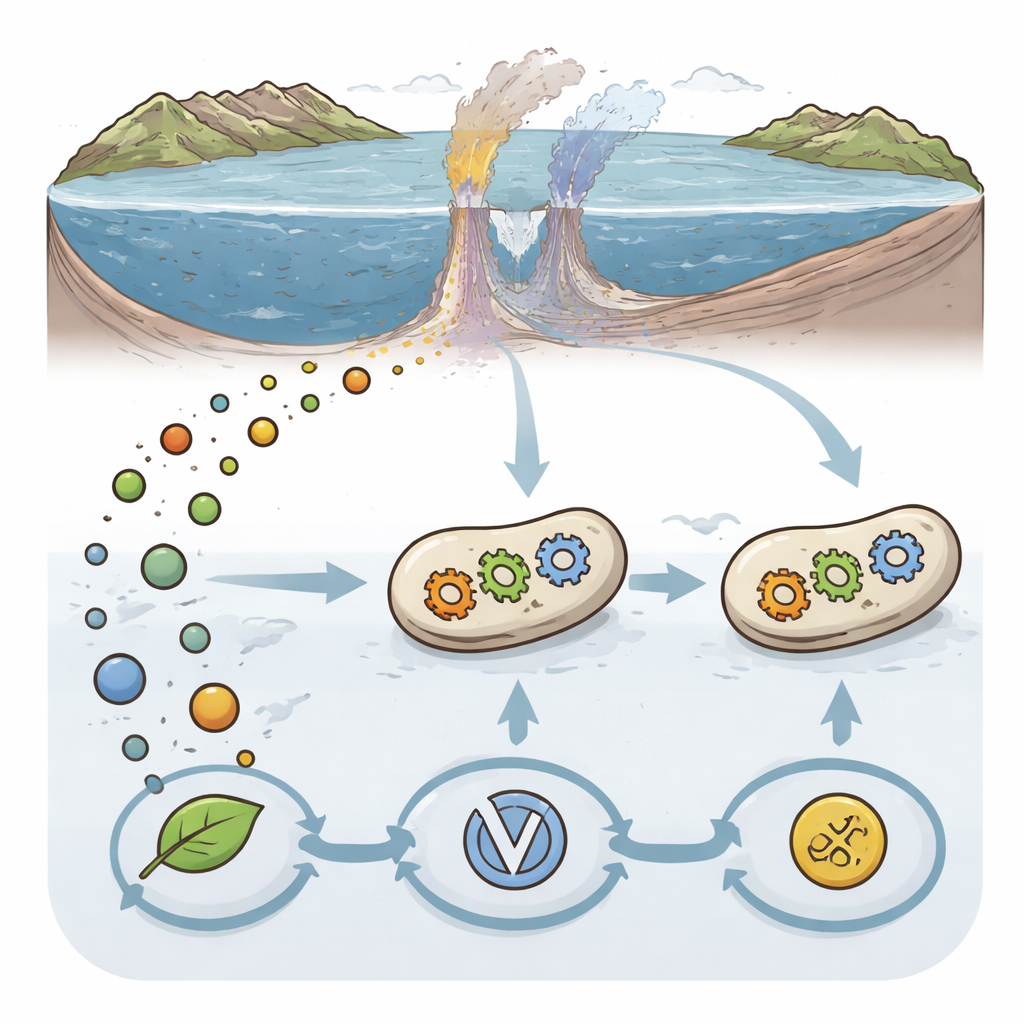
Molybdenum and tungsten act as catalytic workhorses inside cells, sitting at the core of enzymes that drive key reactions in the cycles of carbon, nitrogen, and sulfur. Modern organisms rely especially on molybdenum, yet chemical studies of ancient rocks suggest that early oceans contained almost none of it. This posed a puzzle: if the seas were so poor in molybdenum, how could life have evolved such widespread dependence on it? The authors tackle this mismatch by looking not at rocks, but at the biological machinery itself—genes for metal transport, storage, and the construction of special metal-bearing “cofactors” that slot into enzymes.
Reading deep time from modern genomes
The team assembled a dataset of more than 1,600 genomes spanning bacteria, archaea, and eukaryotes. They searched these genomes for 102 groups of proteins involved in taking up molybdenum and tungsten, building their cofactors, and using them in different enzyme families. These proteins are found in organisms living across an impressive range of environments—from hot, oxygen-free vents to cool, oxygen-rich waters and soils. Especially widespread are the proteins that make the basic molybdenum cofactor, which turns out to be shared across all branches of life, hinting at a very ancient origin. In contrast, some storage systems and specialized enzymes are rarer and more patchily distributed.
Timing the rise of metal-driven chemistry
To convert this genomic survey into a timeline, the authors compared each protein’s evolutionary tree with an age-calibrated tree of life built from fossil evidence and molecular clock models. This reconciliation allowed them to estimate when key “gene events” such as origin, duplication, and spread likely occurred. Their analysis suggests that enzymes using molybdenum and tungsten were already present in the Eo- to Mesoarchean, roughly 3.7 to 3.1 billion years ago—far earlier than many models of ocean chemistry would allow. The machinery for building the core molybdenum cofactor appears in the record by about 3.1 to 2.2 billion years ago, overlapping with the emergence of full transport systems that import both metals into cells.
Shifts with oxygen, heat, and habitat
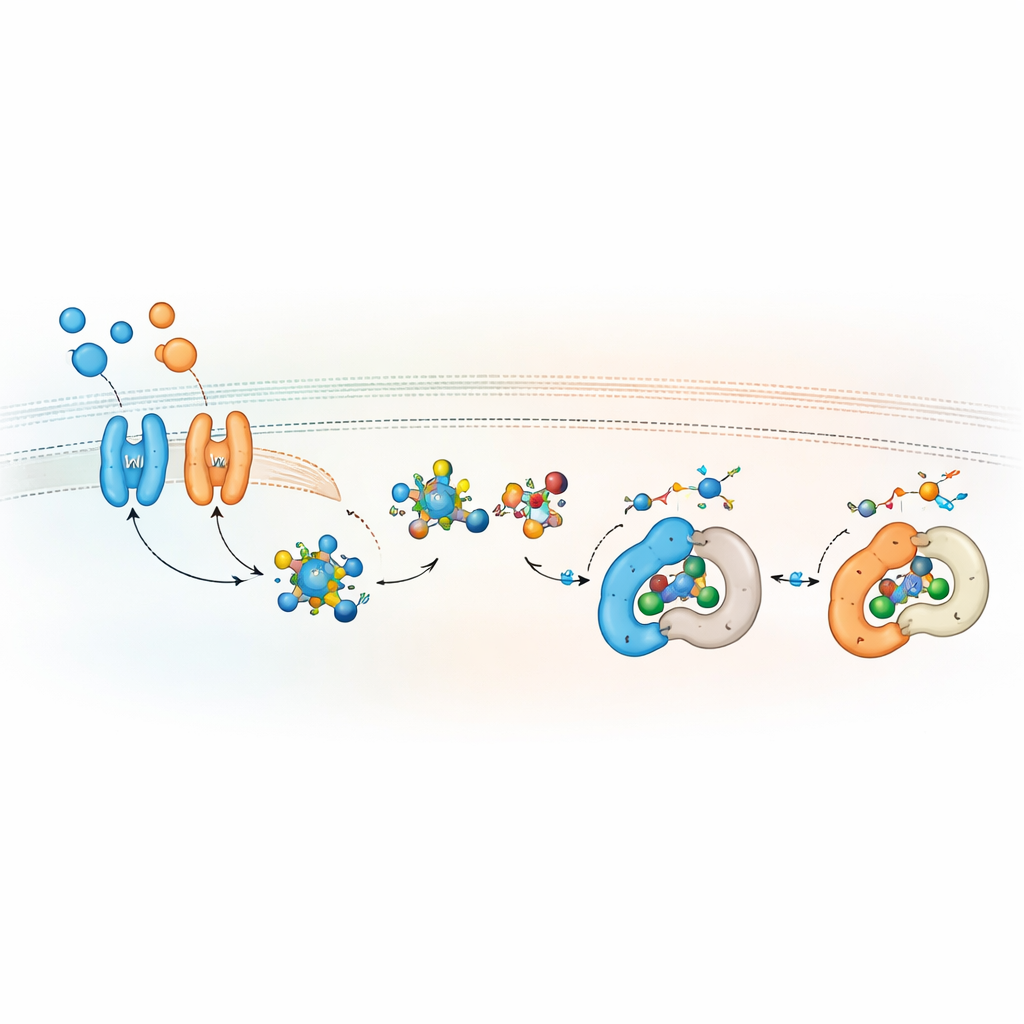
Patterns in modern genomes also reveal how environment and metal use have been intertwined. Species that tolerate or require oxygen tend to carry more molybdenum-related genes, while strictly oxygen-free microbes more often rely on tungsten, especially in hot settings. This fits with laboratory data showing that tungsten-based enzymes perform best at high temperatures and low redox conditions, whereas molybdenum enzymes can handle a wider range of reaction types. The study finds that some molybdenum enzyme families—especially those processing highly oxidized nitrogen and sulfur compounds—became more common after Earth’s atmosphere gained oxygen, hinting that changing surface chemistry opened new metabolic niches.
Rethinking early oceans and early life
Taken together, the results challenge the view of an early Earth where scarce molybdenum prevented its widespread biological use. Instead, life appears to have invested early in sophisticated machinery for both molybdenum and tungsten, likely exploiting local metal-rich environments such as hydrothermal vents. As oxygen and weathering later increased molybdenum delivery to the oceans, molybdenum-based biochemistry diversified further, enabling organisms to tap into new energy sources. For a non-specialist, the key message is that the metal toolkit used by today’s microbes—and ultimately by plants and animals—was largely assembled billions of years ago, under anoxic skies, by tiny cells that learned to make the most of trace amounts of these powerful elements.
Citation: Klos, A.S., Sobol, M.S., Boden, J.S. et al. Biological use of molybdenum and tungsten stems back to 3.4 billion years ago. Nat Commun 17, 3943 (2026). https://doi.org/10.1038/s41467-026-72133-0
Keywords: molybdenum, tungsten, early Earth, microbial evolution, metal enzymes