Clear Sky Science · en
Longitudinal protein profiling of blood during childhood into early adulthood
Why growing bodies leave molecular footprints
From the moment we are born, our bodies are in constant flux, yet routine checkups usually capture just height, weight, and maybe a few lab tests. This study asks a deeper question: what if we could watch thousands of blood proteins change as children grow into adults? By following the same boys and girls over 20 years, the researchers reveal how these tiny molecules trace the story of development, puberty, and emerging differences between the sexes—and why that matters for understanding health and disease.
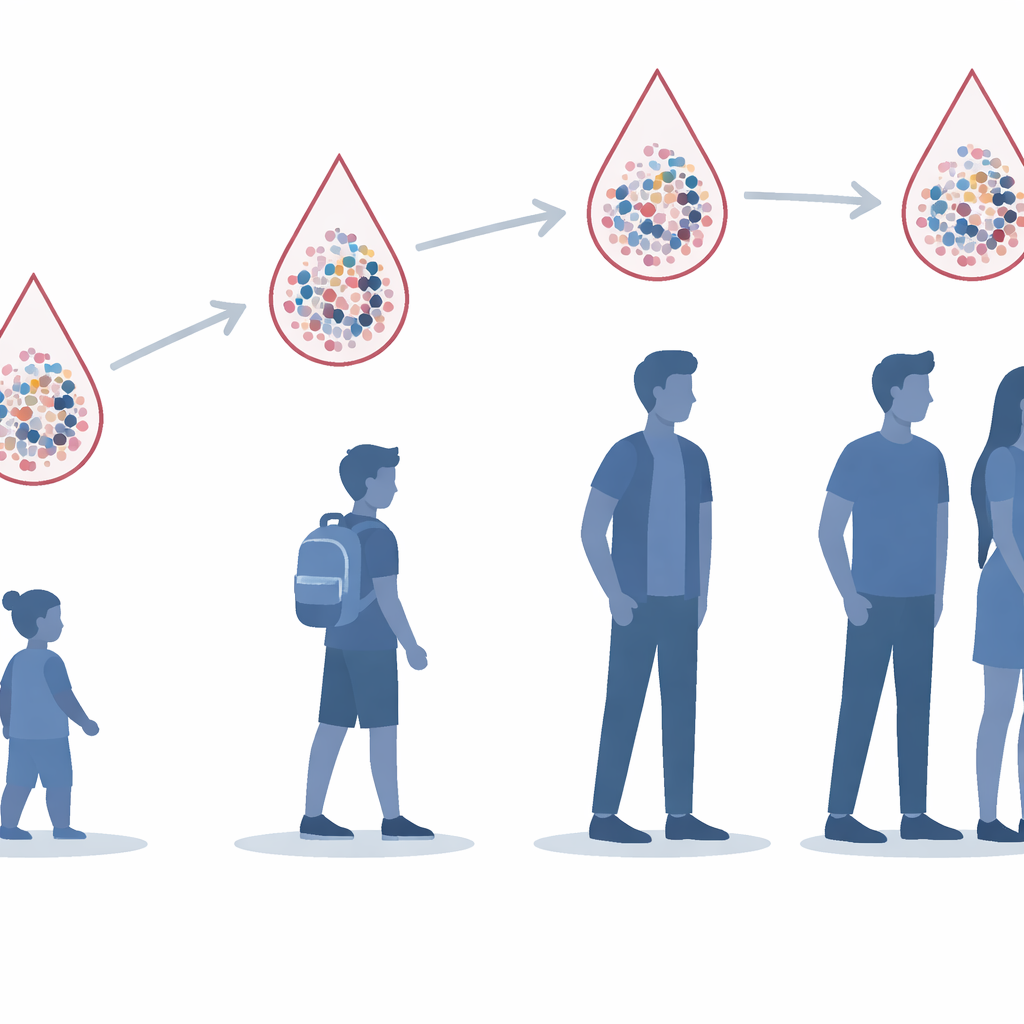
Following children’s blood over two decades
The team drew on a long-running Swedish community study that has tracked thousands of children since the mid‑1990s. From this larger group, they randomly selected 100 healthy participants—50 girls and 50 boys—who had given blood samples at four clinic visits: around ages 4, 8, 16, and 24 years. Using a high‑throughput technology capable of detecting more than 5000 proteins in a small amount of plasma, they focused their analyses on 3509 proteins that met quality criteria across these time points. Instead of taking a single snapshot, they built a time‑lapse view of each person’s circulating proteins as they moved from preschool through school age, adolescence, and into early adulthood.
Age as a powerful shaper of blood proteins
More than half of all measured proteins—1879 out of 3509—changed significantly between at least two of the visits, underscoring just how dynamic the blood landscape is during growth. The biggest shifts occurred between roughly ages 8 and 16, the years when most participants passed through puberty. Many proteins involved in building and remodeling the body, such as those tied to bone, cartilage, and teeth, either rose or fell sharply. Others related to brain development, nerve-cell connections, and hormone release gradually declined from early childhood, mirroring the intense early burst of brain wiring that later stabilizes. The researchers also saw age‑related changes in proteins that help process drugs and toxins, hinting that children’s capacity to handle medications and environmental exposures may differ markedly from that of adults.
Distinct patterns and hidden biological themes
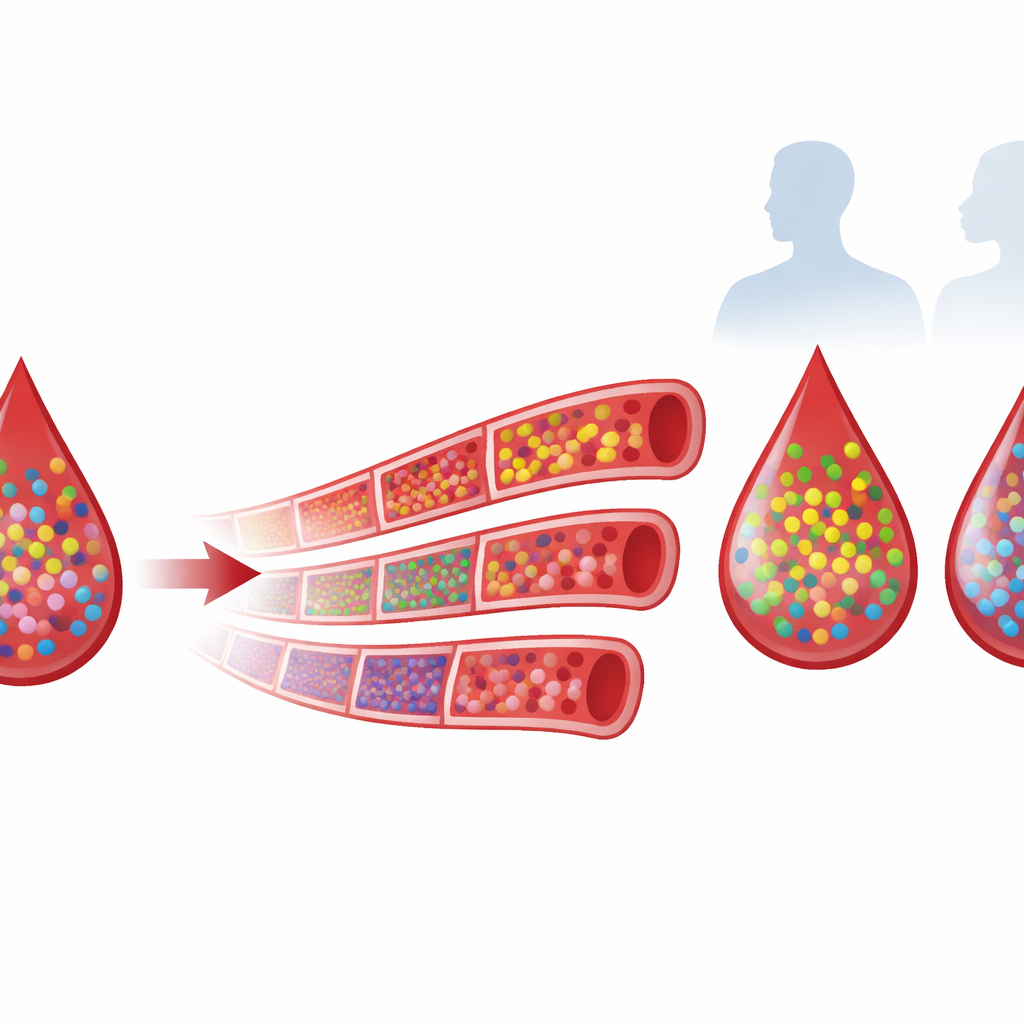
To make sense of this complexity, the scientists grouped age‑sensitive proteins into eight "trajectory" clusters based on how their levels rose, fell, or fluctuated over time. Some clusters showed steady increases or decreases; others spiked during adolescence and then settled. When they examined the known functions of proteins within each group, clear themes emerged. One cluster was rich in molecules involved in cell division and internal housekeeping, another in neural growth and cell‑to‑cell adhesion, and yet another in energy use and breakdown of nutrients. This pattern suggests that different molecular programs switch on and off at specific developmental windows, coordinating everything from brain maturation to immune tuning and cellular energy management as children age.
When boys’ and girls’ blood begin to diverge
Sex differences in protein levels were minimal in early childhood, but they expanded dramatically by the later visits. At age 16, about 5% of proteins differed between boys and girls, and by age 24 nearly one‑third did, with the vast majority higher in young men. Many of these proteins are linked to the reproductive system, such as those associated with sperm function or female reproductive tissues, reflecting hormonal changes around and after puberty. Others relate to growth, bone development, metabolism, and the immune system. Even after accounting for body size, body fat, smoking, and blood cell counts, most sex‑related differences remained, indicating that intrinsic biology—rather than lifestyle alone—underlies much of the divergence.
What this means for future medicine
For non‑specialists, the key message is that a child’s blood is not just a smaller version of an adult’s. Protein levels shift in coordinated waves as kids grow, and boys and girls begin to show strikingly different profiles by late adolescence. These moving molecular targets matter because many proposed blood "biomarkers" for disease risk or treatment response are, in fact, among the proteins that vary strongly with age or sex. The authors argue that future tests and precision‑medicine tools must be carefully tailored to a person’s developmental stage and sex, or risk mislabeling normal change as disease—and missing early warning signs altogether. Their dataset offers a valuable reference map for interpreting children’s blood tests and for designing better studies of how early‑life biology shapes health across the lifespan.
Citation: Bergström, S., Björkander, S., Bueno Álvez, M. et al. Longitudinal protein profiling of blood during childhood into early adulthood. Nat Commun 17, 3700 (2026). https://doi.org/10.1038/s41467-026-72095-3
Keywords: childhood development, blood proteins, puberty, sex differences, biomarkers