Clear Sky Science · en
Chemical controls on iron distributions across the subsurface South Pacific Ocean
Why the ocean’s hidden iron matters
Far below the ocean’s surface, tiny amounts of dissolved iron help govern how much life the sea can support and how much carbon it can lock away from the atmosphere. This study explores why iron is so scarce in the deep South Pacific Ocean, even though Earth itself is rich in iron, and shows that subtle chemical reactions with organic material and minerals quietly control where iron goes and how long it stays there.
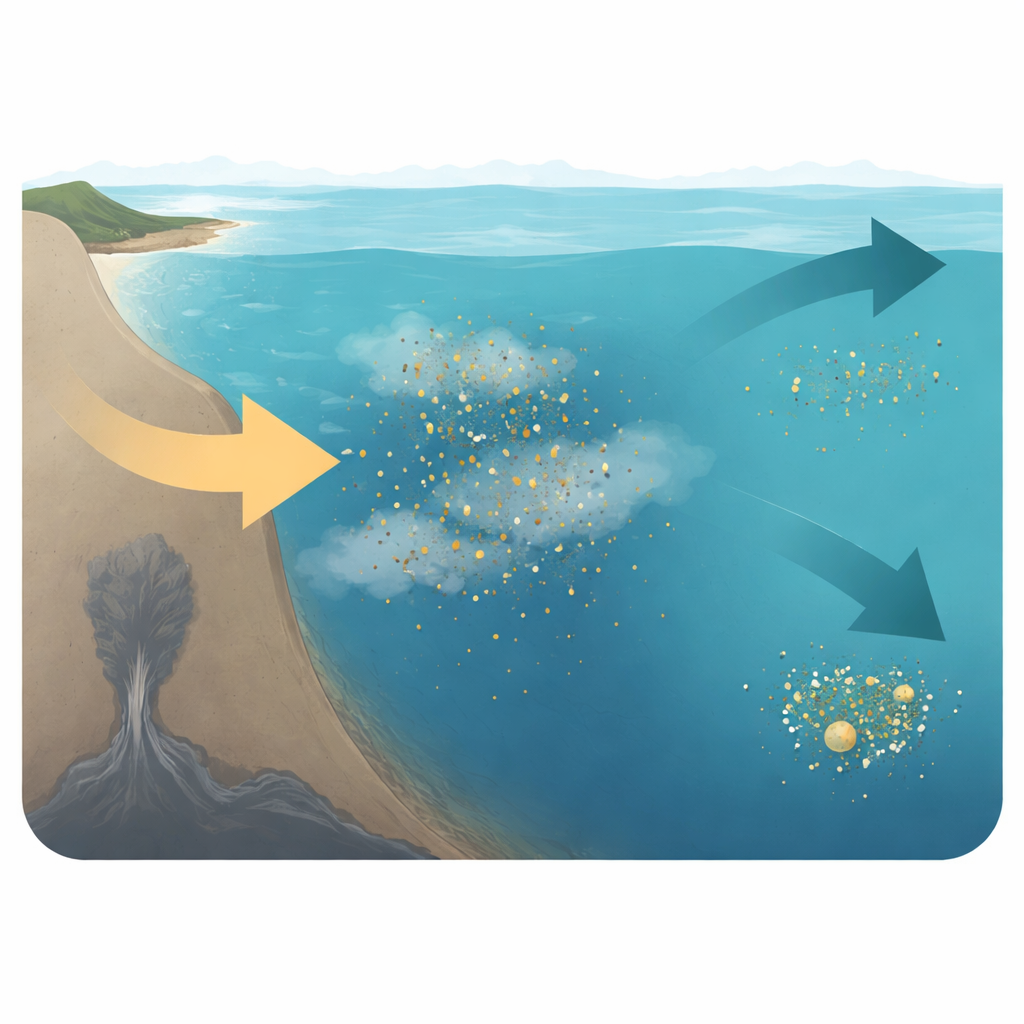
The puzzle of missing iron
Iron and nitrogen are the main nutrients that limit the growth of microscopic plants in the sea. While nitrogen is largely cycled by living organisms, iron’s fate is strongly shaped by chemistry. In oxygen-rich seawater, dissolved iron is unstable and tends to form tiny rust-like particles that can sink out of the water column. For decades, researchers have treated many of these chemical processes as black boxes, using simplified ideas like “binding to ligands” or “scavenging onto particles” without fully representing the diversity of organic matter or the changing conditions of temperature and acidity with depth.
A chemical framework for the deep Pacific
The authors focused on waters deeper than 250 meters along a major east–west transect in the South Pacific, an area with little river or dust input and a well-understood circulation. They built a mechanistic model with four main pathways for iron: binding to a complex mixture of dissolved organic molecules, binding to powerful microbial iron-grabbing compounds called siderophores, forming new mineral particles of iron oxy-hydroxide, and attaching reversibly to small bits of particulate organic matter. This framework allowed them to calculate how much iron should be dissolved, how much should be particulate, and how much of the particulate iron remains chemically active rather than locked away.
Organic matter as an iron buffer
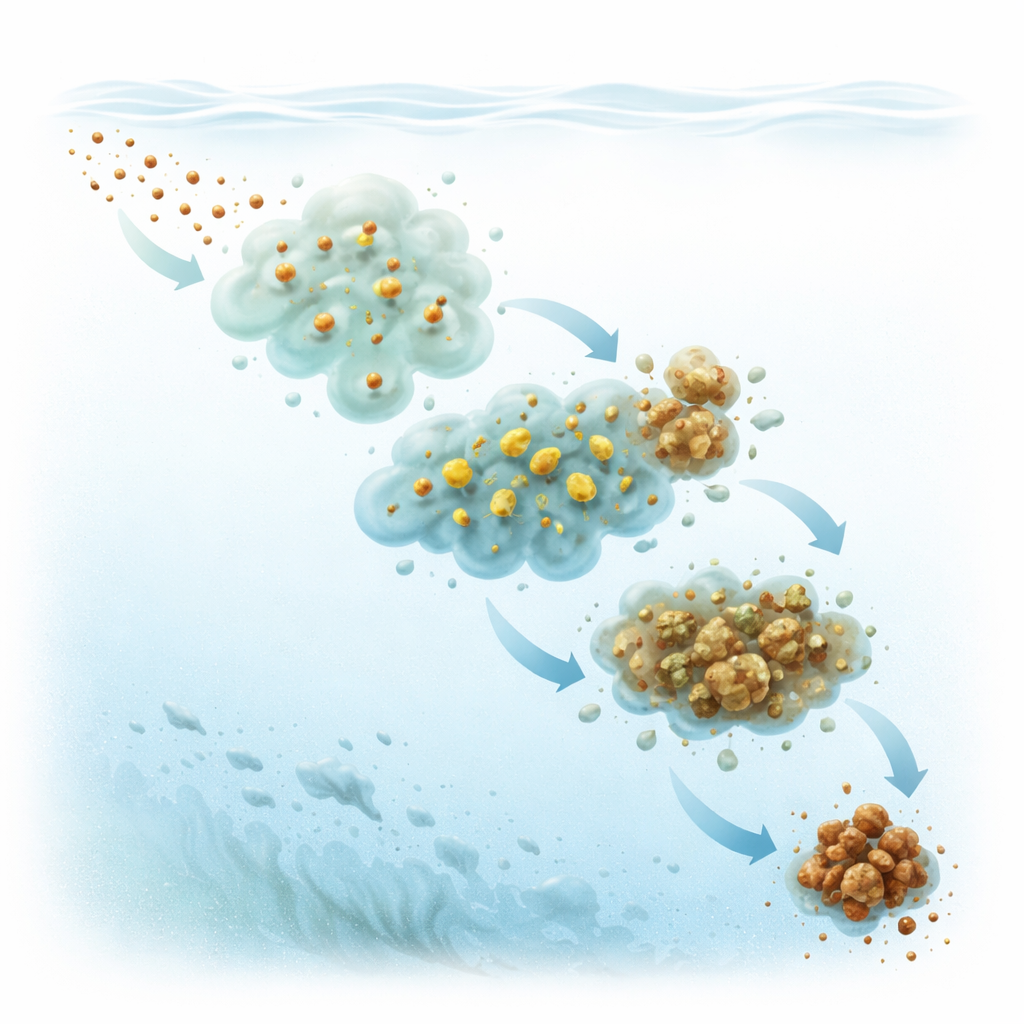
Measurements showed that dissolved and particulate iron were closely linked, and that simple mixing of different water masses could not explain the observed patterns. The model revealed that the varied binding strengths of dissolved organic matter are crucial: some sites hold iron very tightly, others more weakly, and this mix determines how much “free” inorganic iron is available to form minerals. When this free iron exceeds a certain level, it becomes supersaturated and new iron minerals precipitate, especially near strong sources such as hydrothermal vents, underwater volcanoes, and continental margins. At the same time, small particles of organic matter act as an additional buffer, soaking up iron across the deep ocean and helping to maintain a low but persistent pool of labile particulate iron.
When equilibrium breaks down
Across much of the South Pacific interior, the model’s predictions of dissolved and particulate iron matched observations, suggesting that iron there is close to chemical equilibrium with organic matter and newly formed minerals. Where the model and measurements disagreed—near vents, margins, and the seafloor—other processes appear to dominate. In these regions, iron-bearing mineral particles from the seafloor seem to be so old and stable that they barely dissolve, while freshly supplied reduced iron from sediments or hot vents may not yet have had time to fully convert into mineral form. These kinetic delays and inert mineral inputs create local pockets where iron behaves differently from the equilibrium picture.
What this means for ocean life and climate
By treating organic matter as a chemically diverse set of iron-binding sites, and by explicitly including reversible exchange between dissolved iron, organic particles, and new mineral phases, the study shows that most dissolved iron loss in the deep South Pacific is driven by the gradual formation and sinking of authigenic iron minerals. Particulate organic matter, in turn, serves as a widespread carrier that shuttles iron between dissolved and particulate pools, helping to stabilize iron levels far from its sources. For non-specialists, the key message is that the ocean’s ability to feed plankton and store carbon depends not only on where iron comes from, but also on a web of subtle, temperature- and pH-sensitive chemical interactions with organic matter and minerals—interactions that must be captured realistically to predict how marine ecosystems will respond to a changing climate.
Citation: Gledhill, M., Gosnell, K., Humphreys, M.P. et al. Chemical controls on iron distributions across the subsurface South Pacific Ocean. Nat Commun 17, 3533 (2026). https://doi.org/10.1038/s41467-026-72070-y
Keywords: ocean iron cycling, South Pacific Ocean, dissolved organic matter, hydrothermal vents, marine biogeochemistry