Clear Sky Science · en
Genetic determinants of fatigue up to 2 years after radiotherapy in prostate cancer patients
Why Tiredness After Cancer Treatment Matters
Many men treated for prostate cancer find that the greatest burden isn’t the treatment itself, but the lingering exhaustion that can shadow them for years. This long-lasting tiredness, known as cancer-related fatigue, can sap energy, cloud thinking, and diminish enjoyment of everyday life. The study reported here asks a simple but powerful question: are some men genetically more likely to feel wiped out after radiotherapy, and could that knowledge one day help doctors prevent or ease this hidden side effect?
A Closer Look at Tiredness in Prostate Cancer
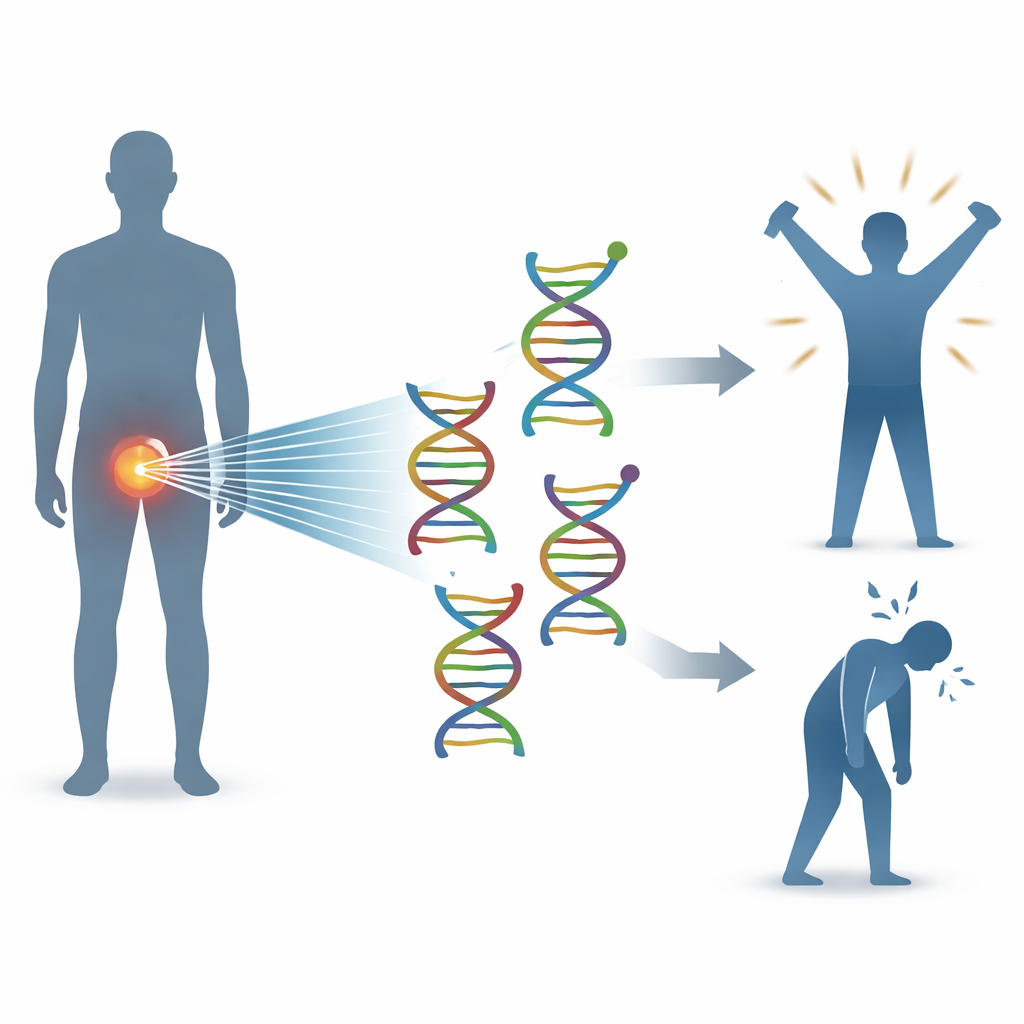
Fatigue is one of the most common complaints among people with cancer, and prostate cancer is no exception. Even when the disease is caught early and treated successfully, a sizeable share of patients report low energy, poor concentration, and reduced motivation long after therapy ends. While age, hormone treatments, and depression are known to play a role, these factors do not fully explain why some men bounce back while others struggle. The researchers suspected that inherited differences in DNA might influence how a man’s body responds to radiation and, in turn, how likely he is to develop long-term fatigue.
Following Men Through Treatment and Recovery
The team drew on the REQUITE study, an international project that tracks patients undergoing radiotherapy. They focused on 1,381 men with non-metastatic prostate cancer treated with external beam radiotherapy in seven European countries and the United States. Over the two years after treatment, the men regularly filled out detailed questionnaires about their fatigue, capturing different aspects: general tiredness, physical exhaustion, mental weariness, reduced activity, and low motivation. At the same time, the researchers analysed hundreds of thousands of genetic markers across each man’s genome, searching for variations that were more common in those who developed clinically important fatigue.
Spotlight on a Genetic Region Linked to Fatigue
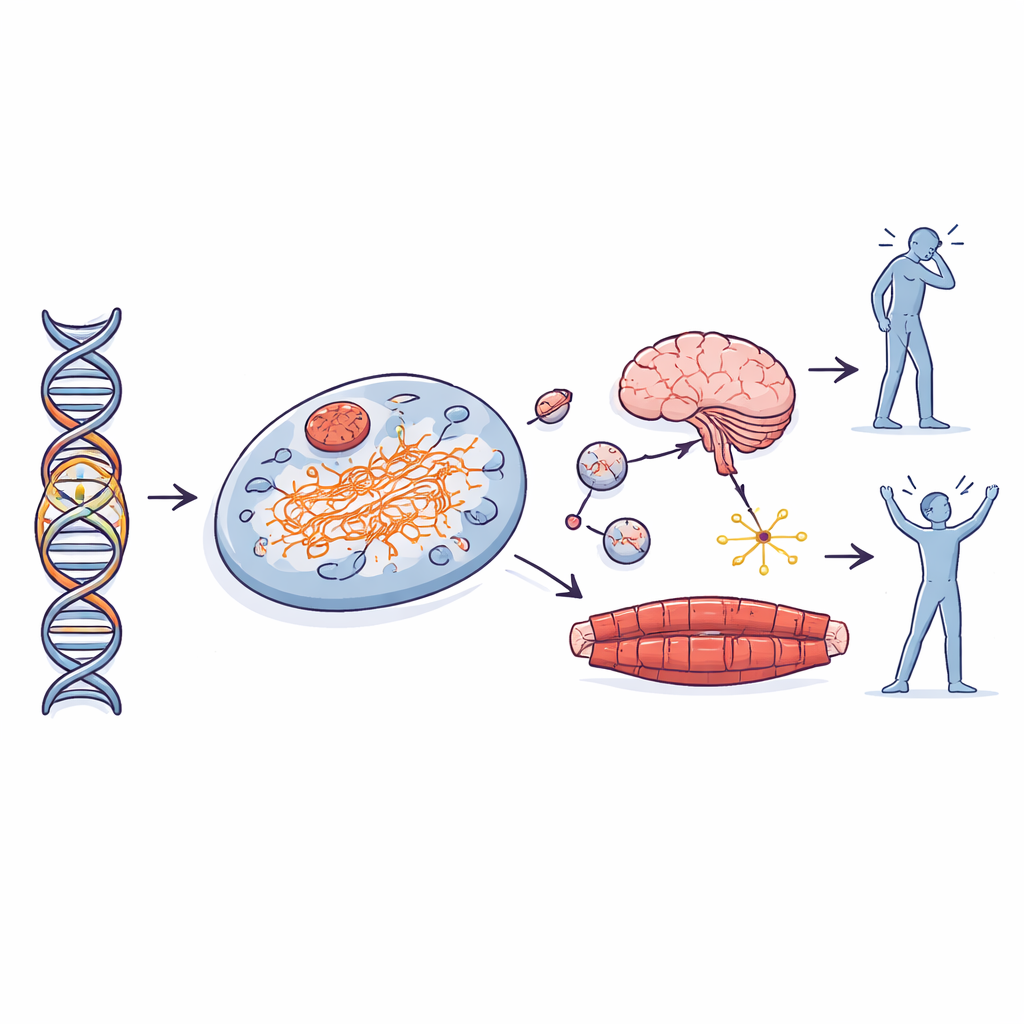
When the scientists compared DNA and symptoms, one genetic signal stood out. Among 643 men who were not physically fatigued before radiotherapy, a specific genetic variant on chromosome 2 was strongly linked to the development of long-term physical fatigue. Men carrying this variant were estimated to have about three times the odds of becoming persistently tired after treatment compared to non-carriers. This variant sits in a region of DNA near genes called ACTR3 and CBWD2. ACTR3 helps build and remodel the internal scaffolding of cells, a structure that is crucial for cell movement and communication. Subtle differences in how this system works might influence how muscles, the immune system, and the brain respond to the stress of cancer and its treatment.
Connections to Chronic Fatigue and the Body’s Wiring
The investigators then asked whether this same DNA region is also involved in other fatigue-related conditions. Using large public genetic databases, they found that the locus near ACTR3 showed a notable genetic overlap with myalgic encephalomyelitis/chronic fatigue syndrome, a long-debated illness marked by severe, lasting exhaustion. Laboratory data suggested that nearby DNA changes may affect activity in brain and muscle tissues and in tiny membrane bubbles released by cells, which can carry proteins related to the cell’s internal skeleton. Though the study did not find strong, statistically firm shifts in ACTR3 or CBWD2 gene activity in blood cells, the hints of altered expression and the links to known fatigue biology point toward a shared underlying mechanism.
What This Means for Patients Today
The work also showed that fatigue is a complex, multi-layered trait: different kinds of tiredness—physical, mental, and motivational—each appear to have their own partial genetic contributions. Overall, common genetic variants together seemed to explain a modest but real portion of who becomes fatigued after radiotherapy. At the same time, the authors stress that their sample size was still relatively small for genetic studies, and that rarer DNA changes and non-genetic influences like sleep, pain, or anxiety were not fully captured. As a result, the findings, while promising, need to be confirmed in larger and more diverse groups of patients.
Looking Ahead to More Personalised Support
For now, this research will not change routine prostate cancer care overnight, but it offers a hopeful glimpse of what might be possible. If the ACTR3 region and related pathways are confirmed in future studies, they could help doctors identify men at higher risk for long-term fatigue before treatment begins. That, in turn, could guide closer follow-up, tailored rehabilitation, or even medicines targeting the biological wiring of fatigue. Most importantly, the study reinforces that post-treatment exhaustion is not simply “in a patient’s head” or a sign of weakness; it is a real, biologically grounded consequence of cancer and its therapy—one that science is beginning to understand well enough to tackle.
Citation: Heumann, P., Aguado-Barrera, M.E., Jandu, H.K. et al. Genetic determinants of fatigue up to 2 years after radiotherapy in prostate cancer patients. Nat Commun 17, 3703 (2026). https://doi.org/10.1038/s41467-026-72041-3
Keywords: prostate cancer fatigue, radiotherapy side effects, genetic risk factors, ACTR3 gene, cancer survivorship