Clear Sky Science · en
Freeze-thaw-driven soil moisture return significantly contributes to spring phenology on the warming Qinghai-Tibet Plateau
Why spring comes earlier on Asia’s high plateau
Across the vast grasslands of the Qinghai–Tibet Plateau, spring green-up has been arriving earlier in recent decades. Earlier leaf-out matters because it boosts plant growth, draws more carbon dioxide out of the air, and alters how water moves from land to atmosphere. This study reveals that an overlooked player – water squeezed and shuffled through the ground as it freezes and thaws – is a major reason why plants on this “Third Pole” of the world are waking up sooner each year.
Hidden water engine beneath frozen ground
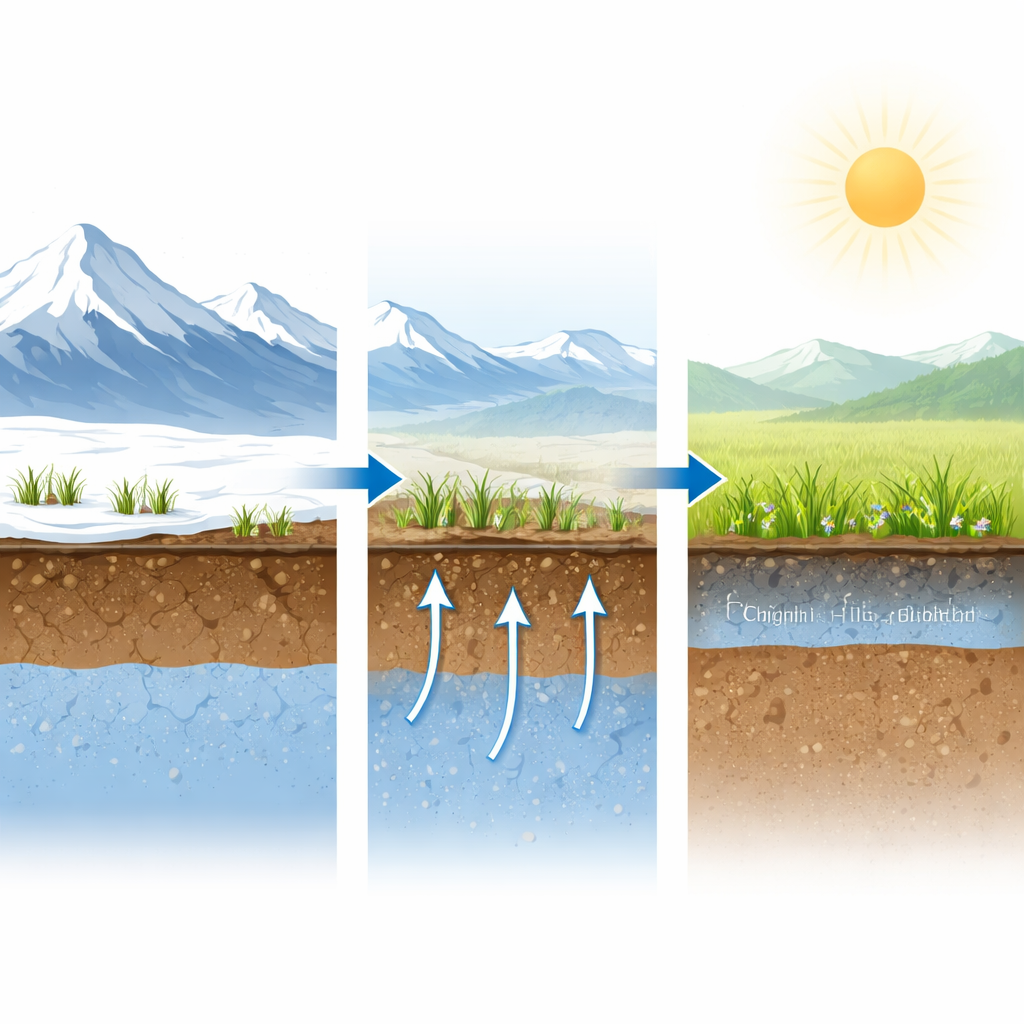
In cold seasons, the uppermost soil on the Plateau repeatedly freezes and thaws. As the freezing front moves downward, it pulls liquid water upward, concentrating moisture in the root zone before everything locks into ice. When spring warmth arrives, that ice melts first in the top layer, suddenly supplying plant roots with a surge of liquid water. The authors call the moisture that returns to the upper soil in this way “soil moisture return.” Using data from 32 sites collected between 2003 and 2024, they distinguished this freeze–thaw-driven water from ordinary spring rainfall to see how each influences the timing of the growing season’s start, or “spring green-up.”
Measuring how much water really matters
To separate the effects of these different water sources, the team built a new framework that tracks how soil moisture overcomes plant water stress. They used energy–water balance ideas to define a critical soil moisture level below which plants are limited mainly by lack of water, and above which they are limited mainly by available sunlight and warmth. By comparing real spring moisture curves with a reference curve that represents how soil would dry out without new inputs, they could estimate how much of the spring moisture boost came from the freeze–thaw process versus from rainfall. They then linked these measures to satellite-based and ground-based records of when vegetation first greens up each year.
Freeze–thaw water beats rainfall and warmth
Across the Plateau, the freeze–thaw-driven water emerged as the single strongest driver advancing the start of the growing season. On average, it explained about one-fifth of the observed shift toward earlier spring, more than spring air temperature and more than the direct effect of spring precipitation. Sites with thick “active layers” – the seasonal thawed zone above permafrost that can exceed two meters – showed especially strong sensitivity: where this layer was deeper than about 2.2 meters, the influence of surface soil moisture on freeze–thaw water increased by roughly one-third. At the same time, the study found that the benefit of added water has limits. When soils became too wet, plants likely faced oxygen shortages and nutrient loss, causing the advance of spring green-up to slow or even reverse.
Changing ground, changing carbon balance
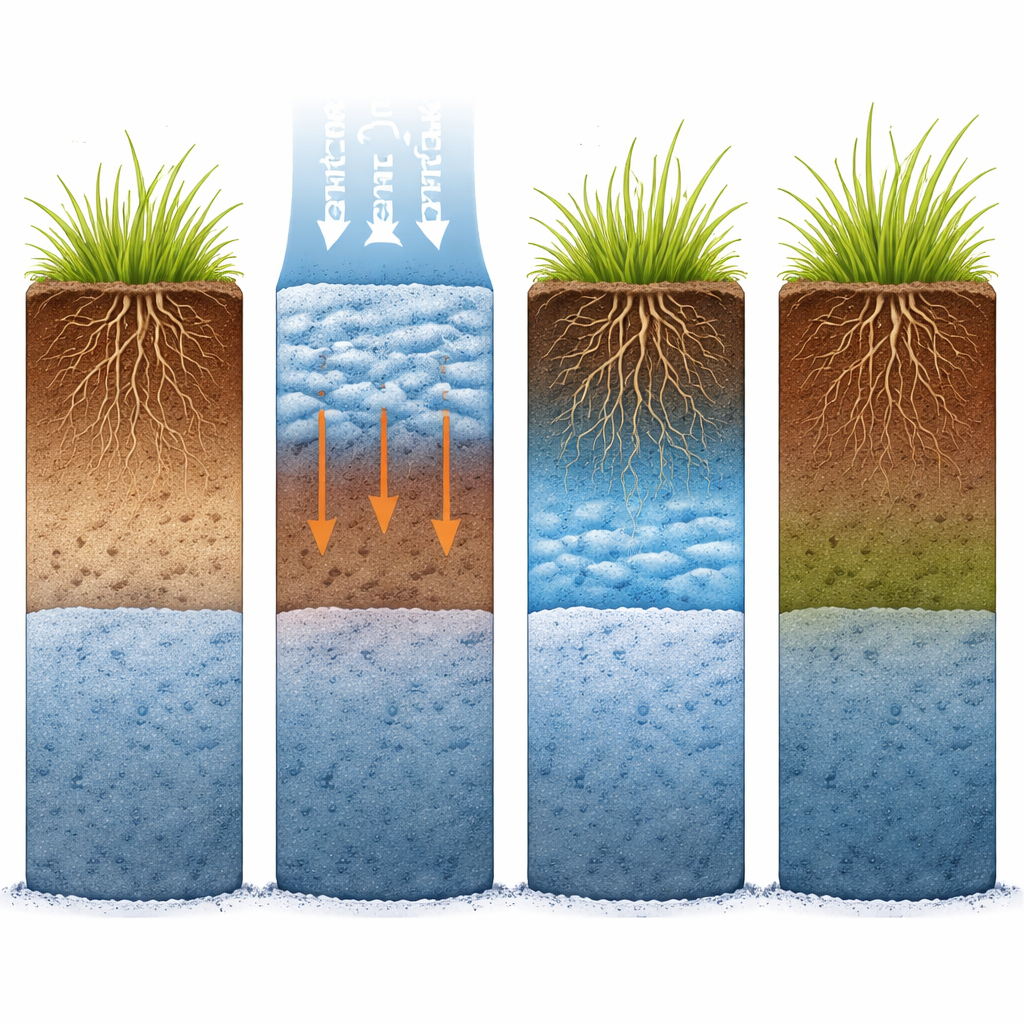
As permafrost thaws, the active layer deepens and the way water moves through the soil column changes. Initially, meltwater from deeper ice can replenish mid-depth soils and help feed the upper layers during freeze–thaw cycles. Beyond the 2.2 meter threshold, however, deeper channels and altered soil structure let more water leak sideways or downward instead of returning to the surface. The study shows that, even as this happens, freeze–thaw water still remains a key trigger for earlier green-up, while spring rain becomes more important in thicker active-layer regions. Earlier green-up, in turn, is tightly linked to stronger spring carbon uptake: at most sites, years with earlier spring were years when the land absorbed more carbon from the atmosphere.
What this means for the future of the "Asian Water Tower"
The results highlight that the Plateau’s spring ecosystem behavior is not controlled by temperature alone. A natural “self-regulating” water mechanism in the soil – driven by freeze–thaw – currently helps plants start growing earlier and absorb more carbon each year. But ongoing warming and permafrost degradation may gradually weaken this mechanism by changing how much water reaches the root zone in spring. That shift could ripple through regional water supplies and carbon balance across Asia. Protecting soil stability and incorporating these freeze–thaw water dynamics into climate and Earth system models will be crucial for anticipating future changes in both ecosystem health and downstream water security.
Citation: Zhao, H., Sun, S., Song, C. et al. Freeze-thaw-driven soil moisture return significantly contributes to spring phenology on the warming Qinghai-Tibet Plateau. Nat Commun 17, 3981 (2026). https://doi.org/10.1038/s41467-026-71956-1
Keywords: spring phenology, soil freeze–thaw, Qinghai–Tibet Plateau, permafrost, carbon uptake