Clear Sky Science · en
PEX11 mediates intralumenal vesicle formation in peroxisomes
How Tiny Cell Compartments Help Young Plants Tap Their Fat Reserves
When a plant seed wakes up, it runs on stored fat before it can make its own food from sunlight. This study looks inside tiny cell compartments called peroxisomes in the model plant Arabidopsis to see how they reshape themselves to burn those fats efficiently. The researchers uncover a hidden inner-membrane system built by a protein family called PEX11 and show that without these proteins, plants are born with plenty of peroxisomes but still struggle to grow and survive.
Little Factories with Hidden Rooms
Peroxisomes are microscopic “factories” that help cells break down fatty molecules and manage reactive chemicals. In seeds, they are central to turning stored oils into usable energy. Earlier work suggested that PEX11 proteins mainly help peroxisomes divide, like slicing one bubble into two. This team discovered that Arabidopsis actually carries five versions of PEX11 and set out to understand what each one does. By using fluorescent tags on the peroxisome surface and interior, they were able to watch these organelles live in young seedlings and to visualize not only their outer shape but also their internal architecture.
Building Inner Vesicles to Handle Fat
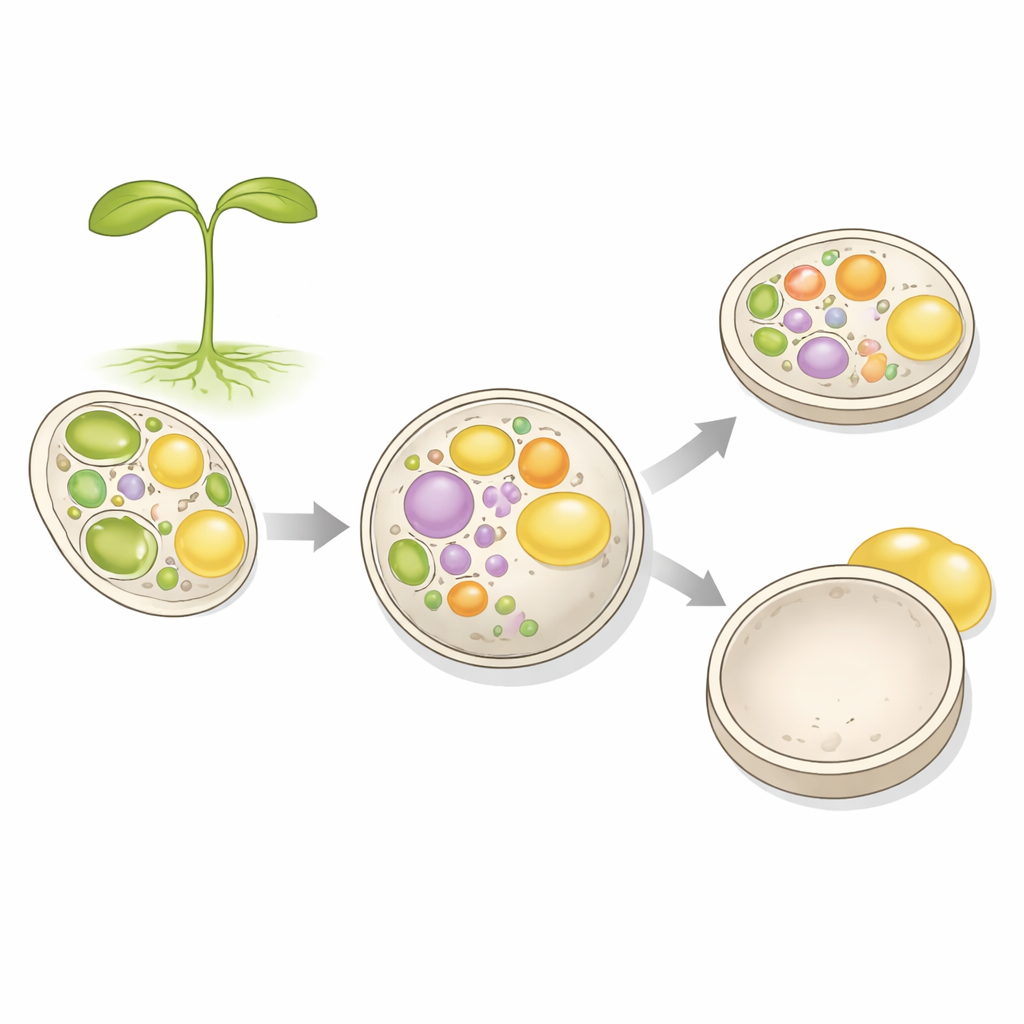
The authors focused on tiny bubbles that form inside peroxisomes, known as intralumenal vesicles—little “rooms within rooms.” Using CRISPR to delete different combinations of PEX11 genes, they found that two subfamilies, called PEX11A/B and PEX11C/D/E, both help create these inner vesicles and keep peroxisomes from ballooning in size. When either subfamily was missing, peroxisomes in seed leaves swelled dramatically, sometimes more than six times their normal diameter, and their interiors became strikingly empty of vesicles. In the most extreme mutants, peroxisomes could grow so large that they distorted the shapes of neighboring cells. Yet, surprisingly, overall peroxisome numbers stayed normal or even increased, showing that PEX11’s role goes far beyond simple division.
Different Jobs at Different Stages of Plant Life
Although both PEX11 branches sculpt peroxisomes, they do so in different contexts. PEX11A/B mainly acts during the brief but intense period when seedlings tap stored oils in their seed leaves and young roots. In these mutants, peroxisomes grew huge only when fat breakdown was active and could be kept small if lipid mobilization was blocked chemically or genetically. By contrast, PEX11C/D/E was needed throughout the plant’s life. Plants lacking this branch not only had oversized peroxisomes in many tissues but also showed stunted growth, dependence on added sugar, and poor survival in soil—signs that they were failing to convert seed oils and certain hormone precursors efficiently.
When Shape Affects Fuel Use
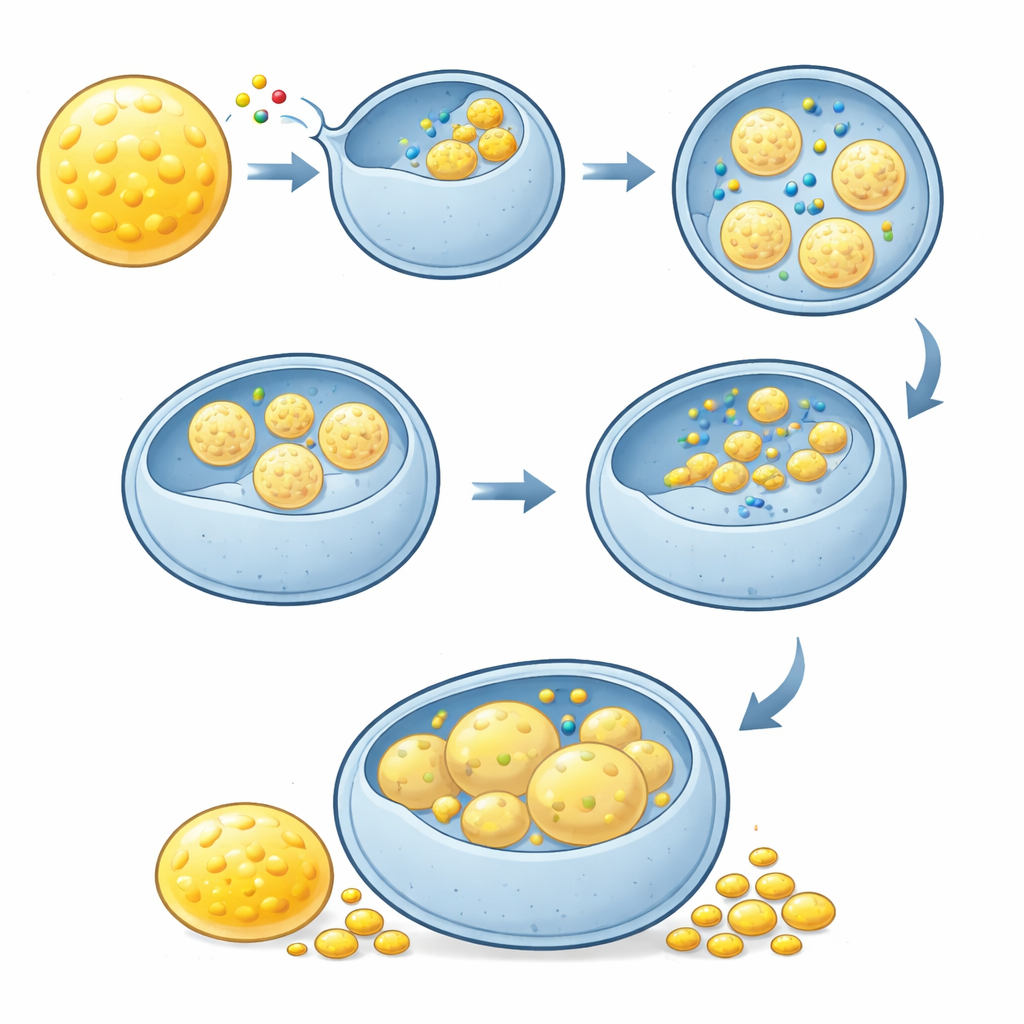
The team connected peroxisome structure directly to fat use. In normal seedlings, lipid droplets shrink over the first week as fats are burned, and a coat protein on these droplets is gradually removed. In mutants missing PEX11C/D/E, droplets lingered, their coat proteins remained, and the seedlings retained unusually high levels of triacylglycerols, the main storage fats. These plants were also less responsive to a hormone precursor that must be processed inside peroxisomes, pointing to broader problems with importing and handling cargo. The authors propose that inner vesicles may help ferry fatty and other membrane-based molecules into the peroxisome interior, making breakdown more efficient; when this system falters, organelles bloat and metabolism slows.
Why These Findings Matter Beyond One Small Plant
By removing all five PEX11 genes at once, the researchers created seedlings that still formed abundant peroxisomes but died soon after germination, with giant organelles nearly devoid of internal vesicles. This lethal outcome shows that properly shaped peroxisomes—and especially their inner membrane system—are essential for plant life. Because many animals, including humans, also carry multiple PEX11 versions and suffer disease when peroxisomes malfunction, the work in Arabidopsis offers a window into a shared cellular strategy: using internal membrane bubbles to manage fatty fuels and other challenging molecules safely. Understanding how PEX11 builds these hidden rooms may ultimately help explain certain human metabolic disorders and inspire new ways to tune energy use in crops.
Citation: Tharp, N.E., An, C., Hwang, J. et al. PEX11 mediates intralumenal vesicle formation in peroxisomes. Nat Commun 17, 3538 (2026). https://doi.org/10.1038/s41467-026-71873-3
Keywords: peroxisomes, lipid metabolism, Arabidopsis, organelle dynamics, PEX11