Clear Sky Science · en
Endothelial-erythrocyte glycocalyx exchange enables liquid biopsies of endothelial function
Reading the health of blood vessels from a simple blood draw
Many serious diseases quietly damage the inner lining of our blood vessels long before symptoms appear. This study asks a simple but powerful question: can an ordinary blood sample reveal what is happening on that hidden surface, giving doctors an easy way to spot early blood vessel injury and track how treatments are working?
A sugar-rich coat that protects our blood vessels
Every blood vessel is lined with a delicate, gel-like coating of sugars and proteins called the glycocalyx. This slippery layer helps keep the vessel wall tight, stops unwanted leaks of proteins like albumin, and controls how immune cells move in and out of tissues. When this layer is thinned or damaged, it is linked to diabetes, kidney disease, sepsis, COVID-19 and other conditions. Measuring this damage directly in people is difficult, because the layer is tiny and sits inside vessels that are hard to reach.
Red blood cells carry a matching surface coat
The researchers noticed that red blood cells also have their own sugar-rich surface coat. Using powerful microscopes on animal and human tissues, they found that the thickness of this red cell coating closely tracks the thickness of the vessel lining nearby. 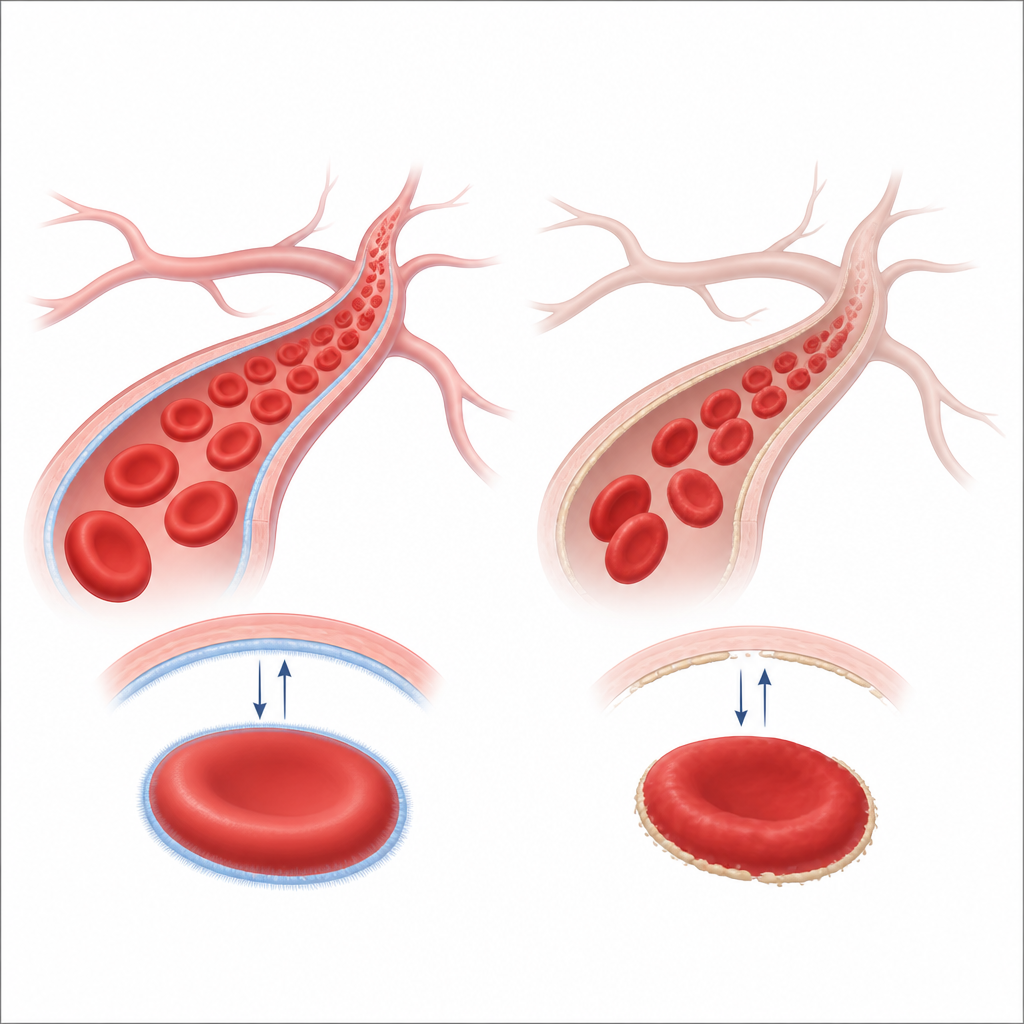
Blood tests that mirror vessel damage in health and disease
In rats with diabetes, the thickness of the red cell coating from simple blood samples strongly matched the thickness of the vessel lining in the heart and kidney, and predicted how “leaky” the kidney filter was in sensitive lab tests. When diabetic rats were treated with a drug known to protect the vessel lining, the red cell coating partly recovered, and this improvement could be followed over time with repeat blood tests. In human kidney biopsies, patients with a kidney condition that severely damages vessels had thinner coatings on both their vessel walls and their trapped red cells than comparison patients. In pregnant women, red cell measurements from a peripheral vein tracked an established bedside imaging measure of vessel lining health taken under the tongue.
How vessel walls and red cells share their surface sugars
To understand why the two coatings match so closely, the team used cell culture systems. They first stripped sugars from the red cell surface with enzymes, then let the damaged cells flow over healthy vessel cells in a dish. The red cell coating gradually regrew, but only when red cells physically touched living vessel cells, not when they were bathed in the same fluid. 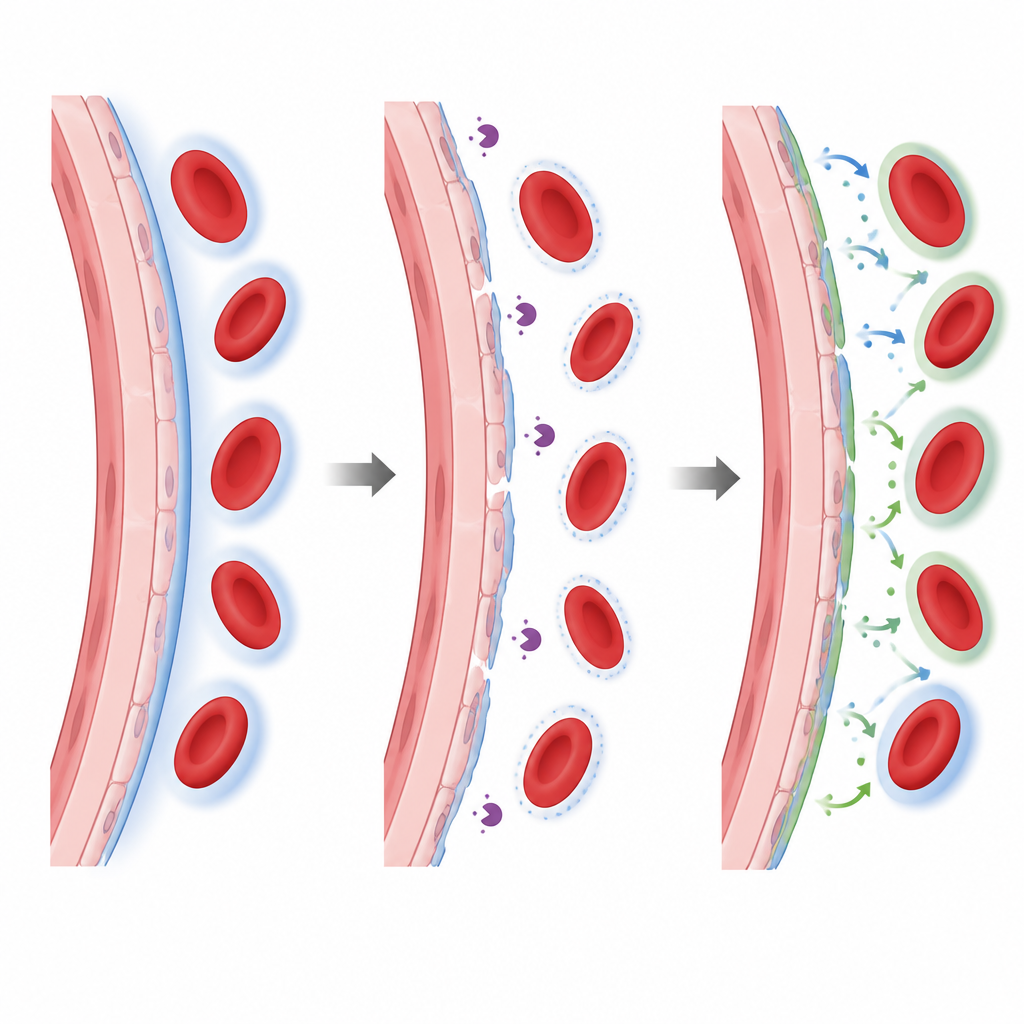
From complex chemistry to a practical liquid biopsy
These findings suggest that red blood cells and vessel walls are in constant conversation, swapping bits of their sugar coats as blood circulates. Because of this exchange, the red cell surface becomes a live record of blood vessel health across the body. The authors show that this record can be read from a routine blood sample using microscopy and image analysis. In the long term, such a "liquid biopsy" could help doctors detect early vessel injury in conditions like diabetes, sepsis or COVID-19, monitor how well treatments protect the fragile inner lining of vessels, and better understand how this tiny sugar-rich layer shapes our risk of organ damage.
Citation: Butler, M.J., Ramnath, R.R., Crompton, M. et al. Endothelial-erythrocyte glycocalyx exchange enables liquid biopsies of endothelial function. Nat Commun 17, 3568 (2026). https://doi.org/10.1038/s41467-026-71848-4
Keywords: endothelial glycocalyx, red blood cells, vascular health, liquid biopsy, diabetes and sepsis