Clear Sky Science · en
Predicting trajectories of illness using RNA velocity of whole blood
Why tomorrow's health could be hidden in today's blood
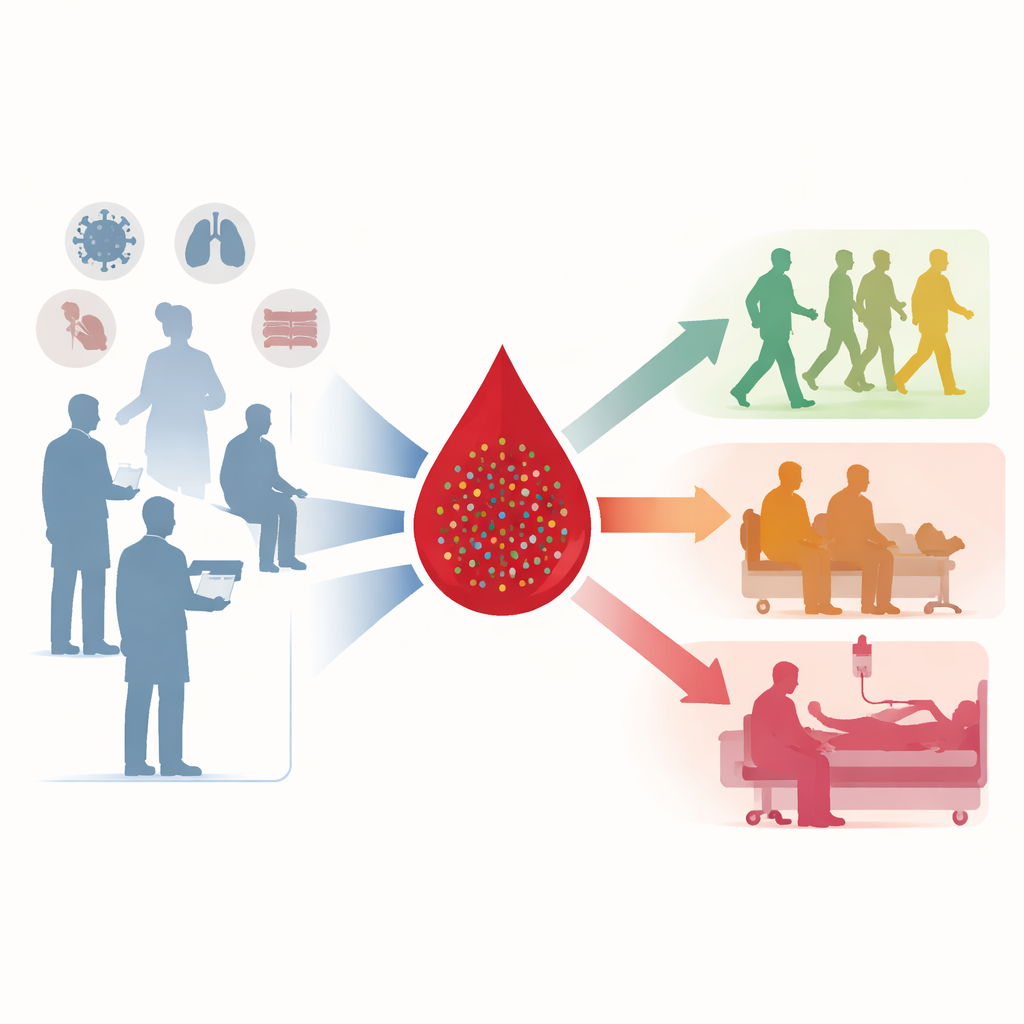
When we fall ill, doctors mostly judge how we are doing right now: our temperature, blood pressure, and lab tests taken at that moment. But what if a single blood sample could also reveal where our illness is heading in the next few days or weeks—whether we are about to get much sicker, recover quickly, or respond to a new treatment? This study introduces a way to read that "direction of travel" from our blood, using patterns in our genetic activity to forecast future health.
Reading the changing music of our genes
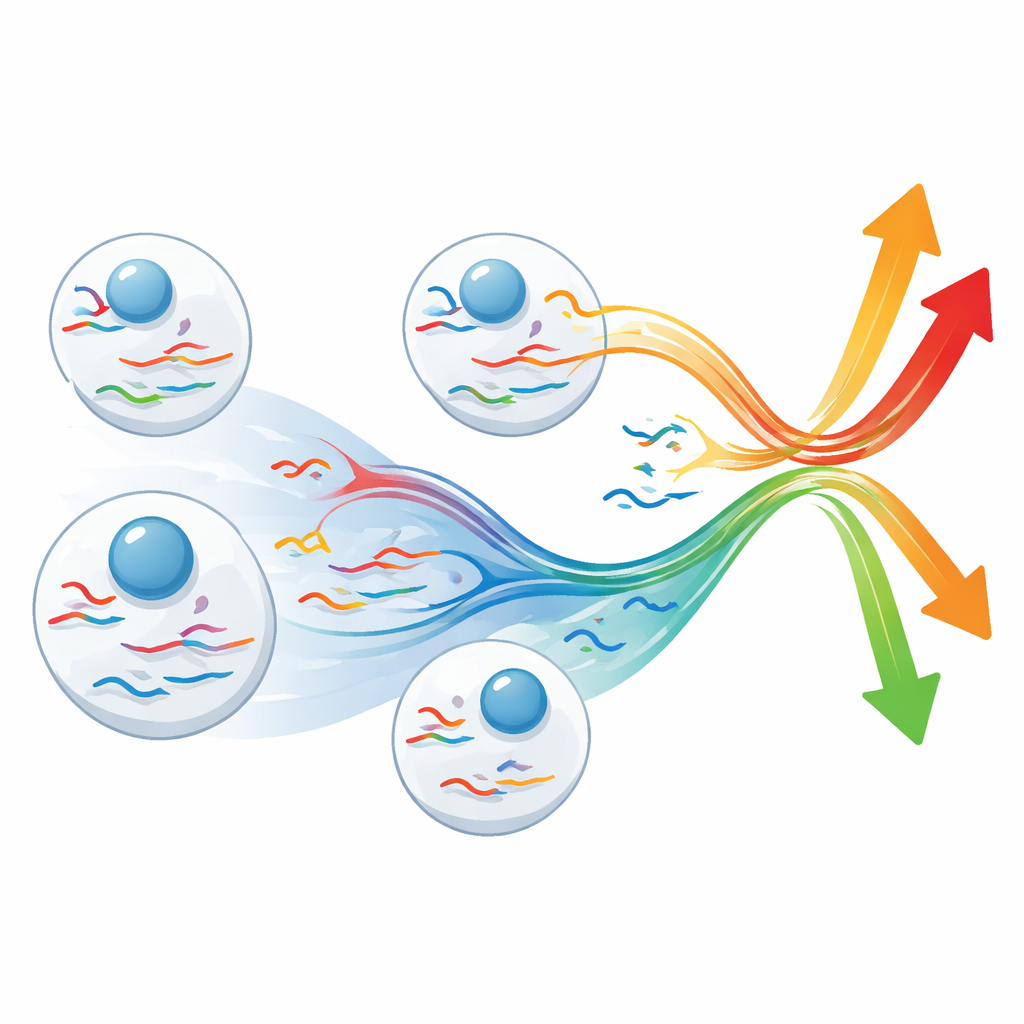
Every cell in our body constantly turns genes on and off, producing RNA molecules that act as working copies of our DNA. Traditional tests measure the steady levels of these RNA messages, giving a snapshot of the body’s current state. The researchers build on a newer idea called RNA velocity, which looks not just at mature RNA messages but also their unfinished, "unspliced" forms. Comparing the two tells us whether a gene’s activity is rising or falling—more like watching the direction of a moving car than just seeing where it is parked. The team asked whether this principle, originally developed for single cells, could be scaled up to whole blood samples from patients to predict how their illness would evolve.
A new tool to forecast illness from a single sample
The authors created a method they call VeloCD, which uses RNA velocity in bulk blood samples. It rests on simple ideas: current RNA patterns in blood reflect how sick someone is now; the balance of unspliced and spliced RNA indicates how those patterns are about to change; and those future patterns, in turn, match future clinical states. VeloCD works by learning from groups of people whose outcomes are already known—such as those who did or did not become infected, or who did or did not respond to treatment. For a new patient, the tool calculates how their blood RNA patterns are likely to shift and then estimates the probability that they will move toward each of these known outcome groups, effectively mapping their probable disease trajectory.
Testing the method in real infections and treatments
To see if VeloCD’s predictions made sense, the researchers first used highly controlled infection studies where healthy volunteers were deliberately exposed to influenza A or SARS-CoV-2 and then followed closely. Even though blood was sampled only once for prediction, VeloCD could anticipate who would later test positive for infection and roughly how far ahead, sometimes even before the virus was detectable by standard PCR tests. The approach also worked in more real-world settings. In people with HIV and tuberculosis, VeloCD helped predict who would go on to develop a dangerous complication called immune reconstitution inflammatory syndrome after starting HIV treatment. Among patients with inflammatory bowel disease receiving a powerful anti-inflammatory drug, early blood samples after the first dose hinted at whether they would be in remission weeks later.
Spotting children most at risk in busy hospitals
Perhaps the most striking test of VeloCD came from a large study of febrile children arriving at hospitals across Europe, with illnesses ranging from mild viral infections to life-threatening bacterial disease. Doctors often struggle to judge which children will deteriorate and which will quickly recover. Using each child’s first blood sample, VeloCD separated those with mild illness from those already critically ill and then examined the large group in the middle who were sick enough to be admitted but not to intensive care. Within this moderate group, children whose blood RNA trajectories pointed toward the severe pattern were more likely to have high inflammation markers, need surgery, stay longer in hospital, or later require intensive care—signals that are not easily seen from routine signs and symptoms alone.
What this could mean for patients and doctors
Overall, the study shows that the direction in which our blood’s gene activity is moving can provide early warning of how disease will unfold. VeloCD does not replace diagnosis of the cause of illness, but it offers an additional layer: prognosis from a single blood draw. With further refinement and larger validation studies, this kind of RNA-based forecasting could help identify exposed people who are silently infected, flag patients at highest risk of getting worse, and reveal early whether a costly treatment is likely to work. In the long run, reading RNA velocity from blood could support more tailored care, helping clinicians intervene sooner for those heading toward danger and avoid unnecessary treatment for those already on the road to recovery.
Citation: Dunican, C., Wilson, C., Habgood-Coote, D. et al. Predicting trajectories of illness using RNA velocity of whole blood. Nat Commun 17, 3652 (2026). https://doi.org/10.1038/s41467-026-71685-5
Keywords: RNA velocity, blood transcriptome, disease prognosis, infectious disease, precision medicine