Clear Sky Science · en
Temporal predictions shape somatosensory perception
Why waiting for pain feels so hard
Most people would rather get a painful event over with than wait for it. Think of choosing an earlier dentist appointment just to stop dreading it. This study asks a simple but important question: when pain feels worse after a wait, is it because of the actual time we spend waiting, or because of what we expect about that wait? By carefully separating real delays from expected delays, the researchers show that our brains use timing predictions to dial up how intense heat and cold feel on the skin.
Setting up controlled moments of dread
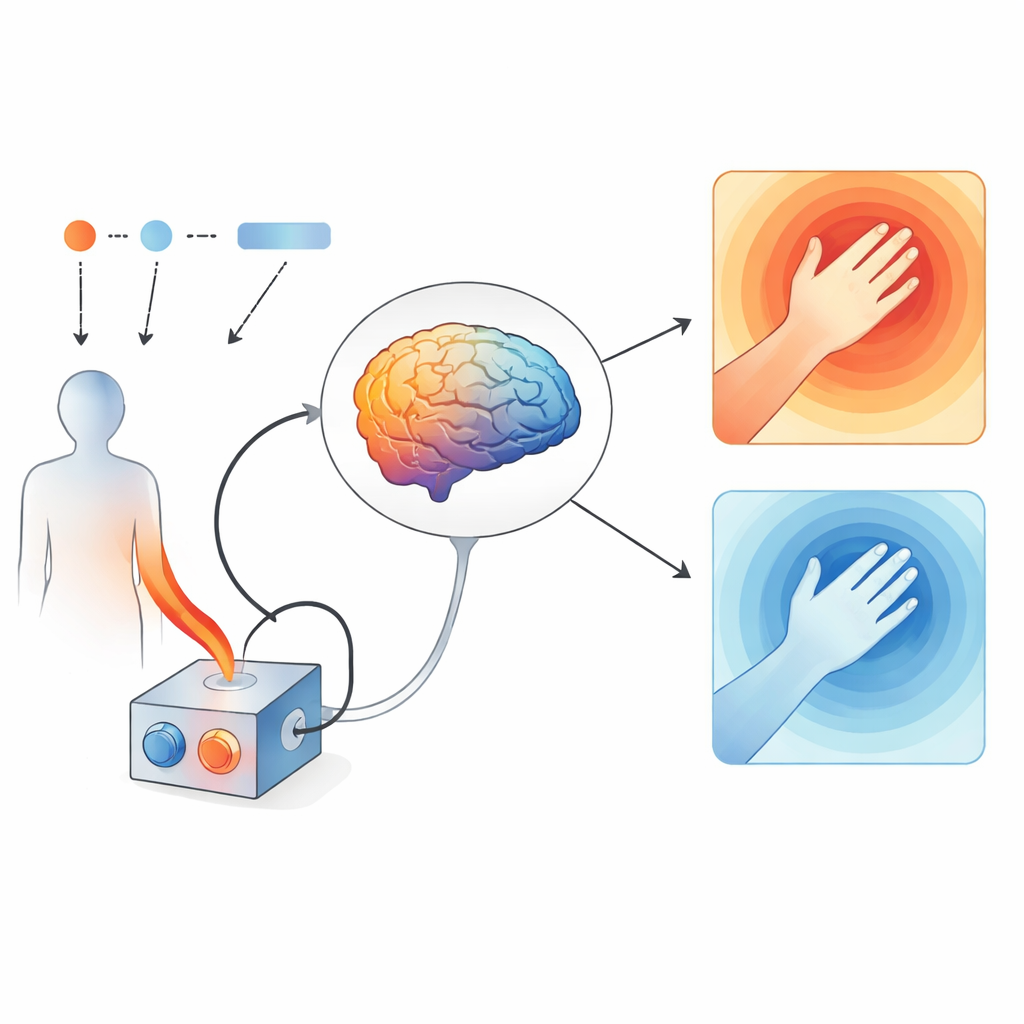
To probe this, volunteers received brief heat and cold stimuli on the forearm while their brain activity was recorded with electroencephalography (EEG). The heat was clearly painful, while the cold was clearly non-painful but noticeable. Each trial began with a cue telling participants whether to expect heat or cold. A second cue then signaled, only probabilistically, whether the stimulus would arrive right away, after a short delay, or after a longer delay. Crucially, these timing cues were not always correct, allowing the researchers to tease apart what people expected from what actually happened. After each stimulus, participants rated how intense it felt on a simple scale.
Expecting a longer wait makes sensations stronger
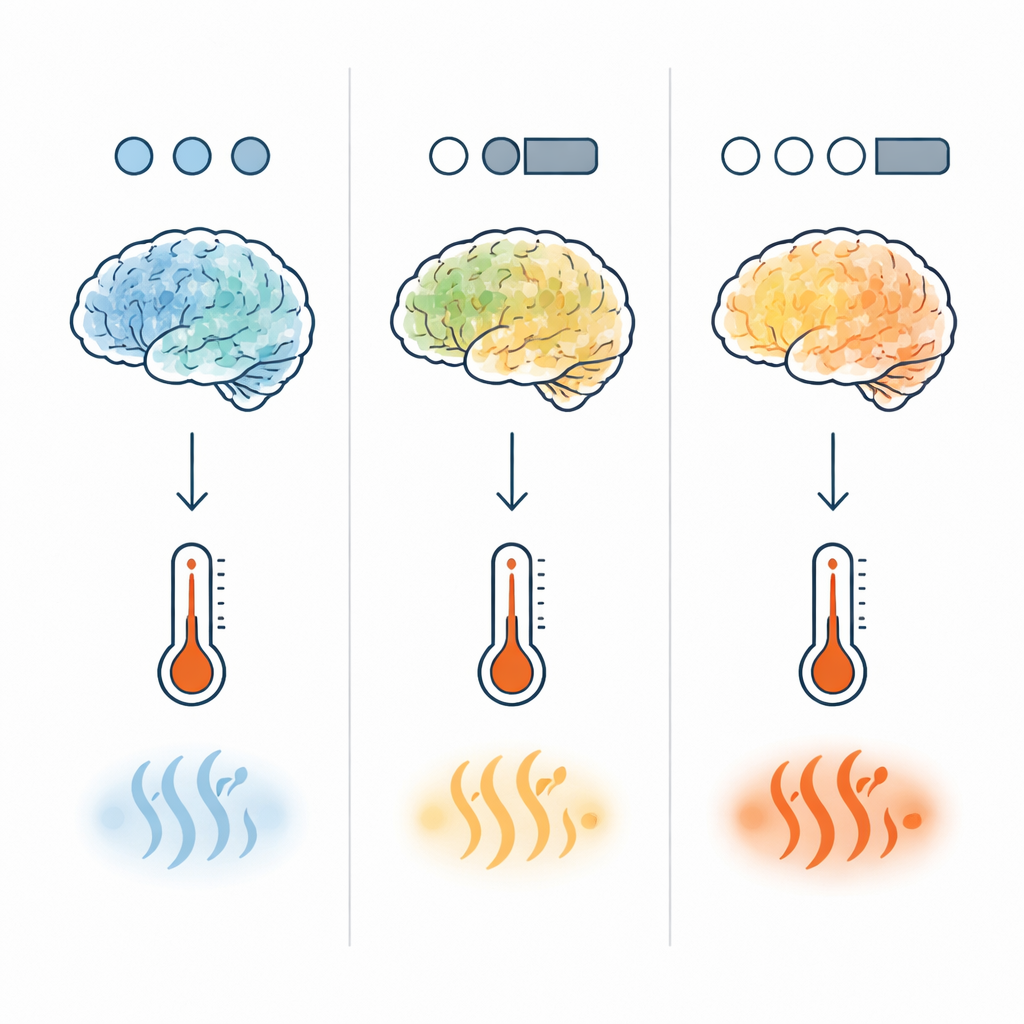
The ratings revealed a clear pattern. When people expected a longer delay before the stimulus, they reported both the painful heat and the non-painful cold as more intense. But the real delay—the actual time between the cue and the stimulus—did not change how strong the sensations felt. Nor did mismatches between expected and actual timing, the so-called prediction errors, alter the ratings. This means that the classic “dread effect,” where future pain seems worse the further it is in the future, reflects what people think will happen in time, not how long they in fact end up waiting.
What the brain does while you wait
EEG allowed the team to examine how the brain’s rhythms responded to timing expectations and surprises. During the cue that set up the expected delay, activity in the alpha and beta frequency ranges changed differently for upcoming heat and cold: for expected painful heat, longer delays led to increased power in these bands, while for expected cold, the same longer delays led to decreased power. This crossed pattern suggests that the brain is tuning itself in a nuanced, context-dependent way as it prepares for what is coming. Once the heat or cold actually arrived, however, these timing expectations no longer shaped the ongoing brain activity.
How the brain flags timing surprises
Although timing surprises did not change how strong the stimuli felt, the brain still registered them. When a stimulus arrived much earlier or later than expected, EEG showed increased activity in faster beta and gamma frequencies during stimulation. These rhythms are often linked to the processing of unexpected information. Here, they seemed to signal that the timing of events violated the brain’s predictions, even though people’s conscious ratings of intensity stayed the same. Meanwhile, the actual delay between cue and stimulus was represented mainly in alpha and beta bands over the back of the head, indicating that the brain keeps an internal record of real timing as well as of what it expects.
Why this matters for everyday pain
Overall, the study shows that it is our expectations about when a sensation will occur, rather than the delay itself, that makes both pain and non-painful touch feel stronger. The brain sets up these expectations during the cue period and uses them to bias how incoming sensations are perceived, consistent with modern “predictive coding” views of perception. For everyday life, this suggests that managing how we think about the timing of painful events—such as medical procedures—could meaningfully change how intense they feel, even if the procedure itself does not change at all.
Citation: Strube, A., Büchel, C. Temporal predictions shape somatosensory perception. Nat Commun 17, 3476 (2026). https://doi.org/10.1038/s41467-026-71600-y
Keywords: pain expectation, temporal prediction, somatosensory perception, EEG brain rhythms, dread effect