Clear Sky Science · en
Vitamin B12 induces memory of predation through vitellogenin provisioning
When Food Teaches Future Generations
Imagine a meal so powerful that it not only changes your own behavior but also shapes how your grandchildren behave. This study explores exactly that kind of biological "memory" in tiny worms, using a familiar nutrient: vitamin B12. By following how diet alters both body structure and hunting behavior across multiple generations, the authors reveal a surprising way that nutrients can leave long-lasting marks on animals.
A Shape-Shifting Predator
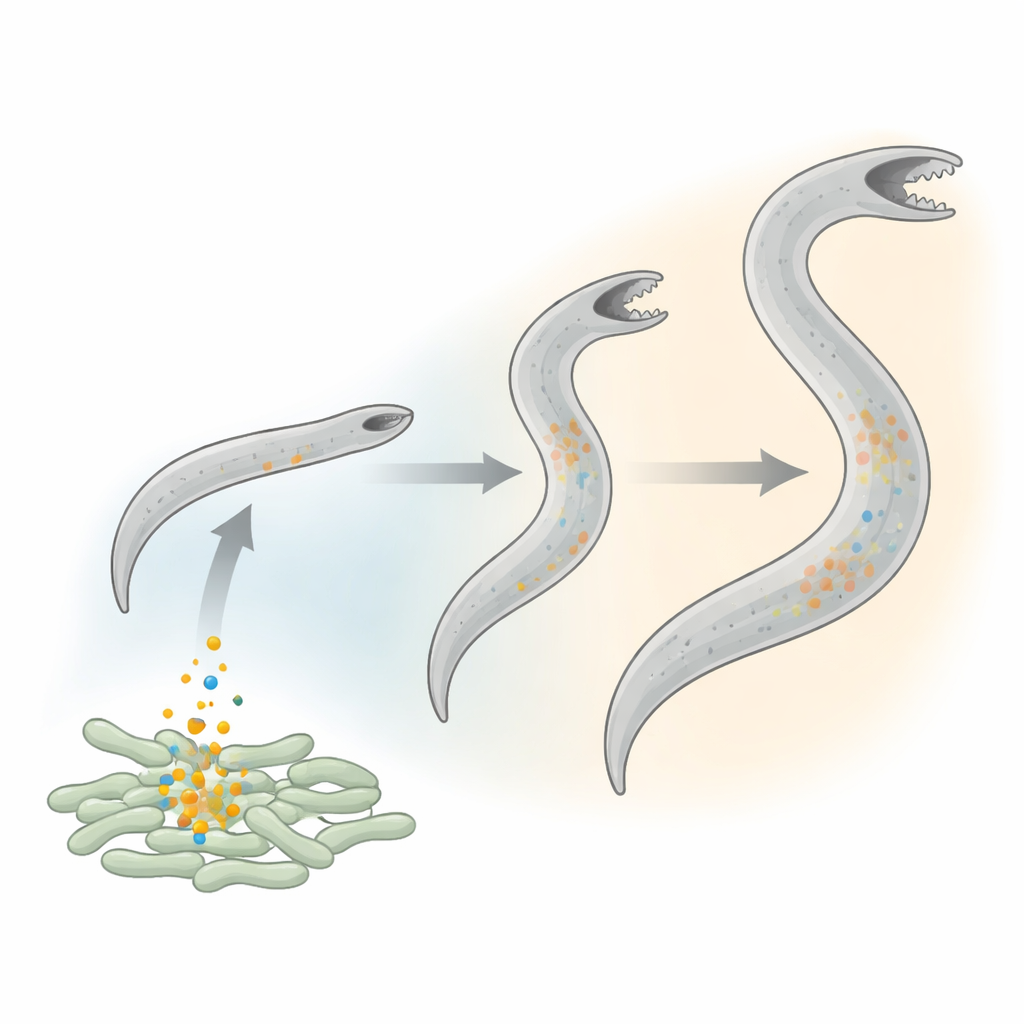
The nematode Pristionchus pacificus is a microscopic worm that can develop one of two mouth types. One form has a narrow mouth suited for munching on microbes. The other form sports a wider mouth with extra teeth, turning the worm into a predator capable of attacking and eating other nematodes. Both forms come from the same genes; which version appears depends on the environment, especially diet. Earlier work showed that when these worms are fed a particular bacterium, Novosphingobium, they rapidly shift to the predatory form and, remarkably, this predatory tendency persists for many generations even after the worms are moved back to a standard, less nutritious bacterial diet.
Vitamin B12 as the Dietary Signal
The new study set out to identify the chemical trigger behind this long-lasting predatory shift. The authors focused on vitamin B12, a nutrient produced by some bacteria but not by the usual laboratory food bacterium, Escherichia coli. By adding purified vitamin B12 to otherwise ordinary E. coli plates, they could mimic a vitamin-rich diet without changing the bacterial species. They found that extra vitamin B12 immediately pushed most worms into the predatory mouth form. At higher vitamin doses, this effect did not stop with the exposed worms: their descendants, raised later on plain E. coli without added vitamin, also continued to develop the predatory mouth, a hallmark of transgenerational inheritance of a diet-induced trait.
How Much Vitamin Is Enough?
The researchers then carefully tuned vitamin B12 levels to see how sensitive this memory system is. Even extremely low concentrations were sufficient to trigger the predatory mouth in the worms that directly experienced the vitamin-rich diet. However, to pass the predatory tendency on to future generations required much higher vitamin levels and several generations of exposure. At intermediate doses, only the children showed the predatory bias, but the grandchildren quickly reverted to normal, a short-lived effect the authors distinguish from true multigenerational inheritance. These findings suggest that the body must cross a nutritional threshold before a dietary experience is written into a longer-lasting biological record.
From Vitamin to Yolk to Offspring
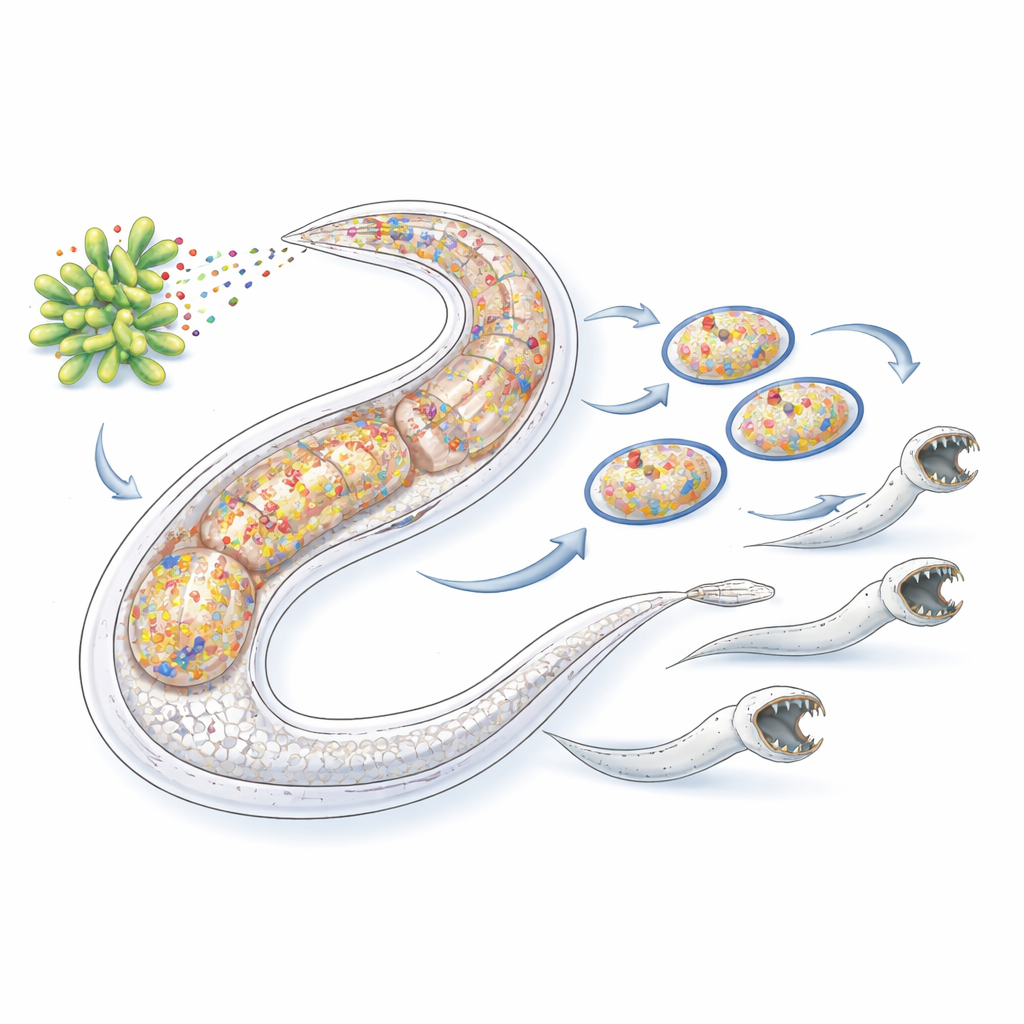
To uncover how a vitamin in the gut can influence descendants, the team examined the worm’s metabolic machinery and gene activity. They showed that vitamin B12 has to pass through a key enzyme in the so-called one-carbon cycle, which helps make methionine, a building block for many cellular reactions. Worms lacking this enzyme failed to show vitamin-induced memory. Further gene expression analyses revealed that a family of yolk proteins, called vitellogenins, was strongly and persistently boosted when worms experienced the vitamin-rich bacterial diet. These proteins, made in the intestine, are normally shipped into developing eggs as a nutrient-rich package. When the researchers disrupted the single receptor that allows this yolk to be taken up into the germline, the worms could still become predatory themselves under the right diet, but they lost the ability to transmit that predatory tendency to their descendants.
Why This Matters Beyond Worms
Putting these pieces together, the study concludes that vitamin B12 does more than fuel daily metabolism: when abundant over multiple generations, it ramps up nutrient loading into eggs via vitellogenin, and this enriched provisioning helps lock in a predatory mouth and behavior in descendants. For a worm living on a decaying beetle carcass, where food sources vary and competition is fierce, such a built-in, diet-driven memory of "good hunting times" could provide a strong evolutionary advantage. More broadly, the work offers a concrete example of how nutrients can shape traits and behaviors long after a particular meal is over, hinting at general principles that may also be relevant to how early-life nutrition in other animals, including humans, leaves lasting marks across generations.
Citation: Quiobe, S.P., Kalirad, A., Zurheide, R. et al. Vitamin B12 induces memory of predation through vitellogenin provisioning. Nat Commun 17, 3408 (2026). https://doi.org/10.1038/s41467-026-71494-w
Keywords: vitamin B12, transgenerational inheritance, predatory behavior, nematode plasticity, maternal nutrient provisioning