Clear Sky Science · en
Genetic genealogy of the Piast dynasty and related European royal families
Tracing Royals Through Ancient DNA
The Piast dynasty founded the medieval Polish state and helped shape the political map of Europe around the year 1000, yet their true origins have long been wrapped in legend. Were they local Slavic leaders who rose to power from within, or ambitious outsiders who arrived from afar? This study uses tools of modern genetics on centuries-old bones to follow the family’s biological trail, linking graves, chronicles and DNA to build a clearer picture of who the Piasts were and how they fit into the wider story of European royal families.
From Forgotten Tombs to Genetic Clues
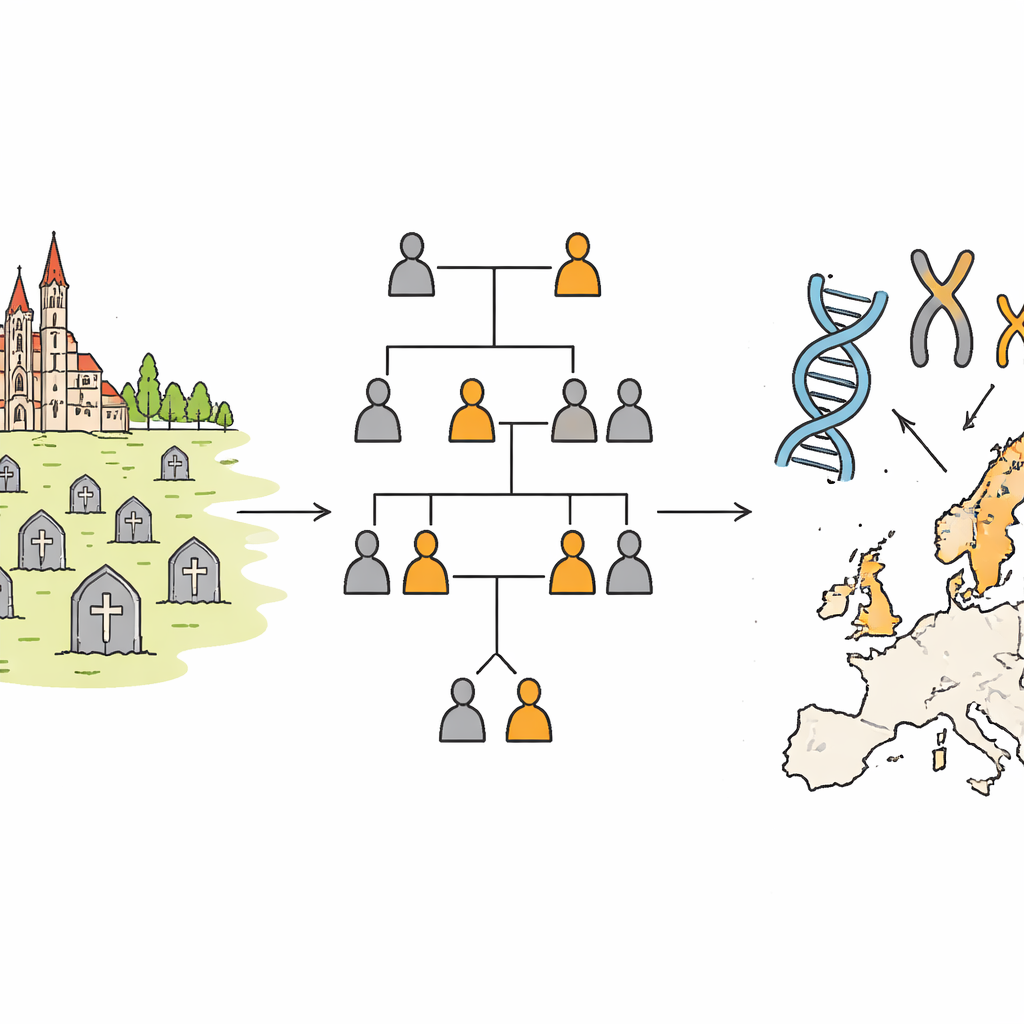
Historians know that Piast rulers turned a loose pagan community into a Christian kingdom that became a cornerstone of East‑Central Europe. But surviving written sources are sparse and often vague. To go beyond legend, the authors searched across Poland for genuine Piast burial sites. From more than 340 possible locations, only eight yielded human remains plausibly tied to the dynasty. In two cathedrals—Płock and Warsaw—they collected bones from 33 graves traditionally attributed to Piast princes and princesses, some undisturbed, others disturbed and mixed during past renovations.
Rebuilding a Royal Family Tree
Working in a dedicated ancient‑DNA laboratory, the team extracted fragile genetic material from the bones, checked the ages of the remains using radiocarbon dating, and determined the biological sex and family relationships among the individuals. They distinguished samples that clearly came from single skeletons from those that might be mixed. By comparing the DNA results to historical records of who was supposed to be buried where and when, they could match many skeletons to named Piast rulers. In total, they obtained good‑quality genome‑wide data from 17 individuals and were able to identify at least 10 of them as specific members of the dynasty spanning 13 generations.
Following the Paternal Line Back in Time
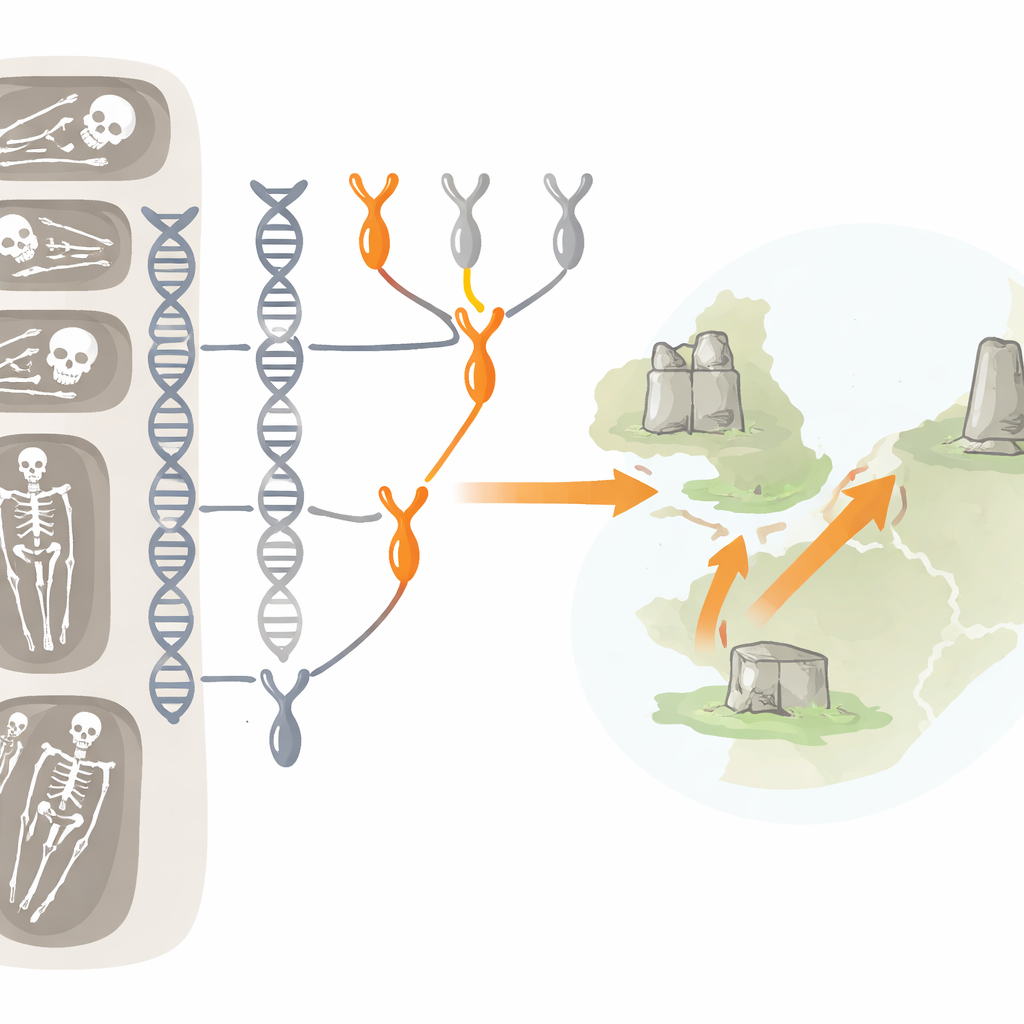
The researchers focused especially on the Y chromosome, which passes from father to son and so preserves a record of the male line. Among the confirmed Piast men, seven shared a distinctive Y‑chromosome branch, called R1b‑BY3549, which today is rare in Central and Eastern Europe but more typical of populations further west. The same branch has been found in three ancient individuals from what is now France, the Netherlands and England, including one person likely linked to Viking communities. This pattern strongly suggests that the founding Piast lineage arrived from north‑western Europe rather than emerging from a long‑established local Slavic male line.
Connecting Royal Houses Across Europe
Beyond Poland, the genetic signatures uncovered in Piast graves helped clarify ties with other royal dynasties. The authors compared their data to previous DNA work on Hungarian kings from the Árpád family. By tracking mitochondrial DNA, which is inherited from mothers, they showed that one previously unidentified Árpád man buried next to King Béla III almost certainly matches Béla’s father, Géza II, and that his maternal line also connects to a Piast prince of Płock. They further confirmed the identity and maternal lineage of Anne of Bohemia, a Piast duchess linked to Bohemian and Hungarian royals. Using similar reasoning, the study infers maternal or paternal lineages for more than 200 historical figures across ten major European dynasties, offering a new resource for historians and genealogists.
Rethinking How Medieval States Were Born
Put together, these findings argue that the Piast ruling house was not biologically rooted in the local population of early medieval Poland. Instead, its key male line likely came from north‑western Europe, later intermarrying with local elites and other royal families. This supports a broader picture in which the rise of early states in East‑Central Europe—Poland, Hungary and the early Rus’ lands—was driven not only by homegrown leaders but also by foreign newcomers who brought power, connections and perhaps military strength. While many details remain uncertain, this genetic portrait challenges long‑held national myths of purely local origins and opens the way for more interdisciplinary research into how medieval kingdoms, and the families who ruled them, were truly formed.
Citation: Zenczak, M., Handschuh, L., Marcinkowska-Swojak, M. et al. Genetic genealogy of the Piast dynasty and related European royal families. Nat Commun 17, 3224 (2026). https://doi.org/10.1038/s41467-026-71457-1
Keywords: Piast dynasty, ancient DNA, medieval Poland, royal genealogy, Y-chromosome