Clear Sky Science · en
Sialic acid exacerbates polycystic ovary syndrome in mice by modulating gut microbiota-mediated bile acid metabolism and FXR activation
Why this matters for women’s health
Polycystic ovary syndrome (PCOS) affects millions of women worldwide, often bringing irregular periods, fertility problems, and higher risks of diabetes. This study in mice digs into an unexpected player in PCOS: a sugar called sialic acid in the gut, the microbes that feed on it, and how this gut activity can worsen hormone and metabolic problems linked to PCOS.
A sugar in the gut that signals trouble
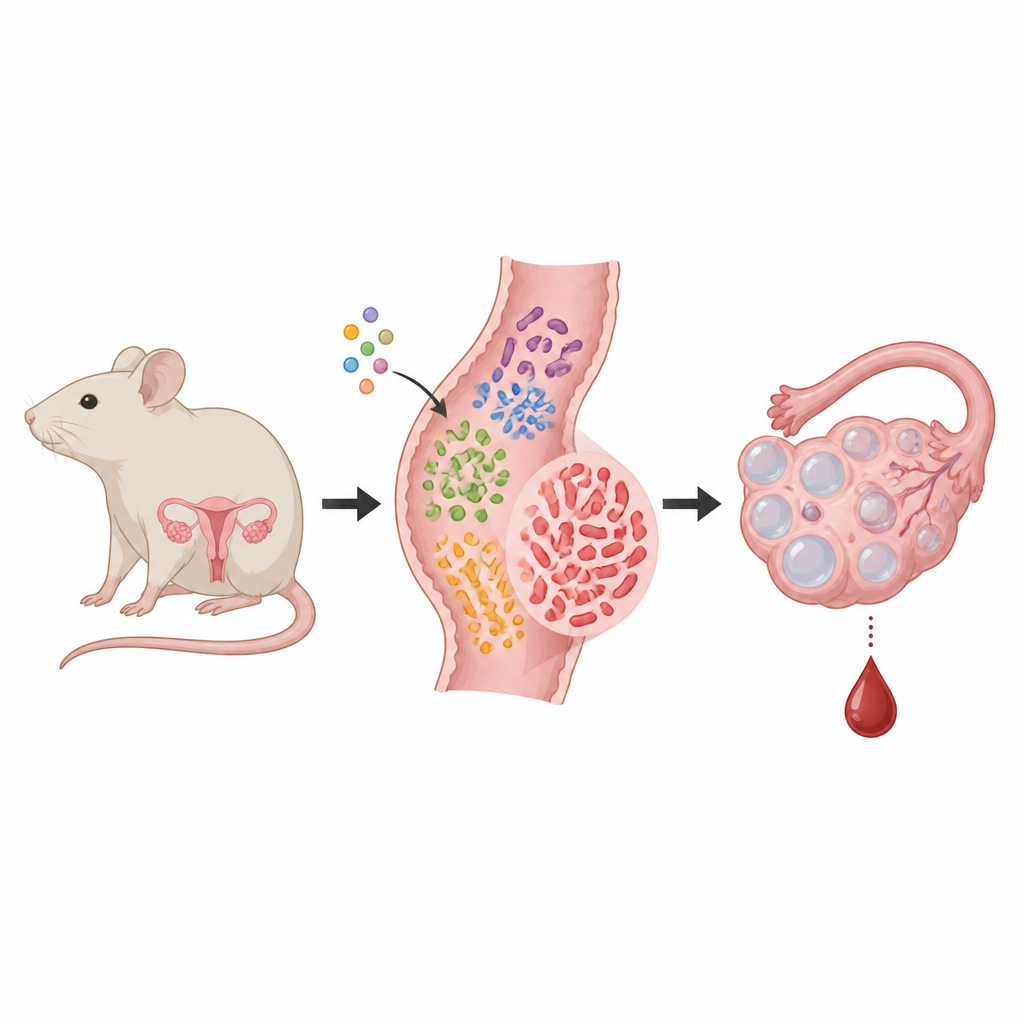
Researchers began by comparing stool samples from women with PCOS to those from women without the condition. They found many chemical differences, but one stood out: much higher levels of a form of sialic acid called Neu5Ac in the feces of women with PCOS, while blood levels stayed similar. The higher the stool Neu5Ac, the more severe the PCOS and the worse the insulin resistance. Female mice given a hormone that induces PCOS-like symptoms also showed increased Neu5Ac in their stool. When the scientists added extra Neu5Ac to these mice, their blood sugar control worsened, their cycles became more irregular, and their ovaries developed more cyst-like follicles and fewer healthy structures needed for ovulation.
Gut microbes as the middlemen
The team showed that these harmful effects of Neu5Ac depended on gut microbes. When mice were given broad antibiotics that wiped out their intestinal bacteria, Neu5Ac no longer made PCOS symptoms worse. Transplanting gut microbes from Neu5Ac-treated mice into other mice was enough to aggravate hormone levels, ovarian damage, and insulin resistance in animals exposed to the PCOS-inducing hormone. Closer inspection of the gut community revealed that Neu5Ac encouraged the growth of a particular bacterium, Ligilactobacillus salivarius, which was also enriched in women with PCOS and closely tracked with stool Neu5Ac levels. Giving this bacterium alone to PCOS-model mice was sufficient to worsen metabolic problems and ovarian changes.
How bile chemicals and a gut sensor link to the ovaries
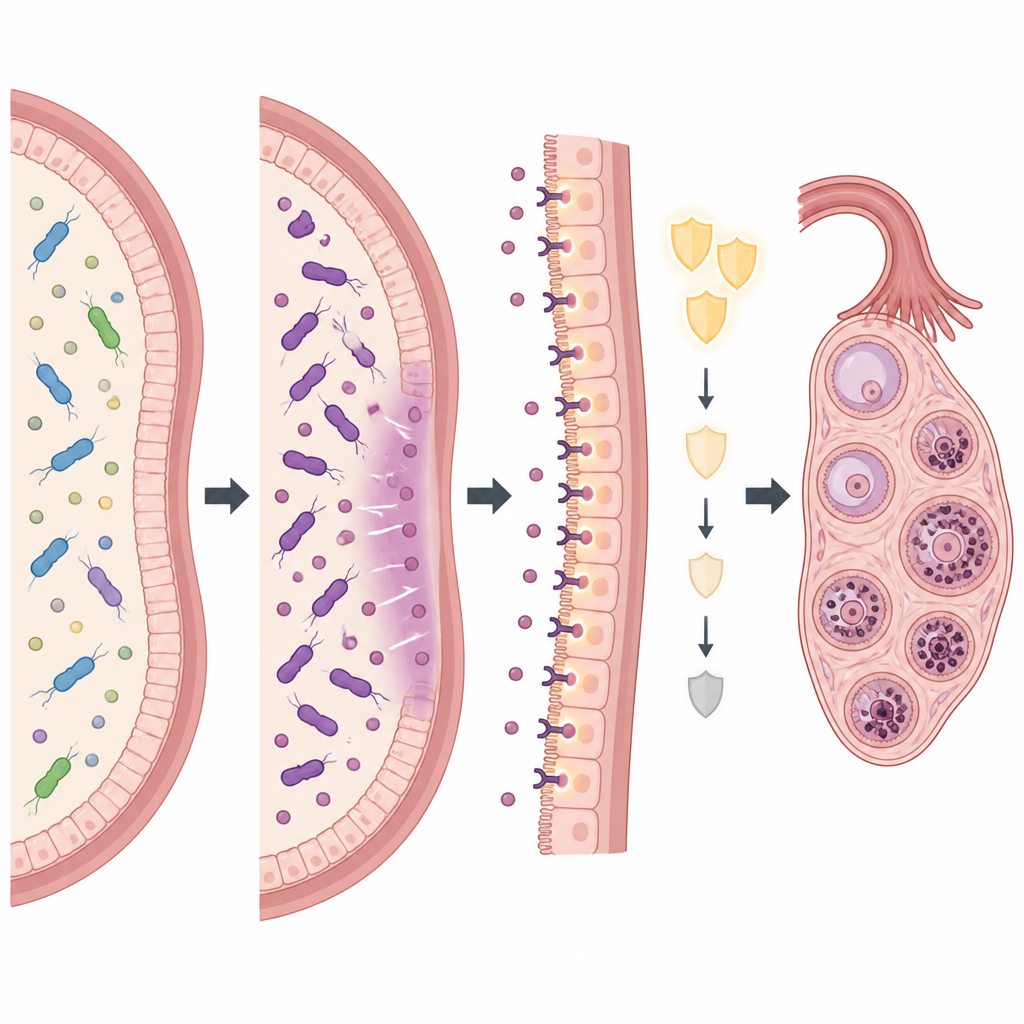
The researchers then asked how this microbe might be influencing disease. L. salivarius can break down special bile chemicals made by the liver that normally help digest fats. In both mice and women with PCOS, levels of “conjugated” bile acids, especially one called TUDCA, were reduced, while microbe-driven enzyme activity that strips these bile acids increased. Neu5Ac and L. salivarius both pushed this shift further. When the team added back TUDCA or blocked the bile-stripping enzyme, PCOS features in mice eased. The loss of these protective bile acids led to stronger activation of a gut sensor protein called FXR. Turning FXR down with a drug or removing it specifically from the intestine protected mice from the worsening effects of Neu5Ac and L. salivarius on insulin resistance, hormone levels, and ovarian structure.
An immune signal that shields ovarian cells
FXR activity in the gut also affected an immune messenger called interleukin-22 (IL-22), which helps maintain intestinal balance and influences distant organs. In PCOS-model mice, IL-22 levels in the gut and blood were reduced, and Neu5Ac or L. salivarius drove them even lower. Blocking FXR or preserving conjugated bile acids restored IL-22, while giving extra IL-22 directly to mice improved blood sugar control, normalized estrous cycles, and reduced ovarian damage. The study showed that low IL-22 allowed a form of iron-driven cell death, known as ferroptosis, to intensify in ovarian tissue. IL-22 normally activates a pathway called STAT3; when this pathway was blocked, IL-22 could no longer protect ovarian cells from death or limit PCOS-like changes.
What it means for future treatment ideas
Altogether, the findings outline a chain of events in mice: excess sialic acid in the gut fuels specific bacteria, these bacteria reshape bile chemicals, the altered bile mix overstimulates a gut sensor, this dampens a protective immune signal, and ovarian cells become more vulnerable to iron-driven damage. While more work is needed in humans, the study suggests that targeting this “sialic acid–microbe–bile–FXR–IL-22” pathway, rather than focusing only on hormones, could open new ways to ease PCOS symptoms by restoring healthier communication between the gut and the ovaries.
Citation: Zhao, C., Zhang, Y., Chen, K. et al. Sialic acid exacerbates polycystic ovary syndrome in mice by modulating gut microbiota-mediated bile acid metabolism and FXR activation. Nat Commun 17, 4619 (2026). https://doi.org/10.1038/s41467-026-71365-4
Keywords: polycystic ovary syndrome, gut microbiota, bile acids, sialic acid, IL-22