Clear Sky Science · en
A long-read human pangenome initiative for comprehensive interpretation of nuclear-embedded mitochondrial DNA
DNA Messages Within Our DNA
Each of our cells carries two kinds of genetic material: one in the nucleus and one inside tiny powerhouses called mitochondria. This study asks a surprising question that matters for health and ancestry alike: what happens when fragments of mitochondrial DNA move into the nuclear genome, and how have these stowaway pieces shaped human evolution and disease risk?
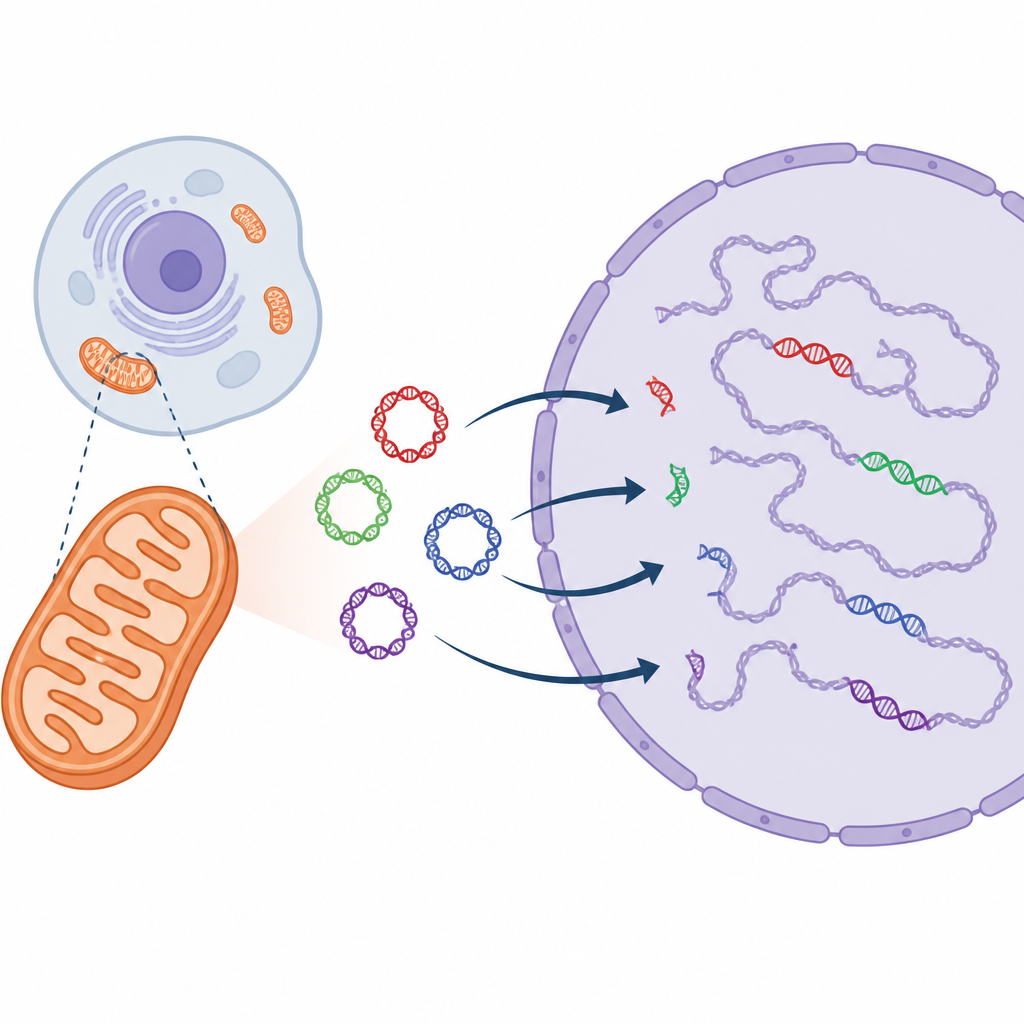
Hidden Passengers in the Genome
Mitochondrial DNA occasionally breaks free and becomes inserted into the chromosomes in the nucleus. These insertions, called nuclear mitochondrial segments, were long viewed as harmless fossils. The authors show that they are far more dynamic. Using new long-read sequencing and a "pangenome" that represents hundreds of people from around the world, they built a detailed map of where these fragments sit, how common they are, and how they differ between individuals and populations.
Seeing What Short Reads Missed
Older methods relied on short snippets of DNA reads and often failed in complex regions of the genome. The team developed a graph-based approach that overlays many complete genomes at once, allowing them to trace mitochondrial pieces with much higher precision. This improved sensitivity by about two and a half times, especially for long fragments, and revealed more than a thousand sites in humans. They distinguished fragments that are fixed in almost everyone from those that vary between people, and they could even tell which copy of a chromosome carried each insertion.
Where These Fragments Land and What They Do
Fixed fragments tend to sit in the quieter stretches between genes, places where insertions are least likely to cause harm. Variable fragments are more scattered, sometimes near or inside genes. The study found that fragments from one specific end of the mitochondrial control region are rarely fixed and can tweak the activity of nearby DNA in lab tests, hinting that the genome weeds out versions that disturb regulation too much. The authors also discovered several insertions linked to changes in how nearby genes are switched on or how their messages are cut and spliced, suggesting subtle roles in traits and disease risk.
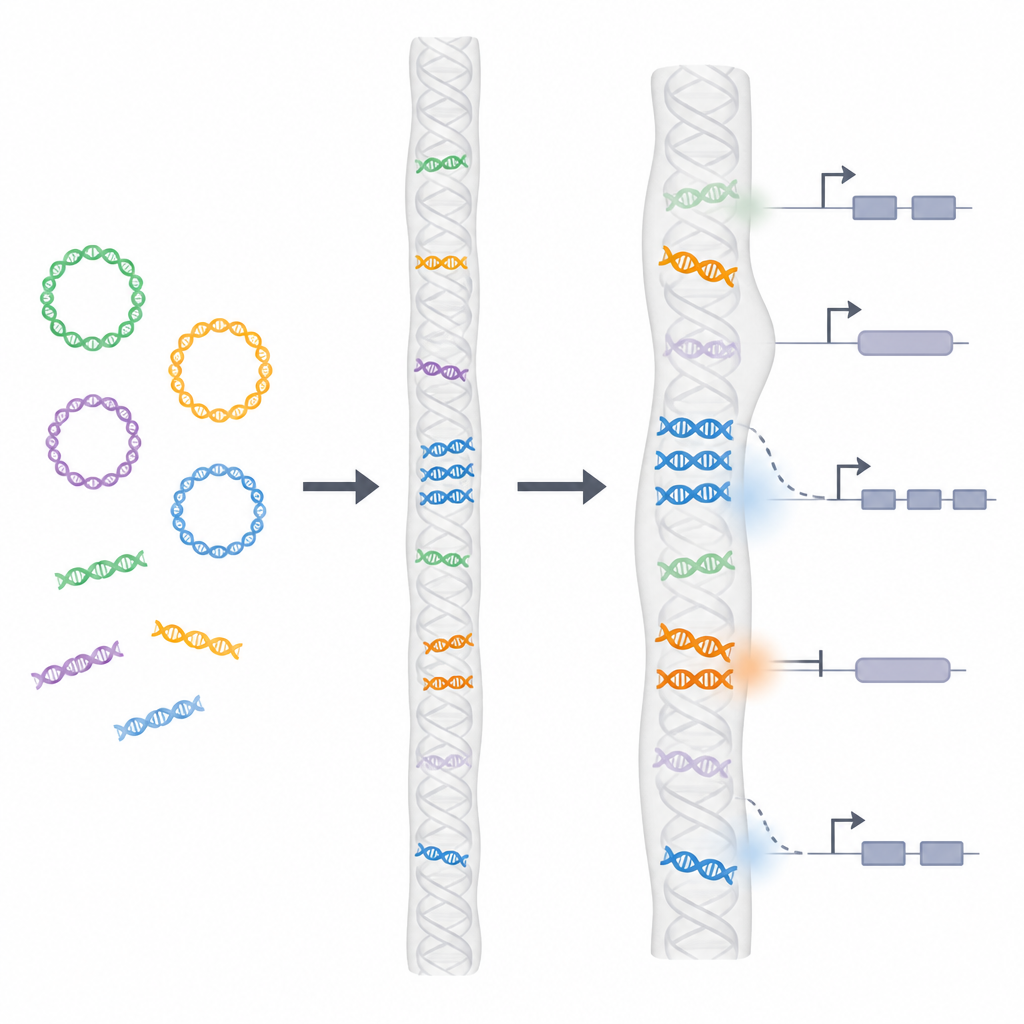
Clues from Primates and Repeated DNA
To put humans in context, the researchers compared these insertions in 20 nonhuman primate species. They found that new mitochondrial fragments have been added steadily over millions of years, but at different rates in different branches of the primate family tree, with chimpanzees and bonobos gaining them especially quickly. In both humans and other primates, existing fragments can be copied along with surrounding DNA, creating clusters and even tandem repeats. In some cases these repeats lie in or near genes involved in traits such as pigmentation, revealing a new route by which mitochondrial pieces can help generate complex variation.
A Living Record of Cellular History
Taken together, the work reframes these mitochondrial fragments as active players rather than dead relics. They record a long history of DNA traffic between cellular compartments, show how genomes reorganize themselves through breakage and repair, and occasionally nudge gene activity in ways that natural selection must navigate. For non-specialists, the takeaway is that our chromosomes are not static blueprints but living documents, annotated over time by pieces of mitochondrial DNA that continue to influence biology and evolution.
Citation: Fu, L., Chen, J., Lian, D. et al. A long-read human pangenome initiative for comprehensive interpretation of nuclear-embedded mitochondrial DNA. Nat Commun 17, 4371 (2026). https://doi.org/10.1038/s41467-026-71348-5
Keywords: mitochondrial DNA, nuclear genome, pangenome, human evolution, gene regulation