Clear Sky Science · en
FSHR and LHR functional compensation reveals the mechanism and treatment of Ovarian Hyperstimulation Syndrome
When Fertility Treatment Goes Too Far
Fertility drugs help many people conceive, but in some cases the ovaries react too strongly, swelling and leaking fluid into the abdomen. This dangerous reaction is called ovarian hyperstimulation syndrome, or OHSS. The study behind this article explores why a small songbird family can naturally avoid this problem and how that insight may point to safer fertility treatments for humans. 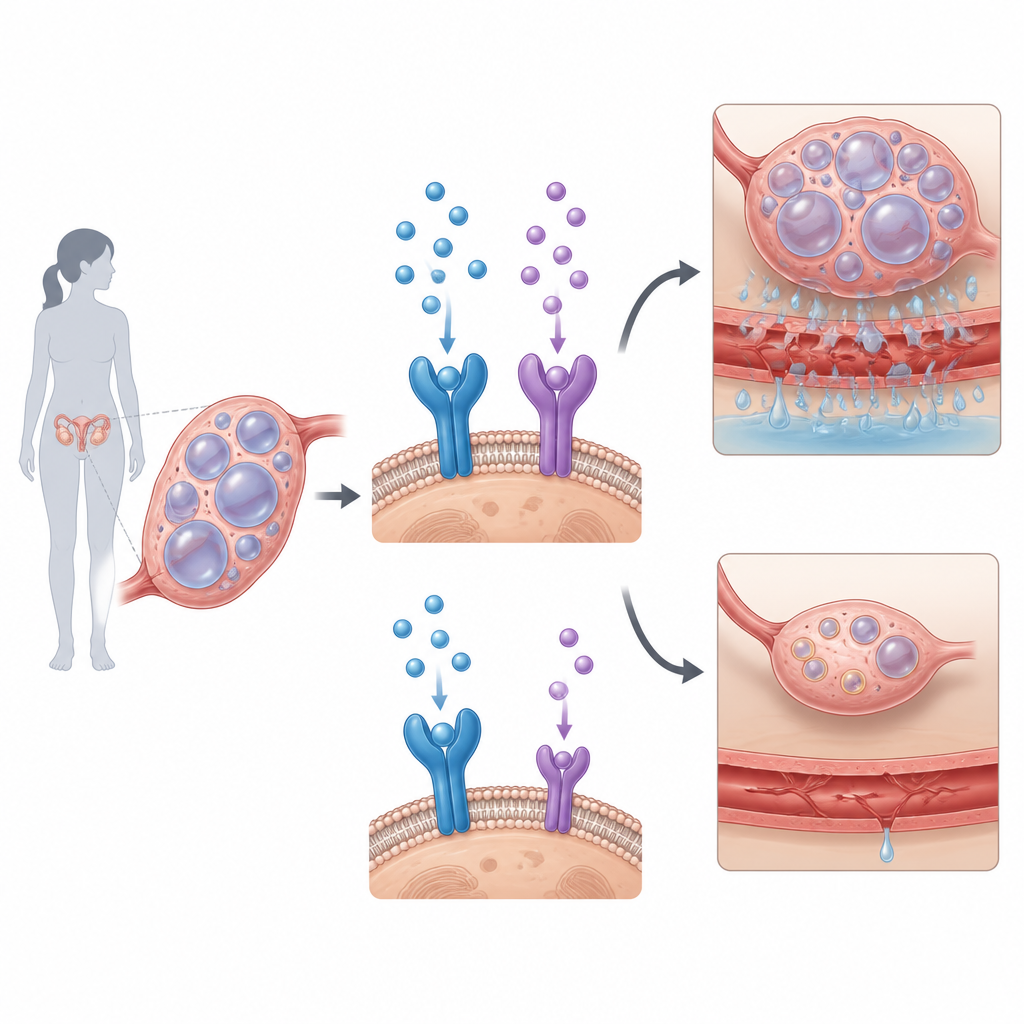
How Hormone Signals Guide the Ovary
In females, egg development is guided by two brain-controlled hormones that travel in the blood to the ovaries. One is follicle-stimulating hormone, which helps eggs grow inside fluid-filled sacs, and the other is luteinizing hormone, which helps trigger ovulation and hormone release. Each hormone normally fits into its own matching “docking station” on ovarian cells. During in vitro fertilization treatments, doctors give extra doses of these hormones, which can sometimes cause too many follicles to grow, very high estrogen levels, and blood vessels that become leaky, leading to OHSS.
Bird Clues to a Human Disorder
The researchers focused on a genetic change in the docking station for follicle-stimulating hormone that has been found in women with spontaneous OHSS. This change makes the receptor more active on its own and able to respond to additional hormones, including those that normally work through the luteinizing hormone receptor. Surprisingly, several finch species in the estrildid family carry an almost identical version of this receptor in nature but do not show signs of ovarian damage. By comparing these finches with other birds and with specially engineered mice, the team asked how the finches stay healthy despite the risky receptor. 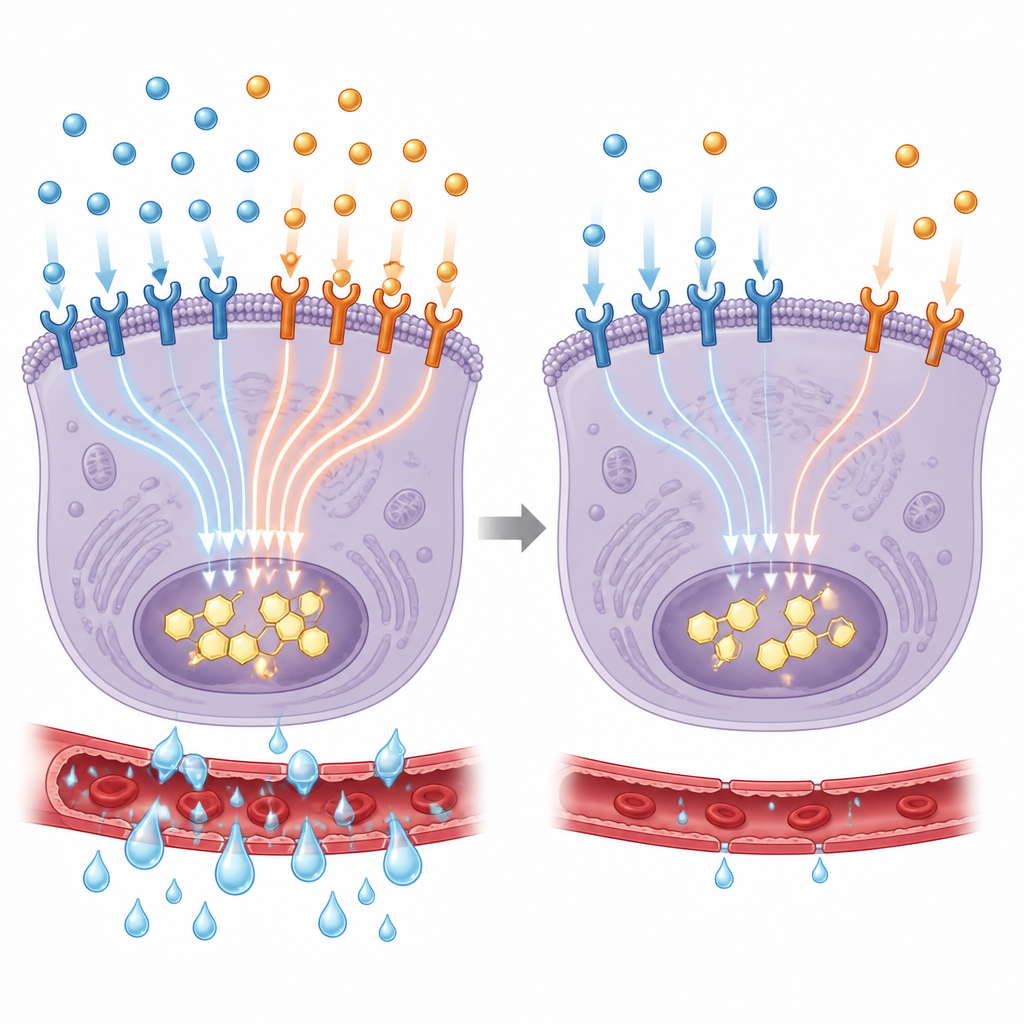
Balancing Two Switches on the Ovary
In mice given the same receptor change, the ovaries became highly sensitive to hormone stimulation. When these animals received fertility-like hormone doses, their ovaries enlarged, produced very high estrogen and vascular growth factor levels, and developed many active hormone-producing structures, all hallmarks of OHSS. In contrast, estrildid finches with the natural version of this receptor did not develop swollen, cystic ovaries, even when researchers tried to induce an OHSS-like state with repeated hormone injections. Detailed single-cell gene reading from finch ovaries revealed a key difference: their cells made far less of the luteinizing hormone receptor compared with other birds.
Turning Down One Signal to Protect the Ovary
The team discovered that in estrildid finches, the overactive follicle-stimulating hormone receptor is balanced by dialling down the luteinizing hormone receptor. This reduces the overall strength of hormone signaling inside ovarian cells, keeps estrogen production in check, and limits the expression of genes that make blood vessels leaky. In mice, blocking luteinizing hormone receptor activity with several different drug molecules reduced ovarian size, hormone levels, and vessel leakage, and decreased the number of highly active ovarian structures. Single-cell analyses showed that blocking either receptor softened many of the same internal signaling pathways, suggesting that the two receptors can substitute for each other to some extent.
What This Means for Patients
The work suggests that the finches have evolved a natural safety valve against OHSS: an overactive receptor for one hormone is offset by lowering the receptor for the other. For people undergoing fertility treatment, this points to a potential new strategy. Carefully blocking luteinizing hormone receptor activity, instead of only reducing hormone doses, might prevent or lessen OHSS while still allowing eggs to mature. While more research and clinical testing are needed, the study shows how lessons from an adaptive bird system can help redesign human therapies to be safer and more balanced.
Citation: Lai, S., Huang, Y., Ma, S. et al. FSHR and LHR functional compensation reveals the mechanism and treatment of Ovarian Hyperstimulation Syndrome. Nat Commun 17, 4677 (2026). https://doi.org/10.1038/s41467-026-71338-7
Keywords: ovarian hyperstimulation syndrome, FSH receptor, luteinizing hormone receptor, fertility treatment, Darwinian medicine