Clear Sky Science · en
Miniature and versatile genome regulation TnpB-ωRNA toolkits facilitate cancer immunotherapy
Turning Tiny Tools into Big Cancer Allies
Modern gene editing tools can reprogram our cells, but many are too bulky to be easily delivered into the body. This study introduces a much smaller, more versatile DNA-targeting system that fits inside a common gene therapy virus and can switch on natural immune signals right inside tumors. By doing so, it aims to help the body’s own defenses better recognize and attack cancer while using existing immunotherapy drugs more effectively.
Why Size Matters for Gene Editing
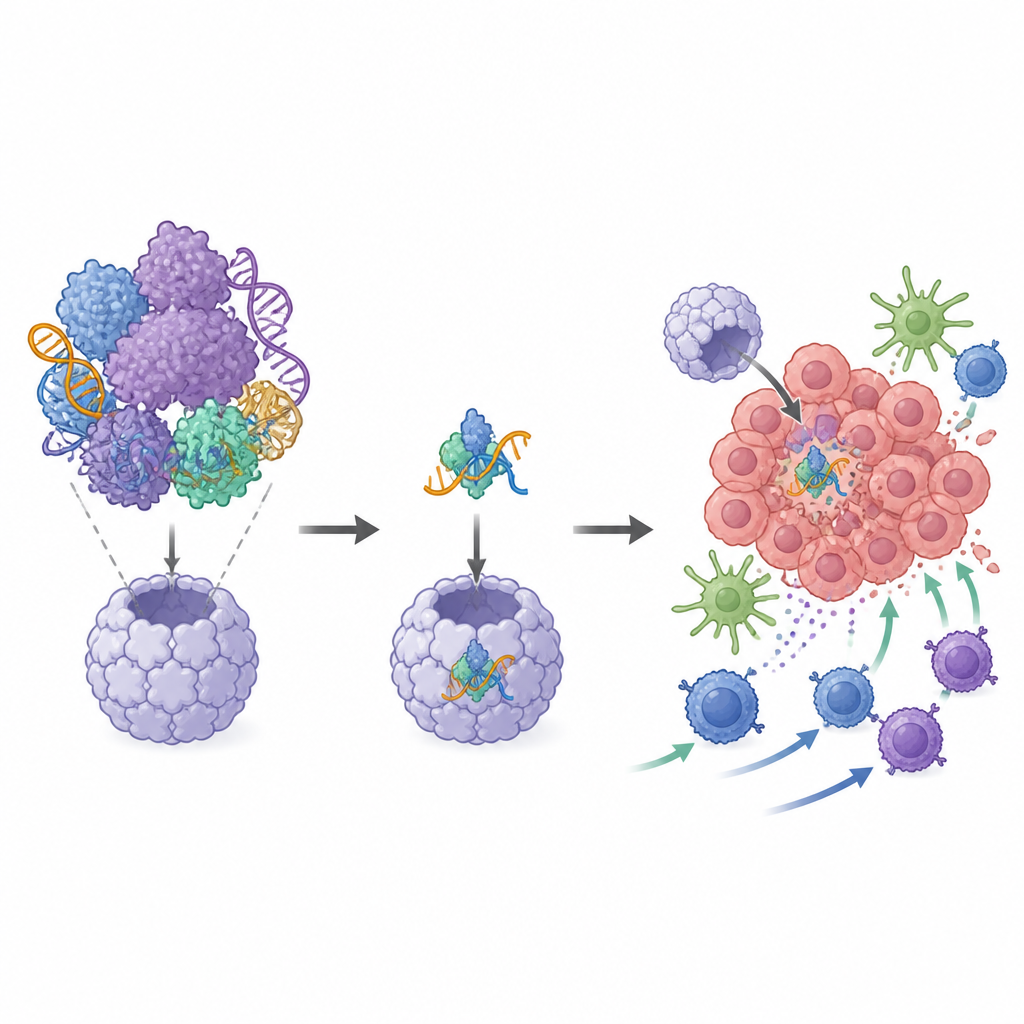
Popular tools such as CRISPR-Cas9 work like molecular scissors that can cut or control DNA, but the protein components are large. To deliver them into tissues, researchers often use adeno-associated viruses, tiny shells that can carry only a limited amount of genetic cargo. Many current gene regulators simply do not fit, which has slowed their translation into real-world therapies. The team behind this work set out to find a much smaller alternative that could still target DNA precisely and control gene activity inside human cells.
Building a Compact Genetic Switch
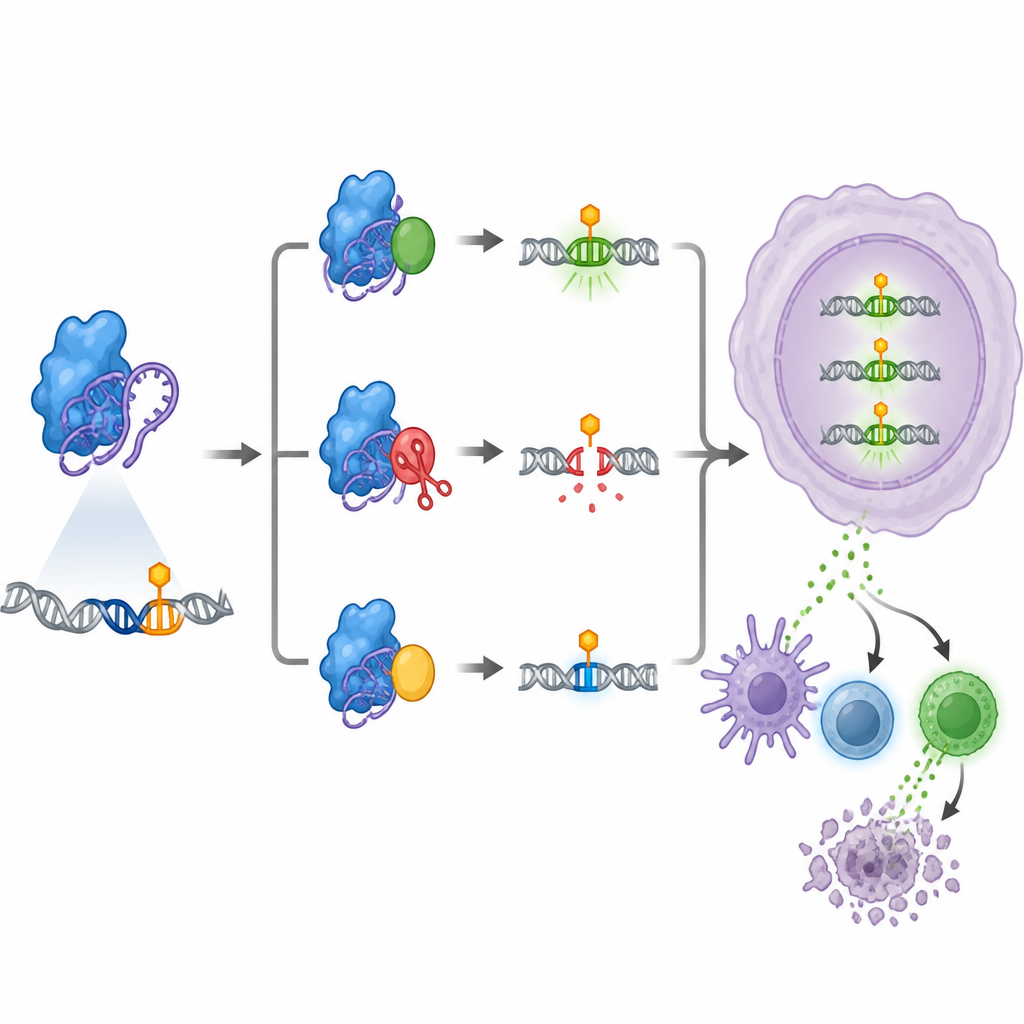
The researchers started from TnpB, a tiny DNA-cutting enzyme found in bacteria, and its partner RNA guide, known as ωRNA. Through stepwise redesign, they first made TnpB safe for use as a regulator by turning off its cutting activity. They then reshaped the RNA guide, trimming and modifying it to fold more stably and bind TnpB more tightly. This "enhanced" RNA shrank to just 93 building blocks while boosting activity nearly twentyfold. In parallel, they altered specific amino acids in TnpB to strengthen its grip on DNA and RNA. Combining the optimized protein and RNA produced enTnpBa, a compact genetic activator that could drive a test gene’s output almost 3000-fold in human cells.
From Switching Genes to Editing and Rewriting Them
Once they had a strong DNA-targeting core, the scientists repurposed it for more than on/off control. By restoring TnpB’s cutting ability and pairing it with the improved RNA, they built a gene editor that introduces small insertions or deletions at chosen DNA sites. This editor showed robust activity across many human genomic locations with very low detectable off-target changes. They also fused TnpB to an enzyme that changes one DNA letter into another, creating an adenine base editor. This version efficiently converted specific A bases to G within a defined window, again with minimal unwanted edits elsewhere in the genome, expanding the toolkit from gene activation to precise rewriting.
Teaching Tumors to Broadcast SOS Signals
To test medical applications, the team packaged enTnpBa and three RNA guides into a single adeno-associated virus, creating a treatment they call AAV-ImmunAct. This construct was designed to boost three immune-stimulating molecules inside tumors: CXCL9, IL-15, and interferon gamma. In cell culture, cancer cells exposed to AAV-ImmunAct produced higher levels of these cytokines, which attracted more killer T cells, switched them into a more aggressive state, and made tumor cells easier to destroy. Patient-derived bladder cancer organoids also became more vulnerable to attack by the patients’ own immune cells after treatment.
Helping Immunotherapy Drugs Work Better
The most demanding test came in humanized mice, which carry human immune cells and human bladder tumors. In this setting, AAV-ImmunAct alone slowed tumor growth, and its impact grew even stronger when combined with an anti-PD-1 antibody, a checkpoint-blocking drug already used in the clinic. Tumors receiving both treatments showed smaller size, fewer dividing cells, more dying cancer cells, and greater infiltration of active CD8 T cells loaded with toxic granules. These results suggest that locally turning up a trio of immune signals can convert a “cold” tumor, sparse in immune cells, into a “hot” one that responds better to standard immunotherapy.
A Small Platform with Wide Potential
Overall, this work presents enTnpB as a miniature yet powerful platform for controlling genes inside the body. Because it fits within a single viral delivery package and can be wired to different functions, it offers a flexible way to switch on helpful genes, cut harmful ones, or subtly rewrite DNA letters. While more fine-tuning and safety testing are needed, especially for long-term use, the study shows that shrinking gene regulators can open new paths for cancer treatment and other gene-based therapies without adding more drugs or synthetic proteins to the mix.
Citation: Lu, J., Lai, J., Cheng, L. et al. Miniature and versatile genome regulation TnpB-ωRNA toolkits facilitate cancer immunotherapy. Nat Commun 17, 4667 (2026). https://doi.org/10.1038/s41467-026-71327-w
Keywords: CRISPR, gene regulation, cancer immunotherapy, adeno-associated virus, T cell activation