Clear Sky Science · en
Exposome-wide patterns predict brain health in aging
Why everyday life matters for your brain
As people live longer, keeping the brain healthy has become as important as protecting the heart. We now know that memory, mood, and independence in later life are shaped not just by genes or single diseases, but by a lifetime of habits and surroundings. This study asks a simple but powerful question: if we look across many aspects of a person’s life and body all at once, can we tell how healthy their brain tissue is as they age—and which parts of their life story matter most?
A new way to read the brain’s age
The researchers worked with brain scans and health records from tens of thousands of volunteers in the UK Biobank, a large long-term health study. Instead of focusing on diagnosed dementia or test scores, they used MRI images to estimate how old each person’s brain looks compared with their actual age. The gap between “brain age” and real age, called the brain age gap, serves as a yardstick of brain tissue health: a brain that looks older than expected suggests more wear and tear in its grey matter, while a younger-looking brain suggests better preservation.
Connecting life exposures to brain health
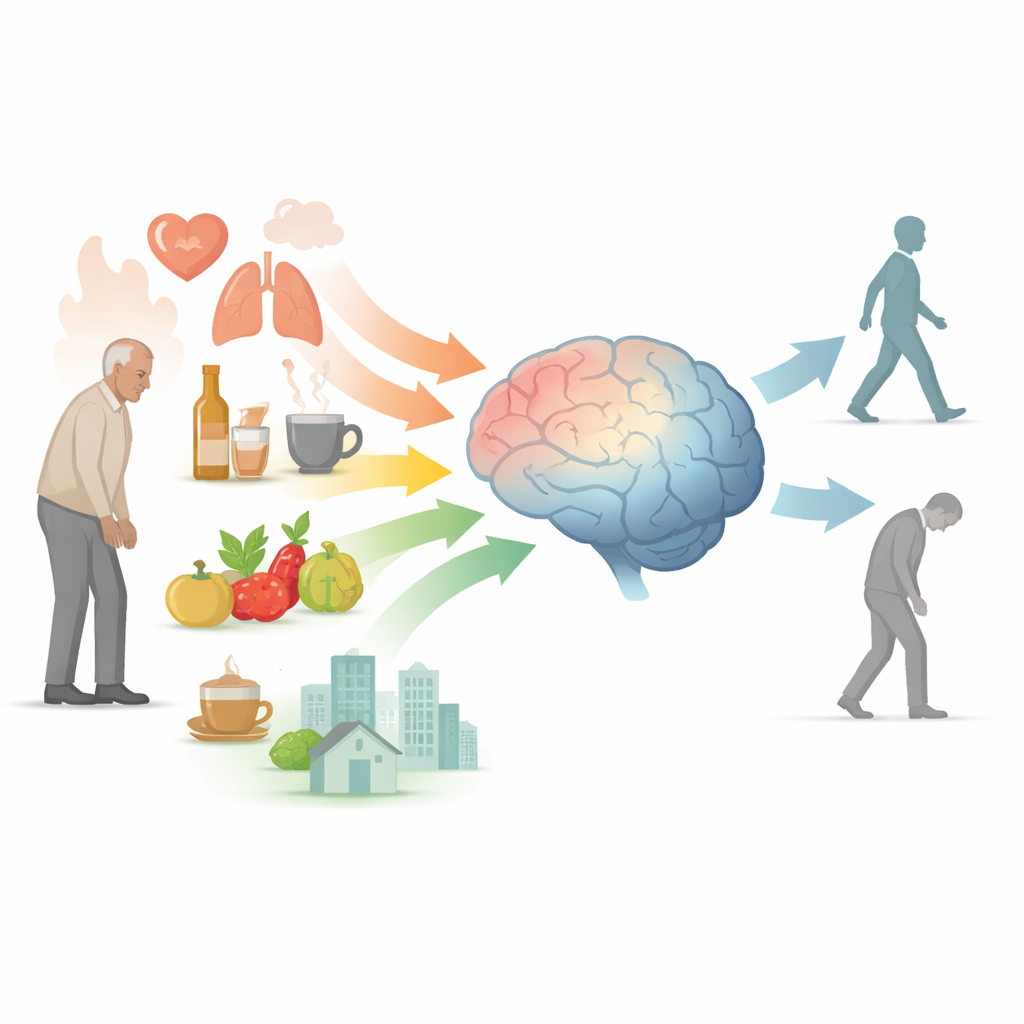
To understand what shapes this brain age gap, the team turned to the “exposome” — the sum of what a person is exposed to over life, from medical conditions to lifestyle and surroundings. They assembled 261 different measures, including blood pressure, diabetes, bone density, body size, smoking and alcohol history, diet, early life hardship, social ties, mood, and features of the home environment. Using machine-learning methods, they trained models to predict each person’s brain age gap based only on this rich profile of exposures, and they checked their findings in multiple independent subsets of participants.
What counts most for an aging brain
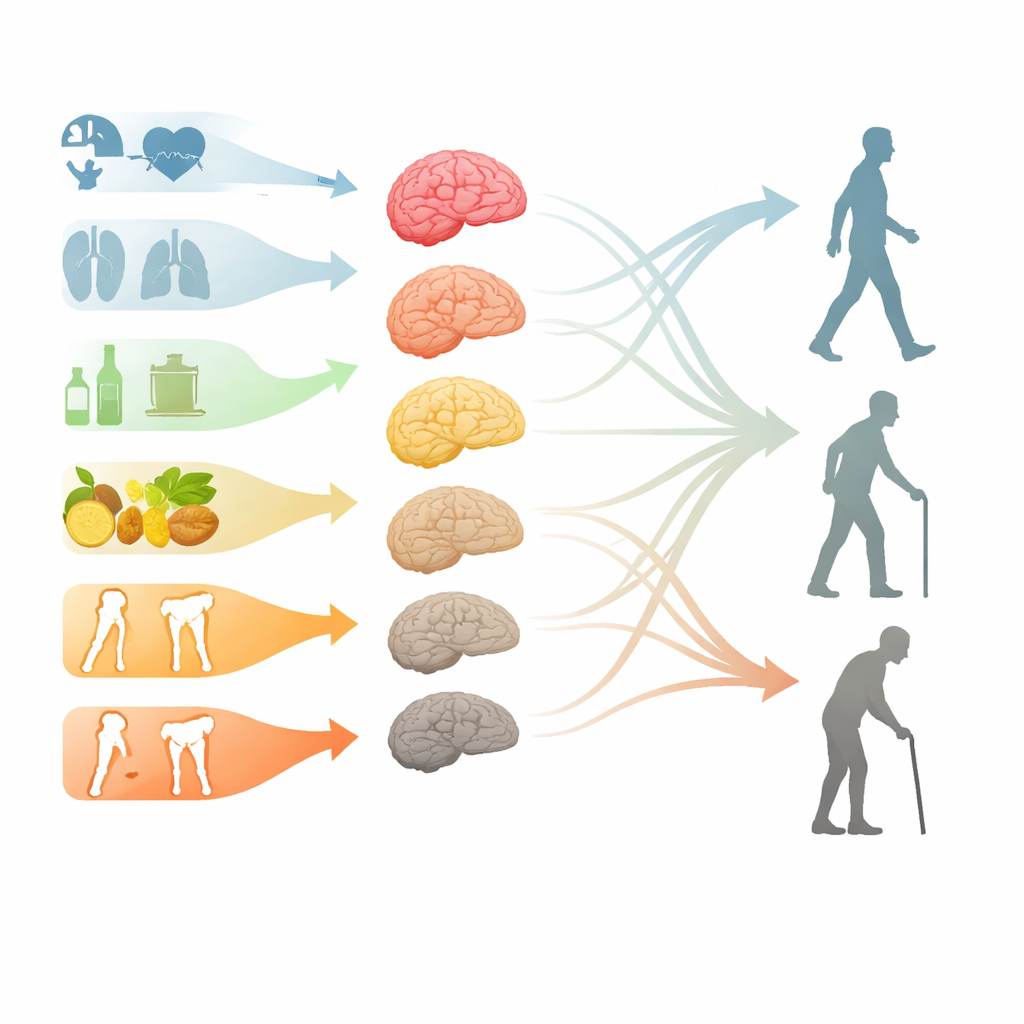
The models showed that, even though no single factor dominates, certain themes consistently stand out. Measures linked to heart and blood vessel health, such as blood pressure and diabetes, were among the strongest predictors of brain tissue health. So were detailed histories of smoking and alcohol use, especially how early people started, how long they continued, and at what age illnesses were diagnosed and treated. Longer exposure to high blood pressure, smoking, heavy drinking, or late-detected diabetes was tied to brains that appeared older than a person’s real age. In contrast, signs of strong bone health and larger hip circumference—both related to sturdier body structure and healthier fat distribution—were associated with better-preserved grey matter, particularly when considered together with other health measures.
Food choices and other factors in the mix
Diet also emerged as an important piece of the puzzle. People who reported high intake of whole-grain cereals and dried fruits such as nuts tended to have younger-looking brains, echoing earlier work on brain-friendly eating patterns. Very high coffee consumption, however, was linked to worse brain tissue measures when set against other risk factors, suggesting that more is not always better. Interestingly, when all variables were considered together, many items that often attract attention—such as brief episodes of low mood, early life adversity, cannabis or sun exposure, or neighborhood crowding—played only a minor role compared with cardiovascular, metabolic, and lifestyle traits directly tied to body health. The model’s accuracy was modest, explaining only a small share of differences between individuals, but the same patterns appeared across several algorithms and samples, underscoring their robustness.
What this means for protecting your brain
In plain terms, this study reinforces a straightforward message: the brain ages along with the body, and the most powerful levers for preserving grey matter are largely the same ones doctors already stress for heart and metabolic health. Keeping blood pressure and diabetes under control, avoiding or quitting smoking, limiting alcohol, moderating coffee, and supporting bone and muscle strength—ideally starting early and sustaining these habits over many years—may together help the brain stay structurally younger for longer. While the models are not yet precise enough to guide personal predictions, they lay a foundation for future “precision brain health,” where a person’s unique pattern of lifelong exposures could one day help forecast vulnerability and guide tailored prevention strategies.
Citation: Mahdipour, M., Maleki Balajoo, S., Raimondo, F. et al. Exposome-wide patterns predict brain health in aging. Nat Commun 17, 3409 (2026). https://doi.org/10.1038/s41467-026-71271-9
Keywords: brain aging, lifestyle and brain health, cardiovascular risk, exposome, grey matter