Clear Sky Science · en
Plasma phosphorylated tau 217 and longitudinal trajectories of Aβ, tau, and cognition in cognitively unimpaired older adults
Why a Simple Blood Test for Memory Loss Matters
As people live longer, many worry about whether their memory will fade with age or tip into Alzheimer’s disease. Today’s tools to detect Alzheimer’s in its silent, early phase often require spinal taps or expensive brain scans, which are difficult to access for most patients. This study asks a hopeful question: can a simple blood test—measuring a form of the protein tau called pTau217—reliably flag who is on a path toward Alzheimer’s changes in the brain years before symptoms appear?
A Window into the Brain from a Vial of Blood
The researchers followed 317 older adults who were thinking and functioning normally when they entered the Harvard Aging Brain Study. Over an average of eight years, participants gave blood samples, completed memory and thinking tests, and underwent specialized brain scans that measured two hallmarks of Alzheimer’s disease: amyloid and tau proteins. In the blood, scientists focused on the percentage of tau molecules carrying a tiny chemical tag at one position—pTau217—relative to untagged tau. Earlier work had hinted that this measure tracks closely with Alzheimer’s changes in the brain. The central question here was whether baseline levels of this blood marker could forecast how much amyloid and tau would build up over time, and how cognition would change.
Early Warnings Before Brain Scans Turn Positive
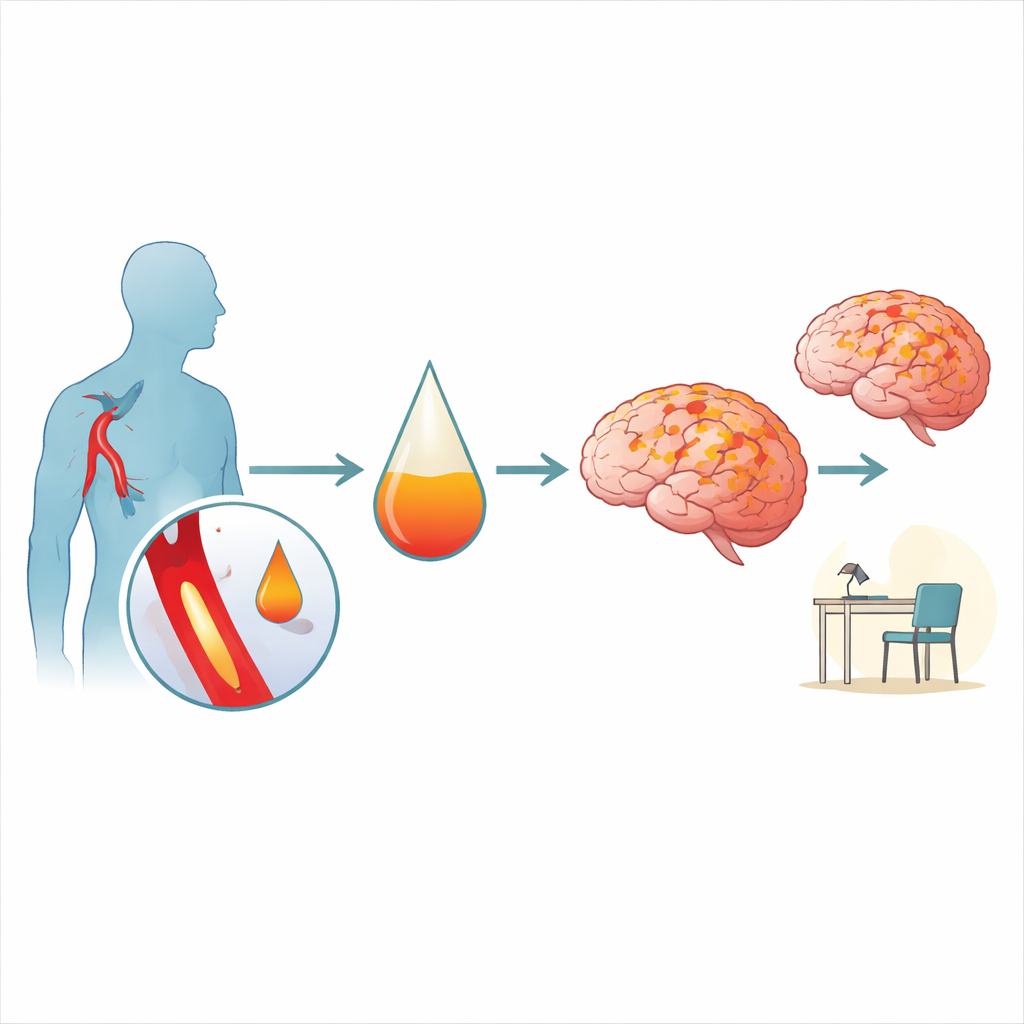
The team found that people with higher pTau217 percentages at the start already tended to have more amyloid in their brains. More importantly, those higher blood levels predicted faster growth of amyloid on brain scans over the following years—even among people whose amyloid scans were still below the usual “positive” threshold. In other words, the blood test could see risk coming before standard imaging would flag it. People who started with very low pTau217 rarely crossed into the range of clearly abnormal amyloid during the study period, suggesting they had a low near-term risk of Alzheimer’s–type brain changes.
Tracking the Spread of Tau in Vulnerable Brain Regions
Beyond amyloid, the study looked at how pTau217 relates to tau buildup inside the brain itself, using a second type of scan. Higher baseline pTau217 was linked to greater increases in tau in deep memory hubs such as the entorhinal cortex, and in nearby outer brain regions that are affected early in Alzheimer’s. These links held even in people who started with little or no detectable amyloid, hinting that the blood marker is capturing very early disease processes that brain scans may not yet fully reveal. Overall, pTau217 in the blood appeared to sit at a key junction between early amyloid changes and later tau spread in memory-critical areas.
From Invisible Changes to Noticeable Thinking Problems
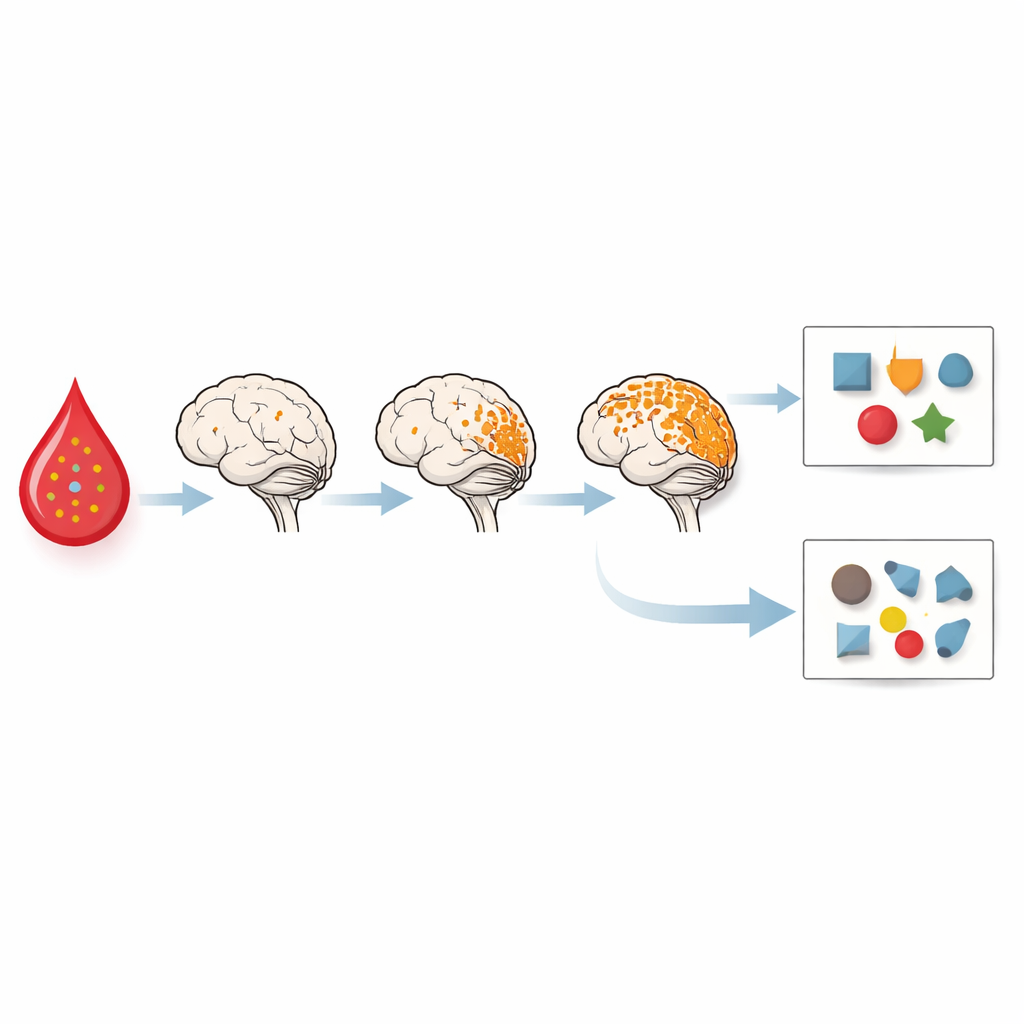
The researchers next asked how these biological shifts translated into real-world thinking over time. Across all participants, higher baseline pTau217 was associated with steeper declines on a detailed cognitive score that combines memory, thinking speed, and word skills. When they modeled the chain of events, they found that people with higher pTau217 tended to accumulate amyloid more quickly, which then promoted tau buildup in the outer temporal cortex, and this tau buildup was most closely tied to declines in thinking. In contrast, among people whose amyloid scans were clearly negative at the start, pTau217 did not yet predict measurable cognitive decline over roughly eight years of follow-up, suggesting that elevated blood markers alone do not mean memory problems are imminent.
What This Means for Screening and Prevention
To a layperson, the message of this work is that a carefully measured blood test can serve as an early radar for Alzheimer’s biology long before memory slips are obvious. Very low pTau217 levels in healthy older adults appear to signal a low short-term risk of harmful brain changes or serious cognitive decline, potentially reducing the need for frequent, costly scans. Mildly or clearly elevated levels, on the other hand, point to groups who might benefit from closer monitoring, repeat testing, or confirmatory brain imaging—especially in the era of drugs that aim to slow disease if started early. The authors caution that cutoffs from this study are specific to one laboratory test and group of mostly well-educated, white volunteers, and that blood screening for symptom-free people is not yet ready for routine clinical use. Still, these results strengthen the idea that a simple blood draw could soon help target prevention trials and, one day, guide more personalized decisions about who is most likely to benefit from early Alzheimer’s interventions.
Citation: Yang, HS., Anzai, J.A.U., Yau, WY.W. et al. Plasma phosphorylated tau 217 and longitudinal trajectories of Aβ, tau, and cognition in cognitively unimpaired older adults. Nat Commun 17, 3188 (2026). https://doi.org/10.1038/s41467-026-71269-3
Keywords: Alzheimer’s disease, blood biomarkers, pTau217, brain imaging, cognitive decline