Clear Sky Science · en
Low-intensity management promotes the soil priming effect in European agroecosystems
Why the way we farm matters for hidden soil life
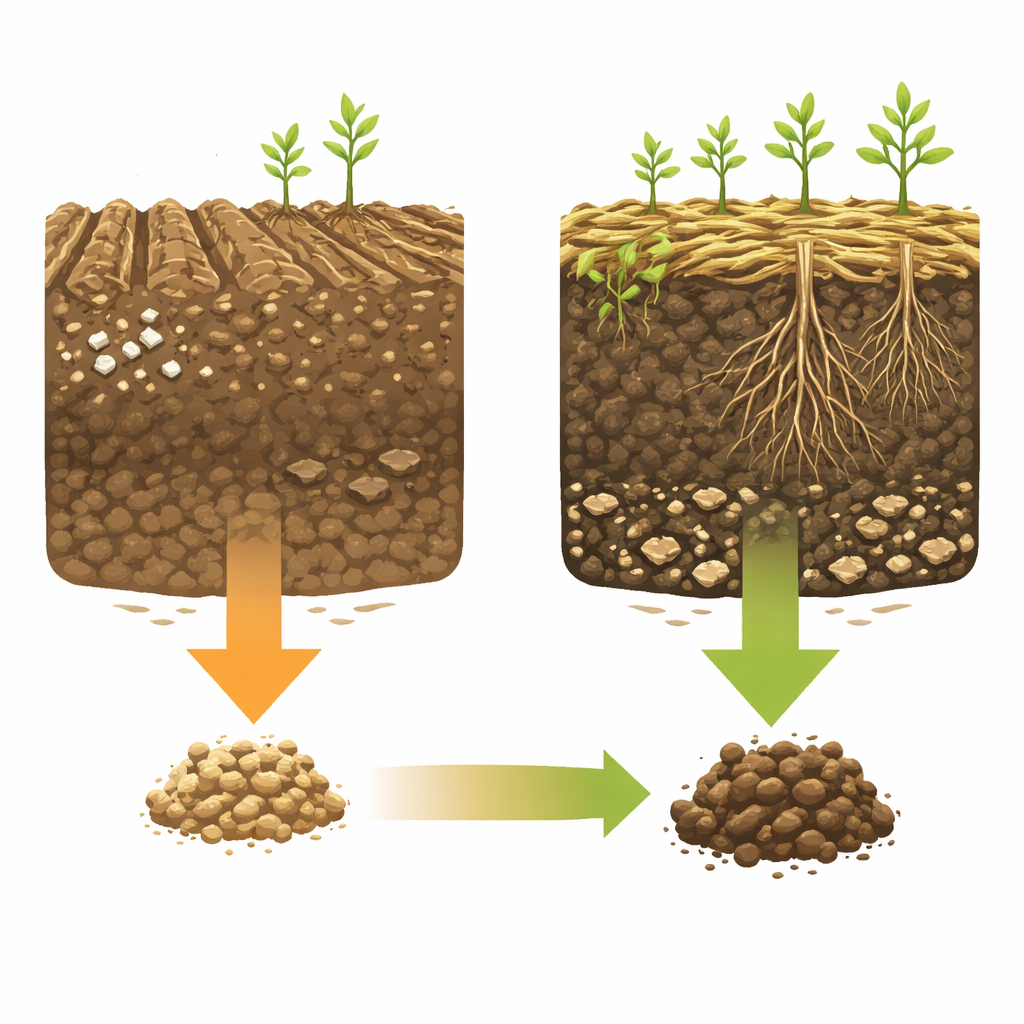
Healthy soils quietly help regulate the planet’s carbon budget, locking away carbon that would otherwise end up in the atmosphere. This study asks a deceptively simple question with big implications: how does the intensity of farming practices – how often we plow and what we use as fertilizer – change the way soil microbes handle fresh food, and in turn, how much carbon stays underground? By peering into fields across Europe and tracking how soil responds to a pulse of simple sugar, the authors reveal that gentler farming can supercharge an important but little-known process called the soil “priming effect,” reshaping how croplands store and release carbon.
Fresh food for microbes and a hidden carbon lever
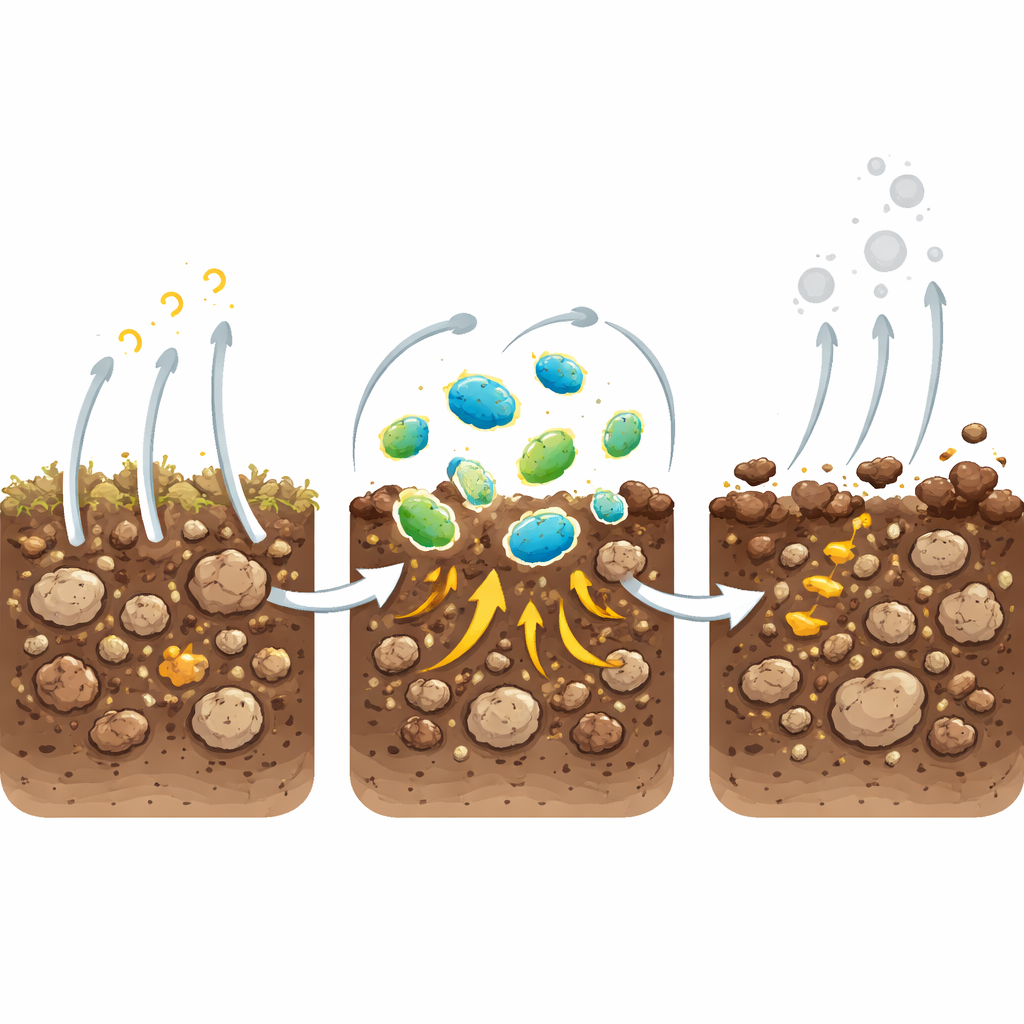
Soil is not just dirt; it is a bustling habitat filled with microbes that constantly eat, grow, and recycle dead plant material. When new, easily digestible carbon – such as plant sugars leaking from roots or decaying leaves – enters the soil, it can change how microbes break down the older, more complex organic matter already there. This shift is called the soil priming effect. If microbes respond to the fresh snack by producing more enzymes and mining the soil for extra nutrients, they can speed up the breakdown of stored organic matter, a phenomenon known as positive priming. In other situations, microbes may focus on the new food and slow their attack on older carbon, leading to negative priming. Until now, scientists did not know how important this priming effect really is for explaining how much carbon different soils contain, especially across large farming regions.
Tracking priming across European fields
The researchers collected soils from long-running field experiments in seven European countries, spanning cold, temperate, and semi-arid climates and a wide range of textures and fertility levels. Each experiment compared different combinations of tillage (from no-till to regularly plowed) and fertilizers (from mineral fertilizers to organic additions like manure or compost). In the laboratory, the team added a known amount of labeled glucose – a simple sugar – to these soils and measured how much extra carbon dioxide came from the breakdown of existing soil organic matter. This allowed them to calculate the priming effect and relate it to soil properties and management history. They also cross-checked their findings with independent European and global datasets that link soil priming to carbon content in many other ecosystems.
Gentler farming boosts priming and carbon links
The analyses showed that the priming effect explains a unique share of the differences in soil carbon across croplands, even after accounting for climate, soil chemistry, and geography. Crucially, management intensity emerged as a major driver. Soils under low-intensity practices – no-till or reduced tillage combined with organic fertilization – tended to have more organic matter, more nitrogen and phosphorus, more stable aggregates, and richer microbial communities. In these soils, the fresh glucose pulse often triggered strong positive priming, meaning microbes rapidly processed both the new and old carbon. By contrast, heavily tilled soils relying on mineral fertilizers, which had lower organic matter and fewer nutrients, showed much weaker priming and more frequent negative priming: microbes primarily consumed the added sugar while leaving older carbon relatively untouched.
How soil structure and microbes tip the balance
To untangle why some soils showed stronger priming than others, the authors used machine-learning and causal modeling approaches. They found that the ratio of carbon to phosphorus, total soil carbon and nitrogen, the stability of soil aggregates, and microbial biomass all helped predict priming strength. Low-intensity management affected priming directly, by increasing carbon content, and indirectly, by building stable clumps of soil and supporting diverse microbial communities and key enzymes. In nutrient-richer soils, microbes were less starved for nitrogen or phosphorus and could use fresh carbon inputs to fuel “co-metabolism” – simultaneously digesting both easy and hard-to-decompose material. Enzymes that break down complex sugars and release nitrogen and phosphorus played a central role in this dynamic, showing how tightly nutrient cycles and carbon turnover are intertwined.
What this means for climate‑smart agriculture
At first glance, it might seem worrying that low-intensity, carbon-rich soils show stronger priming and therefore more active carbon turnover. Yet these same practices – reduced tillage and organic fertilization – are well known to build soil organic matter over the long term and improve soil health. This study suggests that sustainable farming does not simply “lock up” carbon; instead, it fosters a more dynamic, living soil where carbon is constantly cycled, some of it released and some re-stabilized in deeper or more protected forms. By revealing that the soil priming effect is both a key predictor of carbon stocks and strongly shaped by management, the work underscores that the legacy of farming practices can determine how future carbon inputs are processed. In practical terms, promoting low-intensity, biologically rich agroecosystems could help keep soils productive and resilient while still contributing to climate goals, as long as carbon inputs from plants and organic amendments are maintained or enhanced.
Citation: Dong, X., Vera, A., Patiño, M. et al. Low-intensity management promotes the soil priming effect in European agroecosystems. Nat Commun 17, 3819 (2026). https://doi.org/10.1038/s41467-026-71255-9
Keywords: soil carbon, sustainable agriculture, soil microbes, tillage and fertilization, carbon cycling