Clear Sky Science · en
Cartilage targeting hydrogel nanoplatform degrades BRD4 to alleviate osteoarthritis via Nav1.7 axis
Why protecting aching joints matters
Osteoarthritis is a leading cause of pain and disability as we age, yet most treatments only ease symptoms without slowing the disease itself. This study explores a high-tech way to protect the smooth cartilage that cushions our joints by shutting down a damaging molecular pathway inside cartilage cells. The work combines insights into how joint cells malfunction with an injectable smart gel designed to deliver therapy precisely where it is needed.
When cartilage cells go off balance
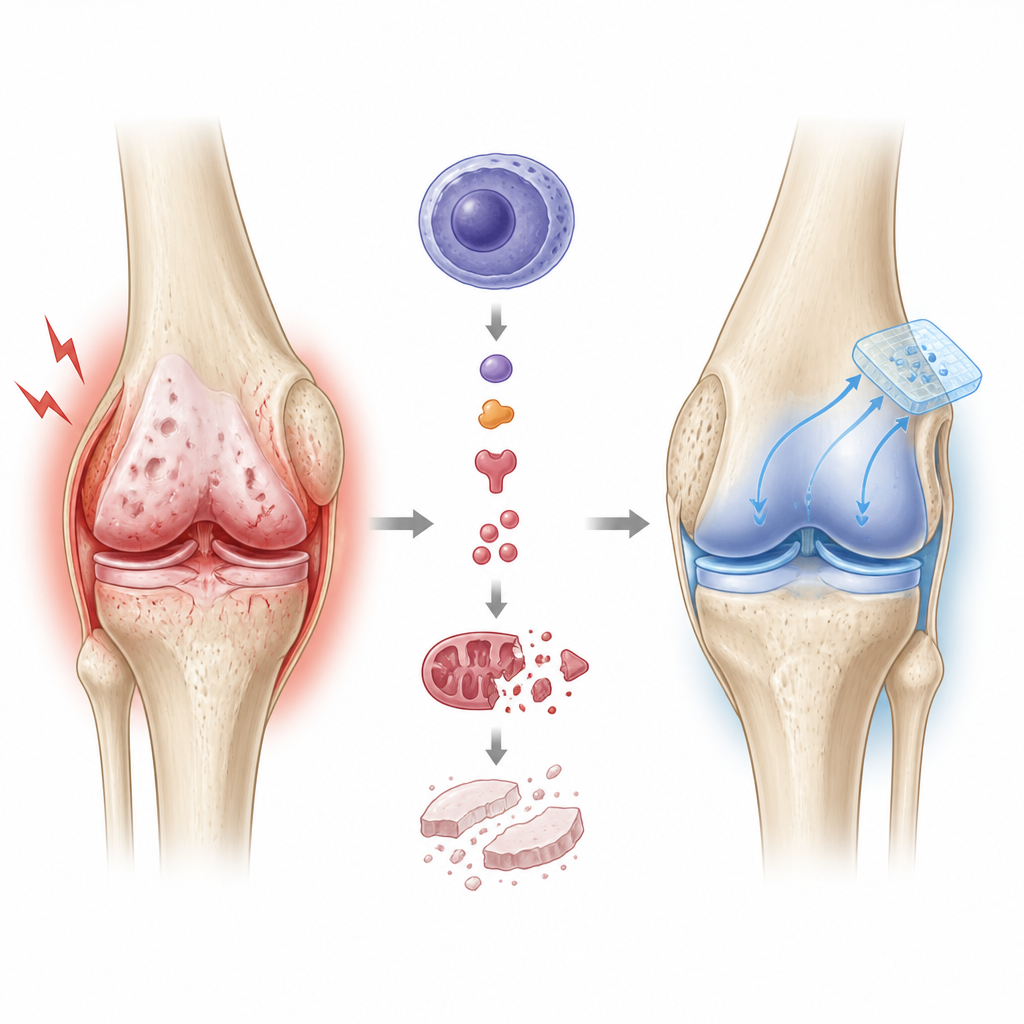
In healthy joints, cartilage cells quietly maintain a balance between building and breaking down the tissue. In osteoarthritis, this balance is lost, leading to thinning cartilage, bone spurs and chronic pain. The researchers focused on two key players inside these cells: BRD4, a protein that helps switch genes on, and Nav1.7, a channel in the cell membrane that lets sodium ions flow in. Using single-cell and bulk genetic analyses in mouse cartilage, they found that BRD4 is unusually active in a subset of damaged cartilage cells and that it strongly boosts production of Nav1.7. Together, this BRD4/Nav1.7 axis drives inflammation, energy loss in the cell’s power plants and excessive breakdown of cartilage.
A hidden pain channel inside cartilage
Nav1.7 is best known for its role in pain-sensing nerves, but this study shows it is also active inside cartilage cells. In cell experiments mimicking an arthritic environment, Nav1.7 levels surged and the cells developed stronger sodium currents, confirming the channel was working. When the team removed Nav1.7 only from cartilage cells in mice, their joints were better protected in two different models of osteoarthritis. These mice had healthier cartilage, fewer bone changes and reduced pain-like behaviors, suggesting that Nav1.7 in cartilage itself influences both tissue damage and how much pain the animals experience.
Shutting the switch with protein demolition
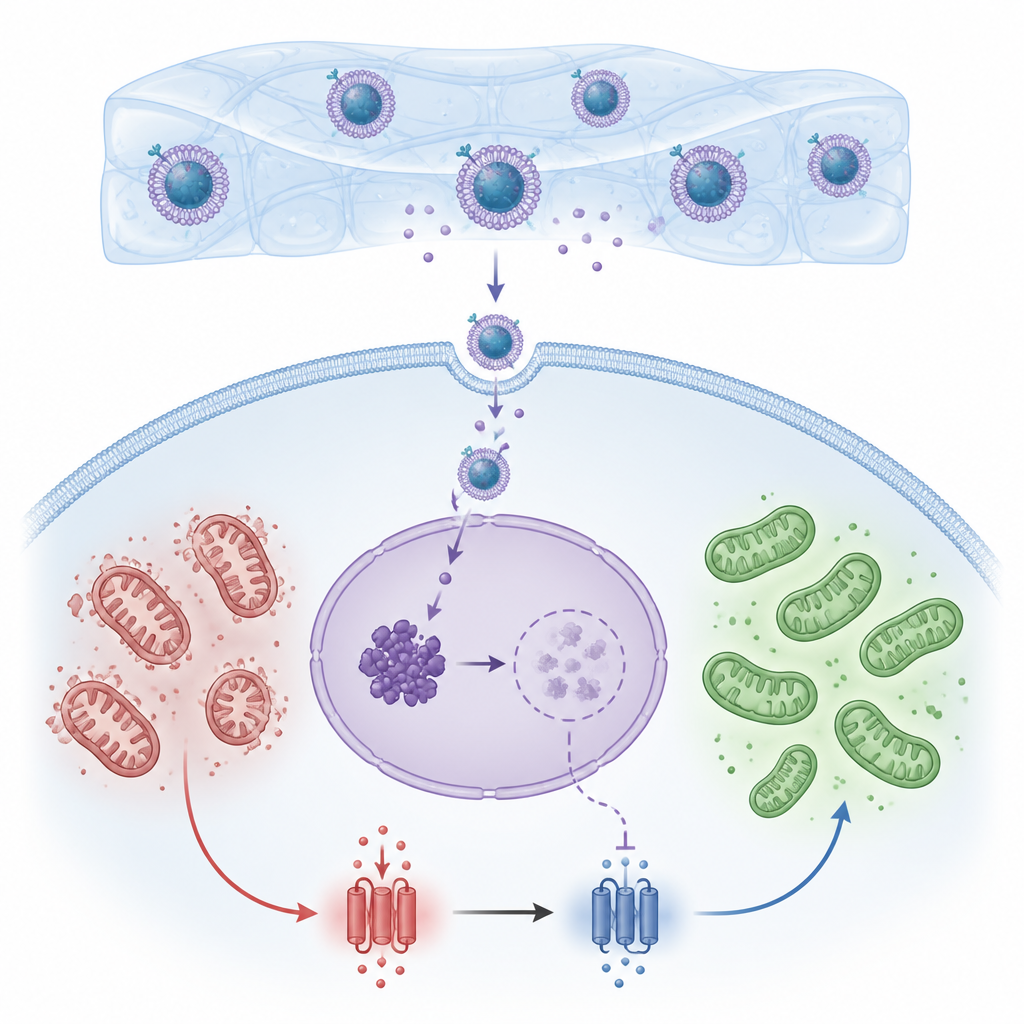
Because BRD4 is buried in the cell nucleus and hard to block with ordinary drugs, the researchers turned to a newer approach called PROTACs. Instead of simply inhibiting BRD4, a PROTAC molecule tags it for destruction by the cell’s own waste-disposal system. The team used such a compound, called dBET1, and showed it could efficiently remove BRD4 from cartilage-like cells without major toxicity. As BRD4 levels fell, Nav1.7 activity dropped, harmful oxygen by-products declined, and the cells’ mitochondria recovered their structure and energy output. Cartilage-building genes were switched back on, while genes that chew up cartilage were dialed down.
A smart gel that homes in on cartilage
Delivering a bulky, fragile PROTAC into the dense cartilage layer is a major challenge. To solve this, the scientists built a layered delivery system. First, they loaded dBET1 into porous silica nanoparticles. Then they wrapped these particles in real cartilage cell membranes, helping them latch onto cartilage tissue and slip past local defenses. Finally, they embedded the membrane-coated particles in a self-assembling hydrogel made from the plant compound rhein, which can be injected into the joint as a liquid and then gently sets. The gel slowly releases the nanoparticles, which are taken up by cartilage cells through natural uptake routes, where they release dBET1 into the cell interior while keeping its activity intact.
Healthier joints in arthritic mice
In mice with surgically or chemically induced osteoarthritis, weekly injections of the PROTAC-loaded hydrogel into the knee joint had striking effects. Compared with untreated animals, treated mice moved more freely and showed reduced sensitivity to painful stimuli. Imaging and tissue sections revealed smoother cartilage surfaces, thicker cartilage layers and more normal underlying bone architecture. Markers of inflammation and cartilage breakdown fell, while proteins that help build and maintain cartilage increased. Importantly, the gel system showed good safety in blood tests and organ examinations, and it remained in the joint for weeks without drifting to distant organs.
What this could mean for future joint care
This work presents a clear, stepwise story: an overactive BRD4 protein in cartilage cells boosts Nav1.7, which in turn harms cell energy production, stokes inflammation and accelerates cartilage loss and pain. By selectively removing BRD4 using a PROTAC and delivering it through a cartilage-homing hydrogel, the researchers were able to calm this pathway and protect joints in animal models. While still at the preclinical stage, the study outlines a potential future therapy that does more than soothe symptoms: it targets an upstream control point in diseased cartilage cells with a precision delivery system designed for the harsh environment inside the joint.
Citation: Zhao, Q., Xu, T., Du, Z. et al. Cartilage targeting hydrogel nanoplatform degrades BRD4 to alleviate osteoarthritis via Nav1.7 axis. Nat Commun 17, 4573 (2026). https://doi.org/10.1038/s41467-026-71246-w
Keywords: osteoarthritis, cartilage, BRD4, Nav1.7, hydrogel therapy