Clear Sky Science · en
Nucleophagy is promoted by two autophagy receptors and inhibited by chromatin-nuclear envelope tethering in fission yeast
How Cells Clean House Without Hurting Their DNA
Inside every cell, the nucleus stores the genetic instructions that keep life running. Yet the nucleus itself also needs cleanup and repair. This study explores how fission yeast cells selectively recycle worn-out nuclear parts while sparing their precious DNA, revealing basic rules that may apply to many organisms.
A Targeted Cleanup Crew in the Nucleus
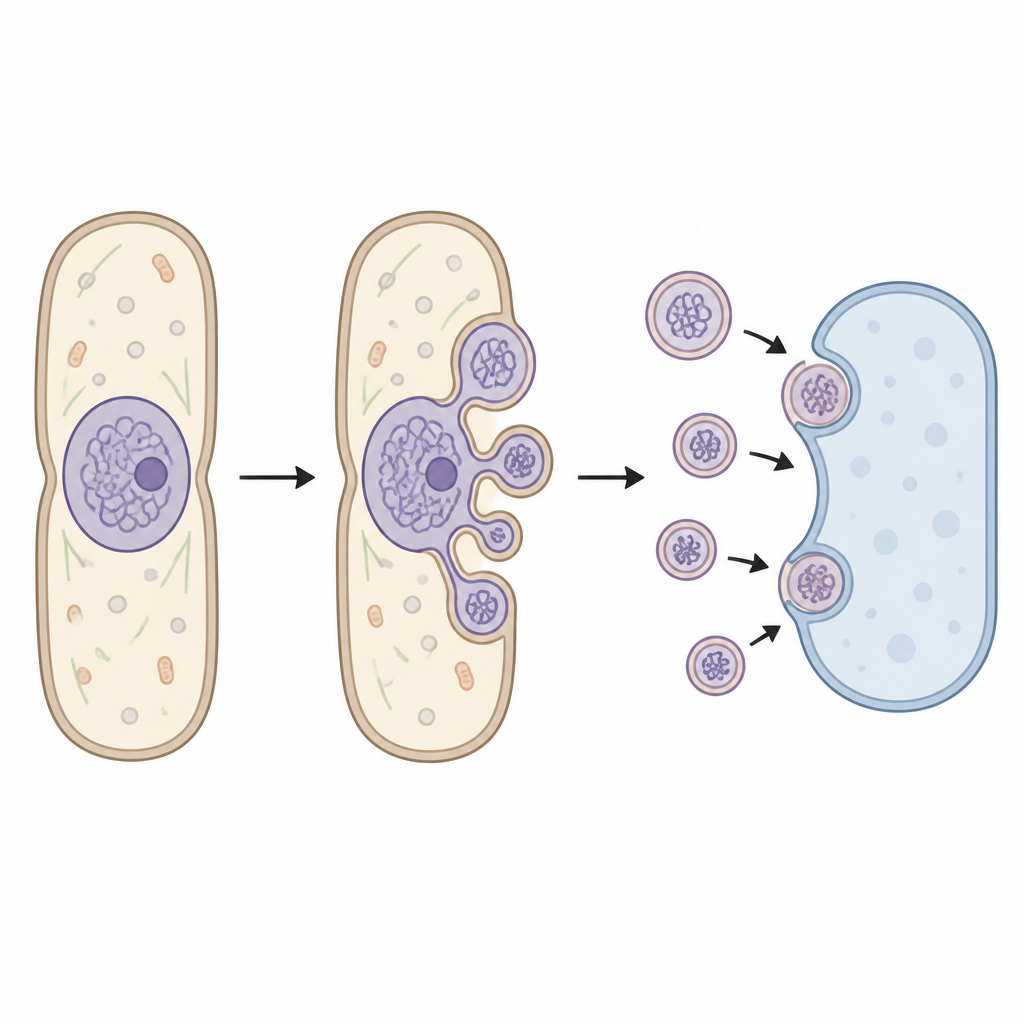
Cells use a process called autophagy to wrap unwanted material in membranes and send it to a recycling compartment similar to a lysosome. When the target is part of the nucleus, this is called nucleophagy. The authors show that in fission yeast, starvation for nitrogen triggers nucleophagy that removes several nuclear components: the fluid interior, the nuclear envelope, nuclear pores, and the nucleolus. Notably, DNA-packed chromatin is left untouched. This selectivity hints that cells have special safeguards to protect their genetic blueprint during nuclear cleanup.
Two Helpers Guide the Waste to the Cellular Recycling Center
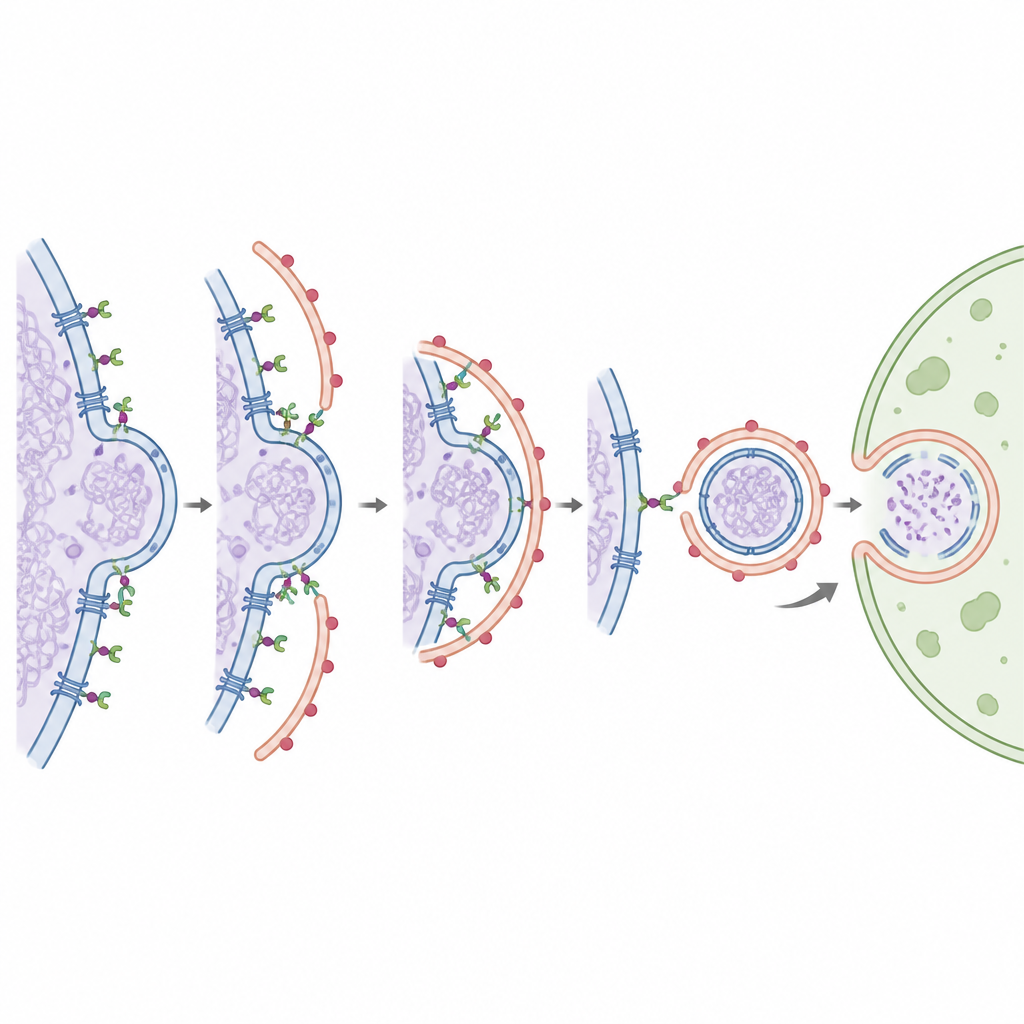
The team identifies a previously uncharacterized protein, Npr1, as a key nucleophagy receptor. Npr1 sits in the outer membrane of the nucleus and can bind another protein, Atg8, which coats the growing recycling membranes. Npr1 works together with a known receptor called Epr1. Either one alone is sufficient, but removing both almost completely blocks nucleophagy triggered by nitrogen starvation. Under starvation, Npr1 and Epr1 gather with Atg8 into bright spots on the nuclear surface, indicating the sites where nuclear material is being packaged for removal. Artificially replacing their Atg8-binding segments with a simple engineered sequence restores the process, showing that their main job is to tether the nuclear envelope to the autophagy machinery.
Bubble-Like Protrusions Bud Off From the Nucleus
Using live-cell imaging and electron microscopy, the researchers watch the physical reshaping of the nucleus during nucleophagy. At sites where Npr1 or Epr1 and Atg8 cluster, the nuclear envelope pushes outward, forming bubble-like protrusions that contain nuclear interior. These protrusions are often surrounded by additional membrane that will become the outer layer of an autophagosome. In many cases, the neck of the protrusion pinches off, releasing a sealed vesicle into the cell’s interior. These vesicles then move toward the vacuole, where their contents are broken down and recycled. When the autophagy system is disabled, or when both receptors are missing, these protrusions accumulate and the nucleus becomes misshapen, and the cells have a harder time surviving prolonged starvation.
When DNA Gets Dragged Along, the Process Stalls
The study also uncovers a built-in brake that helps protect chromatin. The inner membrane of the nucleus contains proteins that can contact DNA. The authors found that modestly increasing the level of one such protein, Lem2, strongly blocked nucleophagy. Under these conditions, Npr1 and Atg8 still formed puncta and protrusions still emerged, but the protrusions failed to detach and instead collapsed back into the nucleus. By engineering a series of artificial proteins that simply tether chromatin more tightly to the inner nuclear membrane, the team shows that bringing DNA into these protrusions is enough to halt their release. Imaging histone proteins confirms that chromatin is frequently present in stalled protrusions but rarely in those that successfully bud off.
Why This Protective Block Matters
Together, the findings suggest that nucleophagy is a two-edged tool that cells must handle carefully. On one hand, it helps maintain nuclear shape and health during hard times by removing excess or damaged nuclear material. On the other hand, if chunks of chromatin were routinely packed into recycling vesicles, the cell’s genetic information would be at risk. By allowing protrusions that are free of chromatin to pinch off, while stalling those that contain DNA, fission yeast cells appear to strike a balance between nuclear cleanup and genome protection.
Citation: Ma, ZH., Pan, ZQ., Jiang, ZD. et al. Nucleophagy is promoted by two autophagy receptors and inhibited by chromatin-nuclear envelope tethering in fission yeast. Nat Commun 17, 4678 (2026). https://doi.org/10.1038/s41467-026-71237-x
Keywords: nucleophagy, autophagy receptors, nuclear envelope, chromatin protection, fission yeast