Clear Sky Science · en
Rare jackpot individuals drive rapid adaptation in Threespine Stickleback
How a Few Fish Can Change a Whole Lake
Imagine moving a few thousand ocean fish into a newly emptied lake and watching them adapt to freshwater in less than a decade. This study follows that real-world experiment with threespine stickleback in Alaska, revealing that rapid evolution in the wild can be driven not by many average animals, but by a tiny number of genetic "jackpot" individuals whose descendants soon dominate the lake.
A Natural Experiment in a Remote Alaska Lake
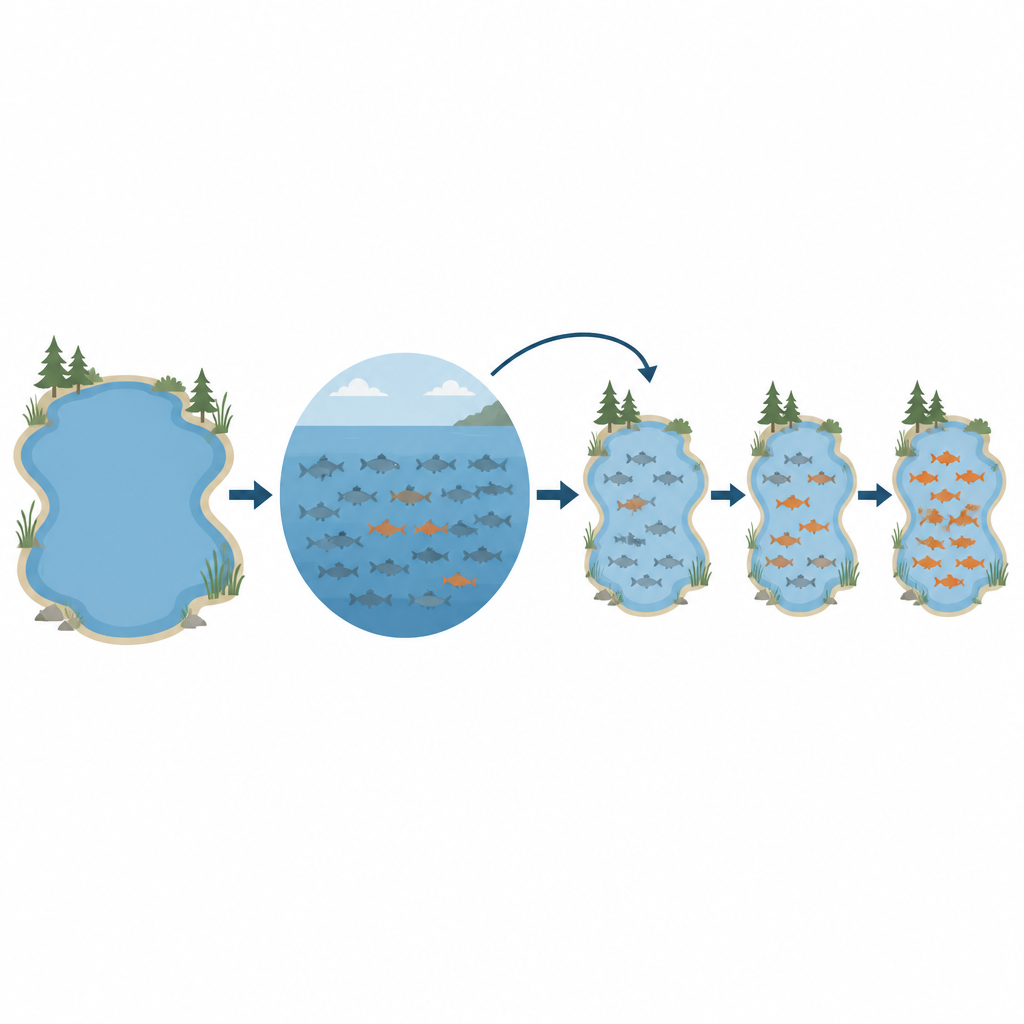
After an invasive fish was removed from Scout Lake in Alaska, scientists released just over 3000 ocean-dwelling threespine stickleback into the empty freshwater lake. These fish, like salmon, breed in freshwater but usually live in the sea. Researchers then sampled fish from the lake over nearly a decade and sequenced hundreds of their genomes, comparing them to fish from the original ocean source. This created an unusually clear time-series view of evolution in action, allowing the team to watch how genetic changes unfolded from one generation to the next.
Hidden Genetic Potential in Rare “Jackpot” Fish
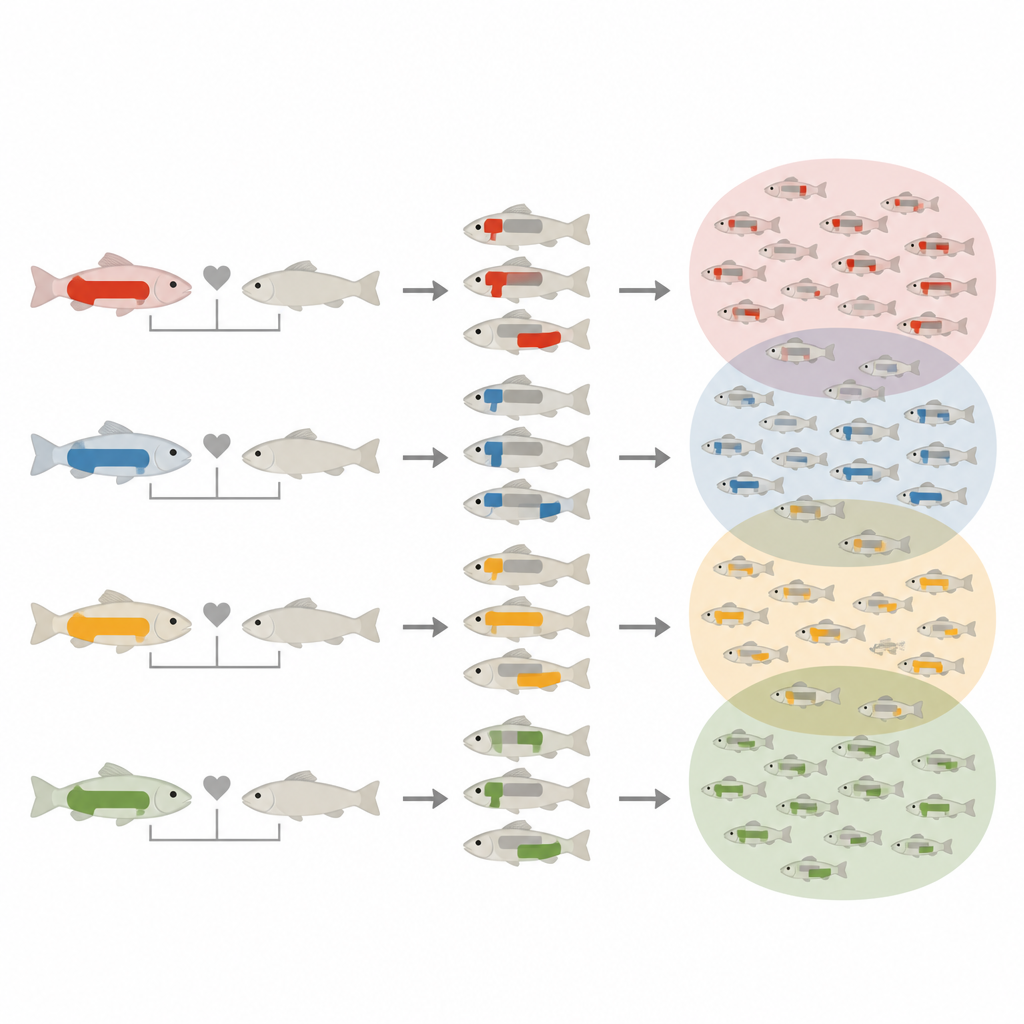
Ocean stickleback already carry some DNA variants that are helpful in freshwater, but most individuals have only a few of these beneficial versions scattered across their genomes. The classic view holds that, once fish colonize a lake, natural selection and genetic shuffling gradually pull these scattered helpful variants together. In Scout Lake, however, the data told a different story. The researchers discovered that rapid adaptation depended on extremely rare founders carrying long stretches of DNA packed with freshwater-friendly variants. These jackpot fish were almost invisible in the source population but, once in the lake, their genetic advantages gave them much higher success than ordinary fish.
A Bottleneck, Family Takeover, and Limited Shuffling
In the first few years after the introduction, most fish in Scout Lake still looked genetically similar to their ocean relatives, with only a handful of helpful freshwater variants. Then, around the third year, the population size crashed and the genetic picture suddenly changed. Many surviving fish now carried large DNA blocks rich in freshwater-adaptive variants, and the proportion of such individuals jumped from about one percent to nearly half of the sample. Kinship analyses showed that these fish were closely related, forming a sprawling family network tracing back to a few jackpot founders. Over subsequent years, nearly all sampled fish descended from this extended family. At the same time, the size of the adaptive DNA blocks changed only modestly, suggesting that recombination, the usual shuffling mechanism, played a smaller role than expected during these early, fast stages of adaptation.
Inbreeding, Genetic Burden, and Cleanup
The sharp population decline and subsequent regrowth from a small number of related jackpot lineages created strong inbreeding, which usually raises concerns about harmful mutations building up. By tracking patterns of genetic variation at different kinds of DNA sites, the researchers found that the bottleneck initially increased the number of rare, potentially harmful changes. Yet as the population grew mainly through matings among jackpot descendants, many of these harmful variants appear to have been exposed in double doses and then removed by natural selection. In effect, the same inbreeding that might threaten a population also helped purge some of its genetic burden, even as the beneficial freshwater DNA blocks spread through the lake.
What This Means for Evolution in the Wild
For a general reader, the key message is that evolution in nature does not always proceed as a slow, even march driven by countless small genetic tweaks. In Scout Lake, rapid adaptation to freshwater hinged on a few fish that arrived already carrying powerful genetic toolkits, packaged in large DNA blocks that resisted being broken apart. Their descendants quickly reshaped the whole population, while inbreeding both concentrated helpful variants and helped clean out some damaging ones. This work shows that rare individuals can have outsized influence on how fast and how far a population can adapt when it encounters a new environment.
Citation: Kwakye, A., Reid, K., Wund, M.A. et al. Rare jackpot individuals drive rapid adaptation in Threespine Stickleback. Nat Commun 17, 4614 (2026). https://doi.org/10.1038/s41467-026-71236-y
Keywords: rapid evolution, stickleback fish, freshwater adaptation, standing genetic variation, population genomics