Clear Sky Science · en
Cardiomyocyte-derived GPX4 stabilizes BNIP3 to facilitate mitophagy and mitigate myocardial ischemia/reperfusion injury
Why protecting the heart after a blockage matters
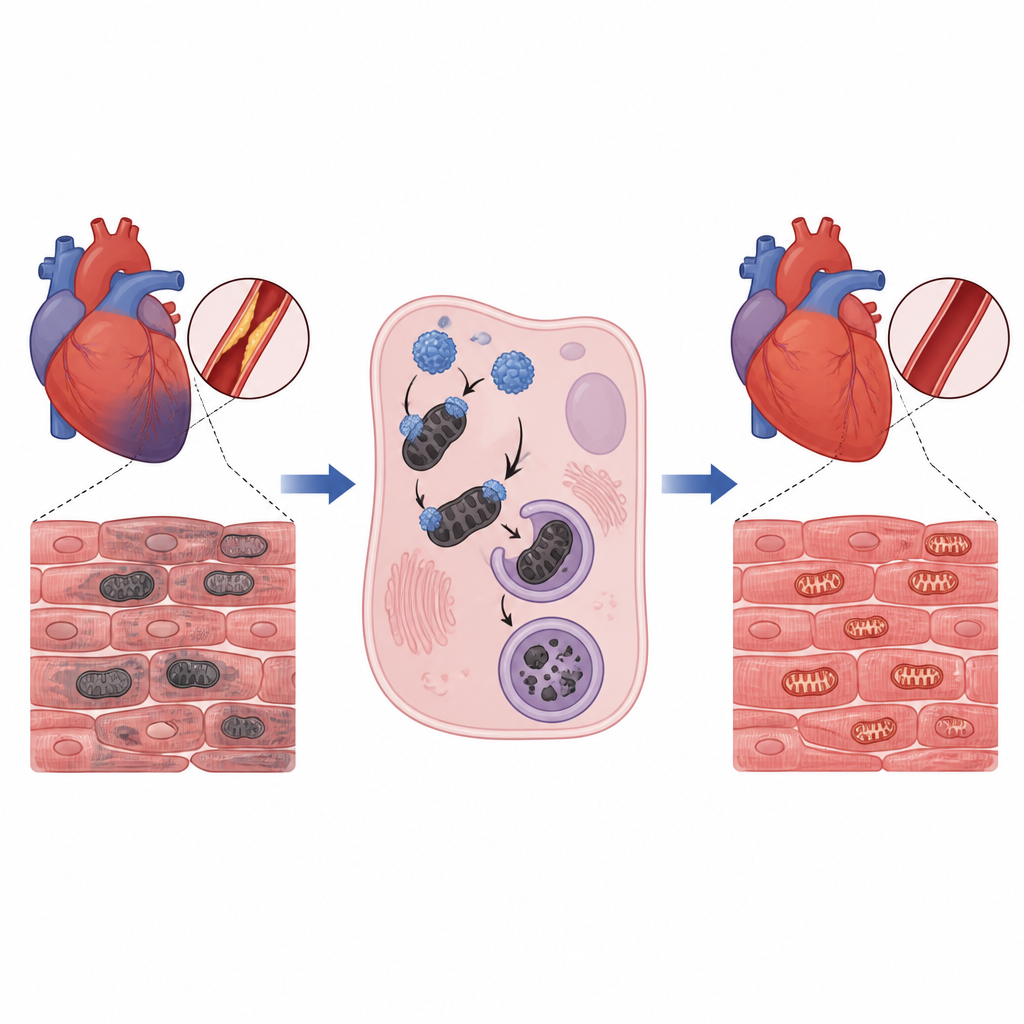
When a person has a heart attack, doctors rush to reopen the blocked artery and restore blood flow. This lifesaving step can paradoxically damage heart muscle further as oxygen suddenly returns, a problem known as ischemia and reperfusion injury. The study in this article explores how heart cells use an internal defense system to clear out damaged energy factories, called mitochondria, and shows how a single protective enzyme helps limit lasting harm and heart failure.
A key bodyguard inside heart cells
The researchers focus on an enzyme called GPX4, which normally protects cells from a type of iron-driven damage that attacks fatty components of cell membranes. Using advanced spatial gene and protein mapping in human and mouse hearts after heart attacks, they found GPX4 is plentiful in healthy and border regions of heart tissue but sharply reduced in the most severely starved areas. Blood samples from patients confirmed that lower GPX4 levels in the circulation are linked to worse risk scores, suggesting that this enzyme tracks with injury severity and prognosis. In single-cell analyses, heart muscle cells were the main source of GPX4, and its levels dropped quickly during the ischemic phase and did not rebound, tying its loss to poor recovery.
Testing GPX4’s protection in living hearts
To probe cause and effect, the team boosted GPX4 specifically in mouse heart muscle cells using a targeted viral vector and then triggered a controlled heart attack followed by restored blood flow. Mice with extra GPX4 had smaller dead tissue areas, lower blood markers of heart injury, and fewer dying heart cells. In contrast, blocking GPX4 activity with a drug made the damage worse and increased cell death. Over several weeks, mice with added GPX4 showed stronger heart pumping function, less scarring, and milder enlargement of the heart chambers in both temporary and permanent blockage models. These findings indicate that GPX4 does not just mark damage but actively shields heart muscle from the short-term and long-term fallout of interrupted blood flow.
Cleaning up broken power plants
Because mitochondria are central to both energy supply and cell death, the scientists examined how GPX4 affects mitochondrial health. In cell culture and mouse hearts, extra GPX4 preserved energy output, supported key mitochondrial enzyme activity, and maintained the electrical potential across mitochondrial membranes during stress. Under the microscope, heart cells with more GPX4 retained more normal internal folds within mitochondria, while cells with reduced GPX4 or drug blockade showed fragmented, swollen structures. Interestingly, GPX4 overexpression was also associated with signals that more damaged mitochondria were being removed, hinting that the enzyme might promote a selective cleanup process rather than simply preserving all mitochondria.
A three-part team that drives mitochondrial cleanup
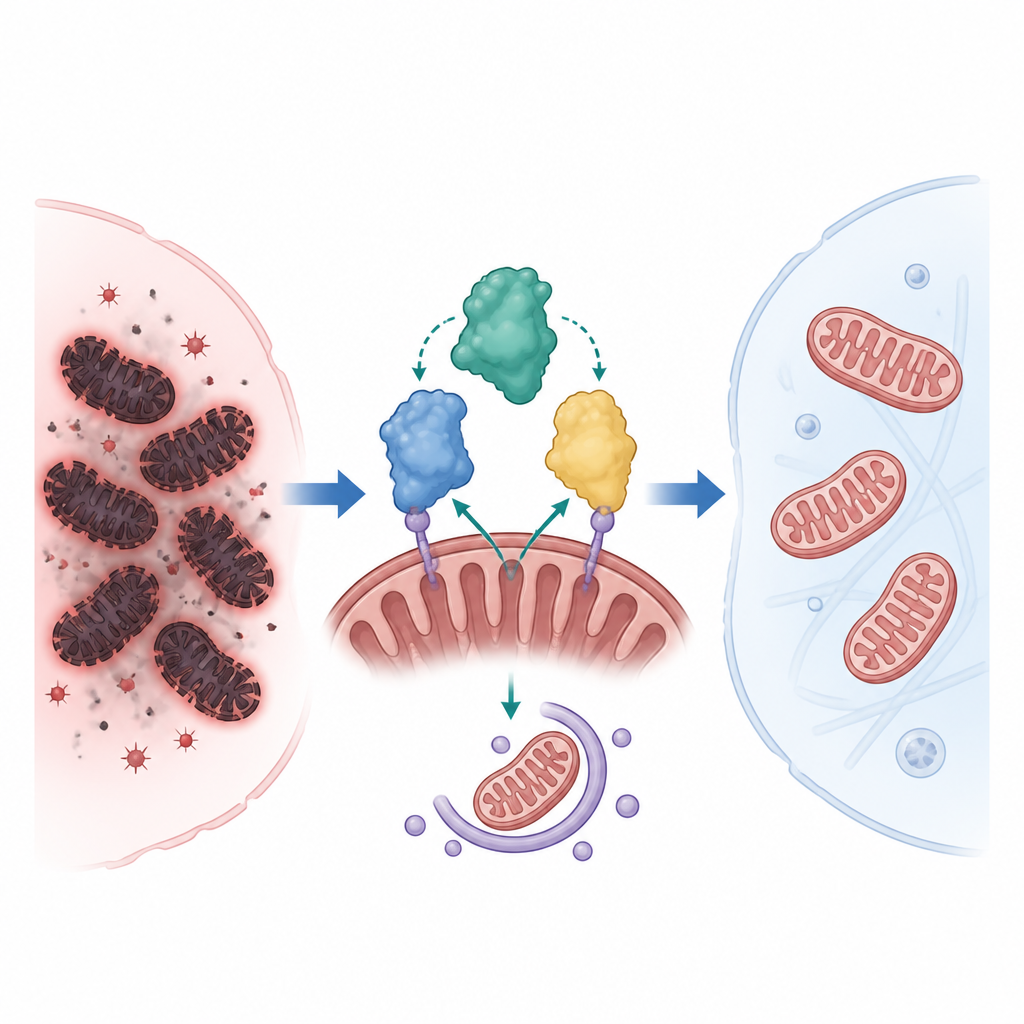
The study reveals that GPX4 physically binds to a mitochondrial receptor protein called BNIP3, which flags damaged mitochondria for disposal, and to a third partner, the enzyme USP20, which strips away small tags that would otherwise mark BNIP3 for breakdown. By stabilizing a three-part complex of GPX4, BNIP3, and USP20, GPX4 reduces the chemical tags that send BNIP3 to the cell’s shredder, especially at a single critical position on BNIP3. This keeps BNIP3 levels high, boosts the specialized recycling process that engulfs faulty mitochondria, and improves overall mitochondrial quality. When USP20 was genetically removed in mice, GPX4 could no longer protect the heart as effectively during the early phase after injury, highlighting USP20 as an essential partner in this defense.
What this means for future heart care
In plain terms, this work shows that a natural enzyme inside heart cells helps organize a cleanup crew that sweeps away damaged energy factories after blood flow is restored. By holding BNIP3 steady through USP20, GPX4 encourages the cell to recycle faulty mitochondria, which supports healthier energy production and reduces lasting heart muscle damage. These insights suggest that therapies aimed at boosting GPX4, protecting its critical active site, or strengthening the GPX4–BNIP3–USP20 team could one day help patients recover better after a heart attack by limiting hidden injury that occurs once the artery has already been reopened.
Citation: Zhong, L., Cheng, Z., Zhang, Y. et al. Cardiomyocyte-derived GPX4 stabilizes BNIP3 to facilitate mitophagy and mitigate myocardial ischemia/reperfusion injury. Nat Commun 17, 4578 (2026). https://doi.org/10.1038/s41467-026-71232-2
Keywords: myocardial ischemia reperfusion, GPX4, mitophagy, BNIP3, mitochondrial dysfunction