Clear Sky Science · en
Deep-branching Chloroflexota lineages illuminate the eco-evolutionary foundation of cross-ecosystem colonization
How tiny lake microbes rewrite their own rulebook
Bacteria are expert survivors, quietly shaping everything from soils to lakes. This study follows a little known group of bacteria as they move from land into lakes and shows how their DNA and proteins change along the way. By watching these microbes cross ecosystem borders, the researchers uncover two surprising strategies life can use to adapt to new worlds.
From dirt to deep water
The work focuses on a branch of the bacterial tree called Limnocylindria, part of the Chloroflexota phylum. Relatives in this group live in soils, lake sediments and open freshwater. Using hundreds of genomes assembled from environmental DNA, the authors reconstructed a family tree and mapped where each lineage is found. They see a clear path: ancient members are almost entirely soil dwellers, a younger group reaches into sediments, and one family, Limnocylindraceae, is now almost confined to freshwater lakes, especially shallow waters fed by runoff from land. This reveals a soil-to-sediment-to-lake journey.
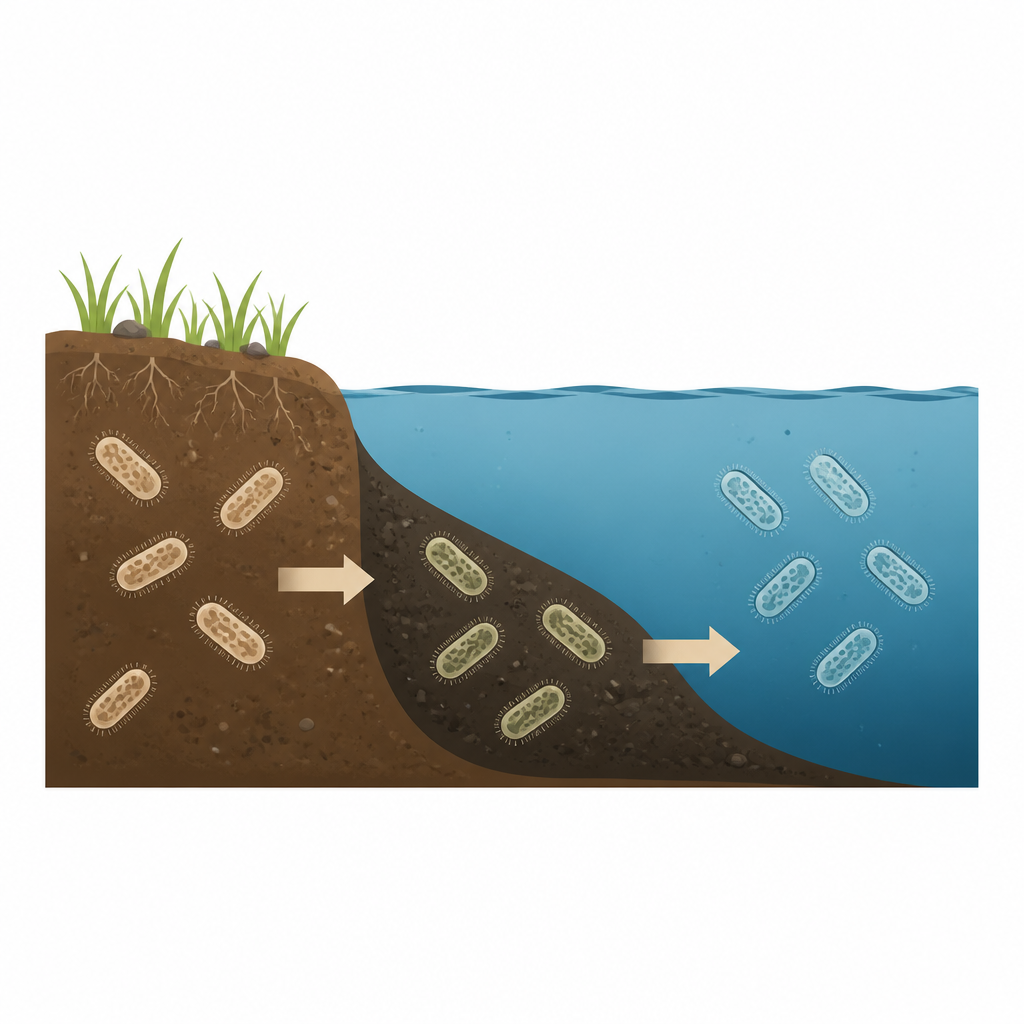
Two very different ways to conquer a new habitat
Once in view, these sister families reveal contrasting survival tactics. One, called CSP1-4, has taken the “more is more” route. Its members grow larger genomes as they spread from soil into sediments and lake water, picking up habitat-specific genes that help them cope with changing oxygen, nutrients, and carbon sources. Their DNA also carries signs of relaxed constraints, such as more mobile genetic elements and extra noncoding space, which can fuel experimentation with new traits.
The minimalist lake specialist
Limnocylindraceae, in contrast, has become a minimalist. Its genomes are almost half the size of those of its soil ancestors, with tightly packed genes and few regulatory switches. Yet these compact genomes are unexpectedly rich in G and C DNA bases, breaking the usual link between shrinking genome size and low GC content in free-living bacteria. By zooming in on one genus, Limnocylindrus, the authors show that genome shrinking happened first, followed later by a modest drop in GC. The pattern of mutations points to random changes gradually swapping GC-rich DNA codons for those rich in A and T, rather than fine tuning by natural selection.
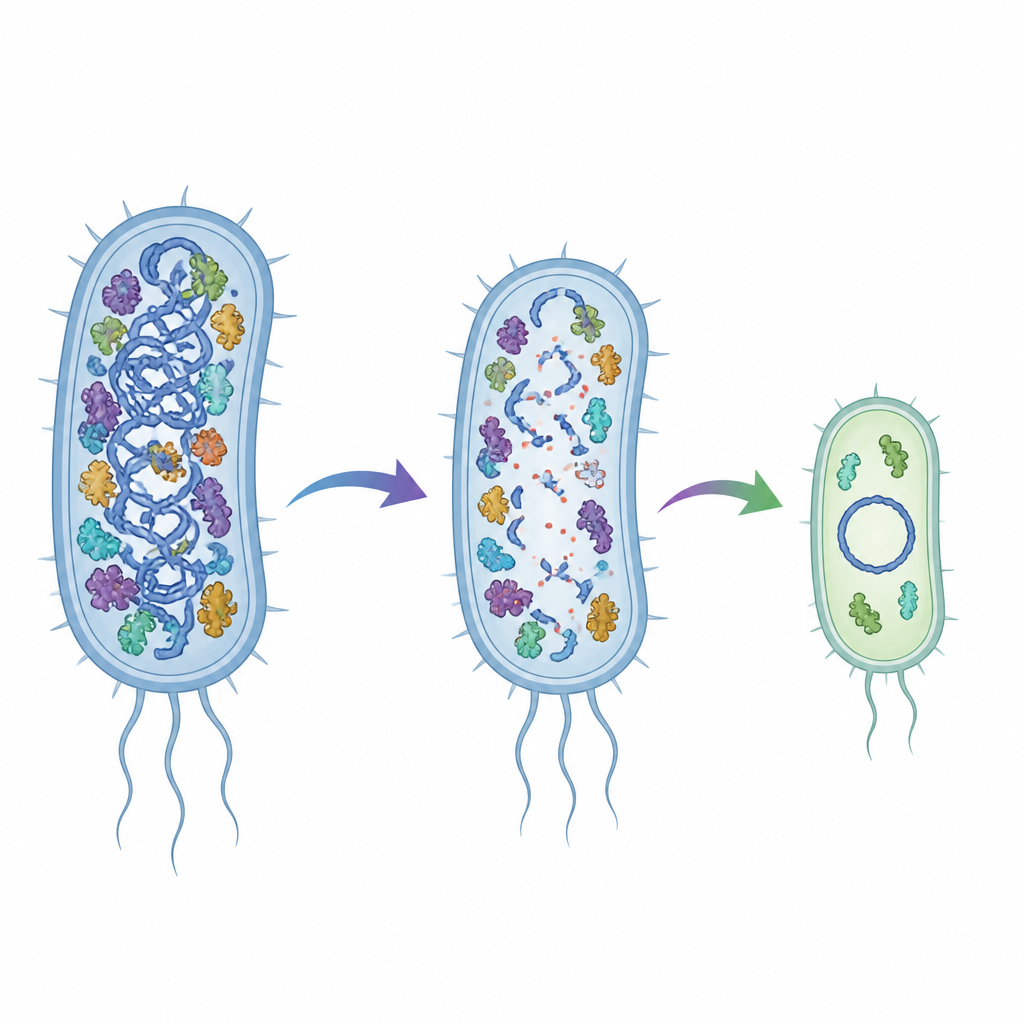
Life without a full DNA repair toolkit
A key clue lies in the loss of several DNA repair enzymes that normally patrol for damaged bases and fix them. In Limnocylindraceae these tools are largely missing, especially from a pathway called base excision repair. Without them, certain chemical lesions accumulate and are copied into permanent mutations, many of which turn GC pairs into AT pairs. The authors argue that this likely turned the lineage into a “hypermutator,” with faster DNA change that both chipped away at nonessential genes and nudged base composition. Over time this mutation-driven erosion stripped the genomes down and narrowed their metabolic range, locking the bacteria into a specialized freshwater lifestyle.
Protein thrift in nutrient-limited lakes
Although mutation seems to dominate genome architecture, natural selection still leaves a footprint at the level of proteins. Limnocylindraceae has shed several pathways for making key amino acids, forcing it to rely more on amino acids dissolved in lake water. At the same time, its proteins are built from amino acids that use less carbon and nitrogen per unit length, lowering the elemental cost of its biomass. Similar “protein thrift” appears in other freshwater lineages from unrelated groups, suggesting that slimming down the chemical cost of proteins is a common response when microbes move into nutrient-limited waters.
What this means for life’s flexibility
Together these findings show that there is no single recipe for how free-living bacteria invade new ecosystems. One lineage adds genes and grows more versatile; another lets mutation hack away at its DNA repair systems, loses genes, and then fine tunes its protein chemistry to make the most of scarce nutrients. For a lay reader, the message is that even simple microbes can follow very different evolutionary paths to reach similar habitats. Random DNA damage and loss, working alongside subtle selection on protein building blocks, can both support the leap from soil to lake, reshaping the genomes of some of Earth’s most abundant and influential organisms.
Citation: Serra Moncadas, L., Shakurova, A., Hofer, C. et al. Deep-branching Chloroflexota lineages illuminate the eco-evolutionary foundation of cross-ecosystem colonization. Nat Commun 17, 4696 (2026). https://doi.org/10.1038/s41467-026-71228-y
Keywords: bacterial evolution, genome reduction, freshwater microbes, DNA repair, proteome optimization