Clear Sky Science · en
The landscape and regulatory potential of eccDNAs in mammalian preimplantation embryos
Hidden DNA Loops in the Earliest Days of Life
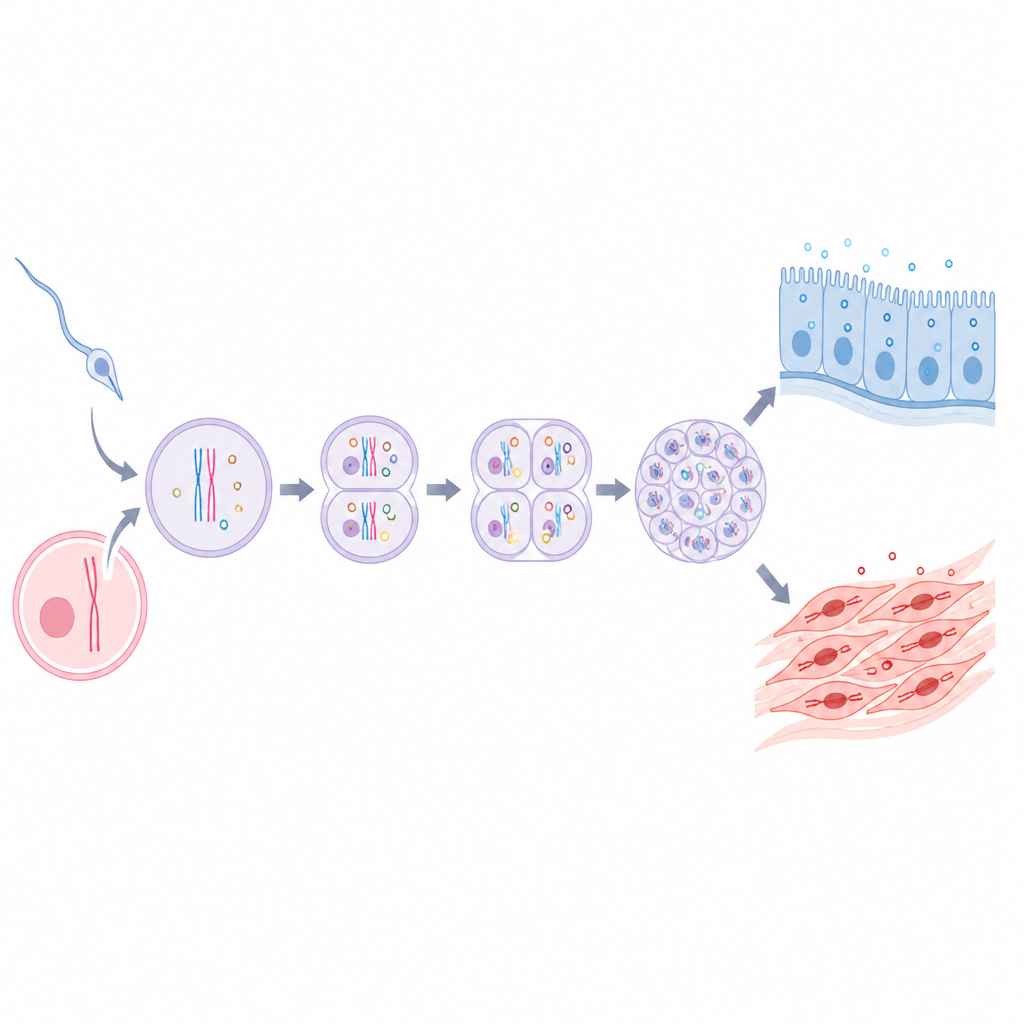
Before a mammal is even implanted in the womb, its tiny embryo is already juggling intense bursts of gene activity and DNA copying. This new study reveals that, during this hectic window, cells generate vast numbers of small circular DNA loops called eccDNAs. Far from being mere genetic debris, these circles appear tightly linked to how the embryo first switches on its own genome and may help fine-tune which genes are active as development begins.
Small DNA Circles and Why They Matter
Our DNA is usually pictured as long chromosomes, but cells can also carry short, closed loops of DNA that sit outside these main structures. These eccDNAs have been found in many tissues and are especially abundant in cancers, where they can boost the activity of growth-promoting genes. Until now, their role in normal early development was unclear. Because the first days after fertilization involve dramatic shifts in gene control and extensive DNA repair, the authors suspected that eccDNAs might be both plentiful and important in preimplantation embryos.
Mapping DNA Circles in Early Mouse Embryos
The team examined mouse embryos from the one-cell zygote through successive divisions up to the blastocyst stage. Using high-depth DNA sequencing and computational tools that can spot circular DNA, they identified nearly 400,000 distinct eccDNAs. These circles peaked in number at the two-cell stage, when the embryo’s own genome is switched on in a surge called zygotic genome activation. Many eccDNAs appeared right in or near genes known to participate in this activation, including regulatory regions such as promoters and enhancers, suggesting a close tie between circle formation and genes that must be turned on early.
How Colliding Cell Machines Can Create DNA Circles
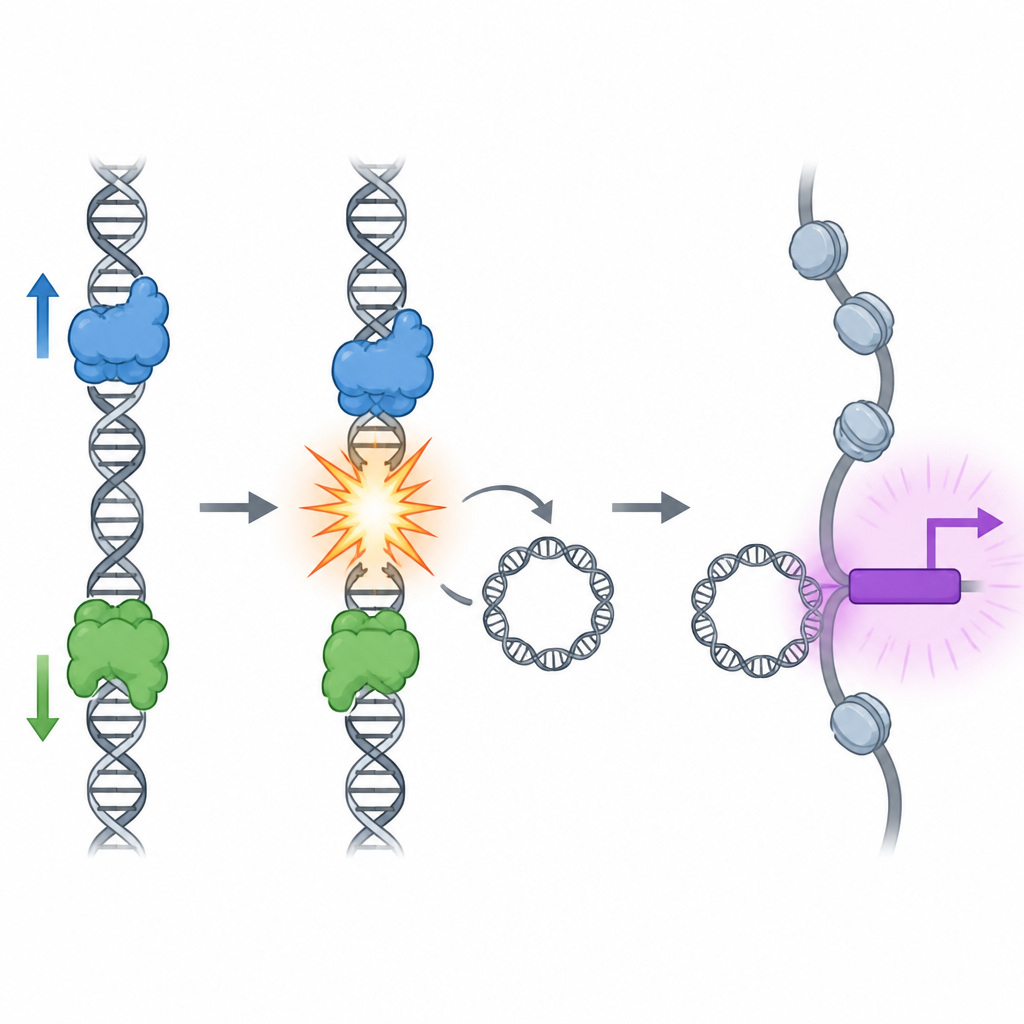
To uncover how these circles form, the researchers zoomed in on the DNA breakpoints where each circle closes. They found short matching sequences on each side of the junction, a hallmark of repair pathways that join broken DNA ends using small stretches of similarity. The eccDNA regions were also enriched for chemical tags associated with active genes and were heavily occupied by the enzyme that reads DNA into RNA. These same sites replicated early in the cell cycle. Together, the evidence points to a scenario in which the machinery copying DNA and the machinery reading genes collide on busy stretches of the genome. These traffic jams can damage DNA, and the resulting fragments are then stitched into circles by error-prone repair processes.
From DNA Circles to Gene Control
The scientists then tested how changing transcription or repair affected eccDNA. Blocking the enzyme that reads genes caused both gene activity and eccDNA levels to drop, while inhibiting a DNA repair pathway that normally resolves transcription–replication conflicts led to more DNA damage and a rise in eccDNA tied to early-activation genes. Across stages, genes linked to eccDNAs tended to be more active than others. When the team engineered synthetic eccDNAs carrying enhancer regions from key developmental genes and introduced them into fibroblasts or embryos, the target genes were expressed at higher levels. This shows that at least some eccDNAs can function as mobile regulatory elements that strengthen gene activity.
A Shared Pattern in Mice and Humans
Because human embryos are far harder to study directly, the authors turned to existing datasets that capture open regions of DNA. Using these, they detected thousands of eccDNAs during human preimplantation development, with patterns remarkably similar to those in mice: widespread presence, enrichment near active regulatory regions, and a peak in inner cell mass cells of the blastocyst. Some eccDNA-forming regions overlapped with genetic changes previously linked to neurodevelopmental conditions, hinting that circle-prone sites may also be fragile spots in the human genome.
What These Findings Mean for Early Life
Together, the results suggest that eccDNAs are not random junk but characteristic features of the earliest stages of mammalian life. As the embryo first takes control of its own genes, intense clashes between DNA copying and gene reading create short DNA loops that can, in turn, help tune gene activity. While many details remain to be worked out, including exactly how each circle acts, this work positions eccDNAs as potential regulators and readouts of healthy or disturbed development in both mice and humans.
Citation: Wei, L., Wu, N., Chen, L. et al. The landscape and regulatory potential of eccDNAs in mammalian preimplantation embryos. Nat Commun 17, 4657 (2026). https://doi.org/10.1038/s41467-026-71227-z
Keywords: embryo development, circular DNA, gene regulation, zygotic genome activation, genome stability