Clear Sky Science · en
Hydrogen transfer-triggered C(sp3)−C(sp3) cleavage of 1,3-diols for mono-N-methylation of primary amines
Turning Plant Waste into Useful Chemicals
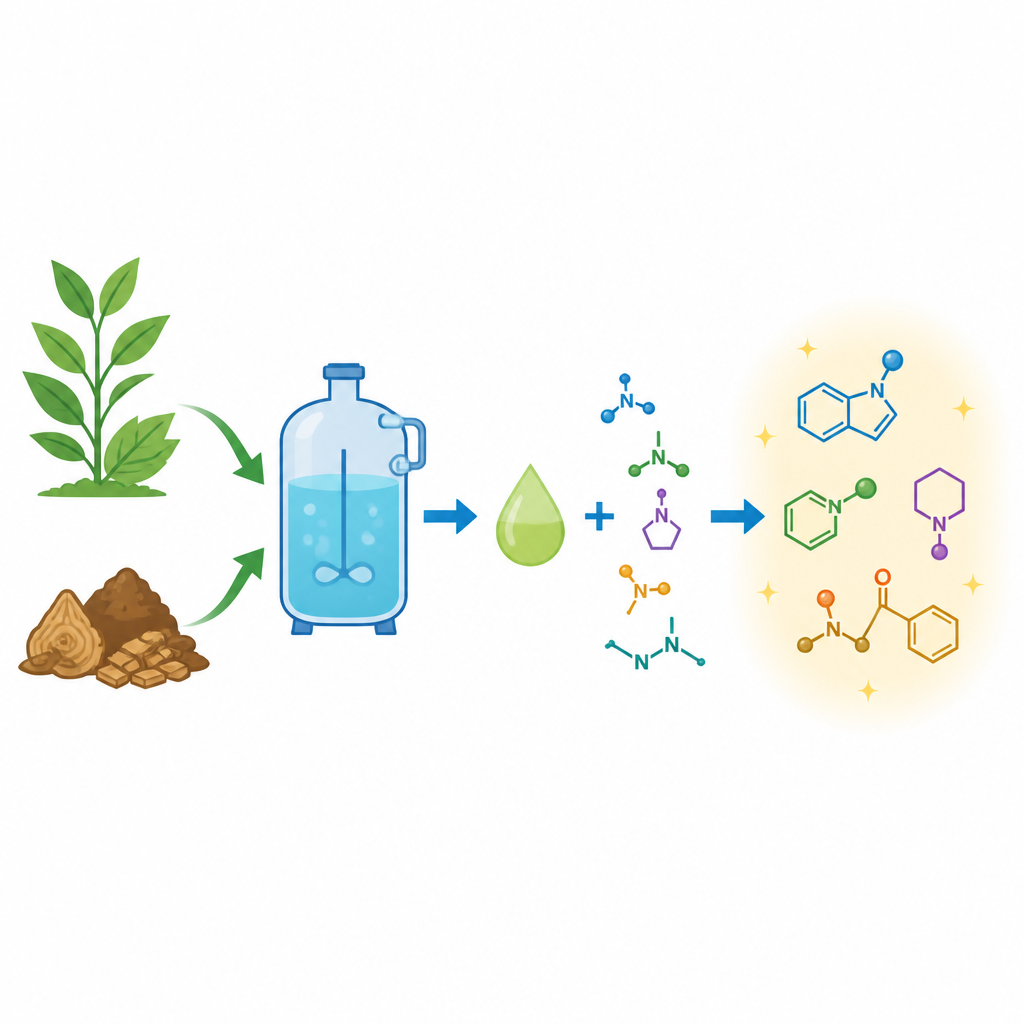
Chemists are searching for ways to turn plant-based waste into valuable ingredients for medicines and materials. This study shows how a common compound made from biomass can gently add a single tiny “methyl” unit to nitrogen-containing molecules called amines. The work offers a cleaner route that avoids some of the hazards and waste linked to older methods, and it hints at new strategies for breaking down tough parts of biomass.
Why Single-Unit Tweaks Matter
Adding just one small methyl group to a primary amine can dramatically change how a drug behaves in the body, affecting its solubility, stability, and activity. Traditional ways to do this often rely on harsh reagents such as methyl halides or dimethyl sulfate, which can be toxic, lead easily to overmethylation, and require many protection and deprotection steps. Chemists have recently learned to use methanol as a gentler source of methyl units through a process known as hydrogen transfer, where hydrogen atoms are shuffled between molecules instead of using an external oxidant or reductant. Even so, methanol is still largely fossil-based and can cause serious health problems upon exposure.
A Safer Building Block from Biomass
The authors turned to 1,3-propanediol, a small molecule that can be produced on a large scale by fermenting renewable feedstocks such as glucose and glycerol. Compared to methanol, this diol is less toxic, non-flammable, and already used in products like cosmetics and polymers. The challenge was to make it behave like a “C1” source, meaning that only one carbon from the molecule is transferred to the amine as a methyl unit, while a stubborn carbon–carbon bond in the diol is broken in a controlled way. Such bond-breaking in simple alcohols is normally difficult, because the molecule prefers to lose hydrogen rather than split its carbon backbone.
How the New Reaction Works
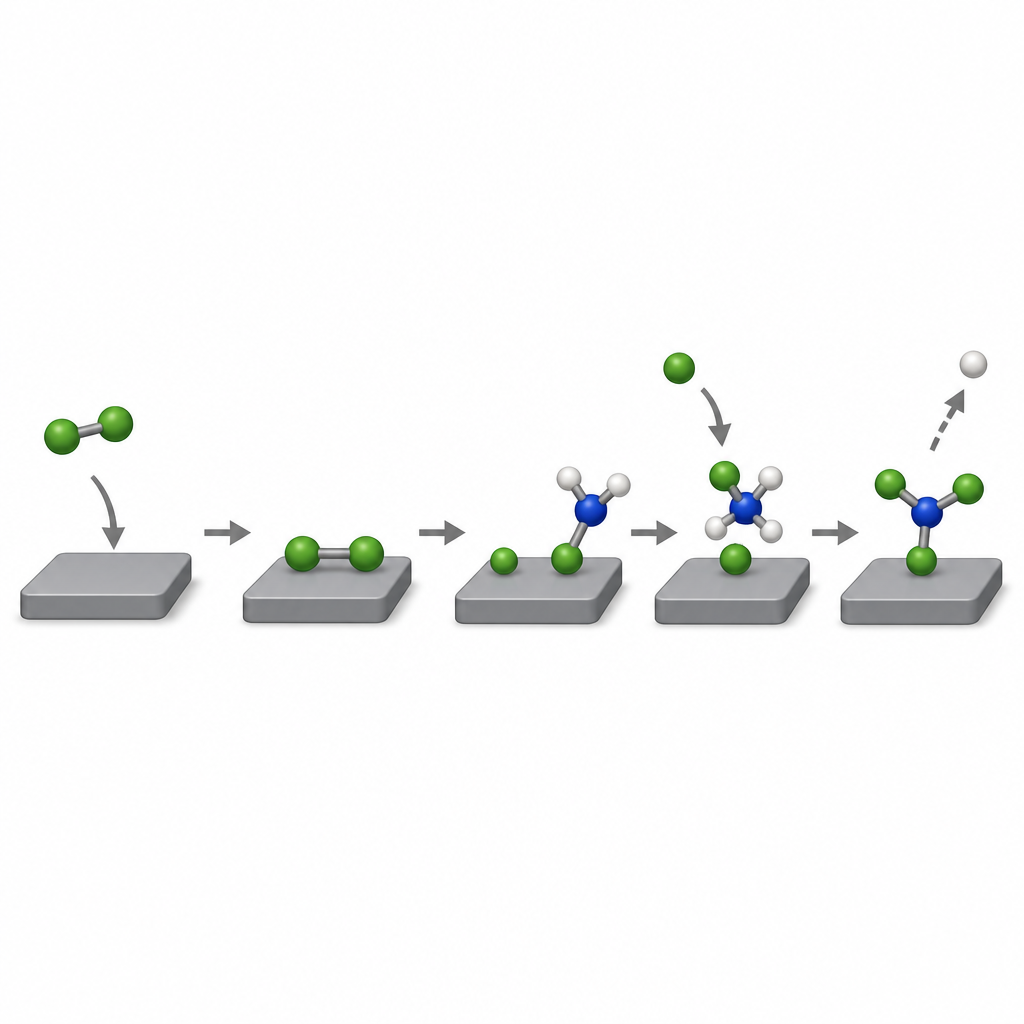
Using a ruthenium-based catalyst, a phosphine ligand, and a base under relatively mild, open-flask conditions, the researchers designed a stepwise sequence driven by hydrogen transfer. First, the diol is temporarily oxidized and reacts with the amine to form an “amino alcohol” intermediate. This intermediate then undergoes a retro-Mannich fragmentation, a rearrangement that cleanly cuts the carbon–carbon bond of the diol while delivering a one-carbon fragment onto the nitrogen to give the mono-methylated product. At the same time, the remaining carbon fragment is released as a small aldehyde that can further react to form an ester. Experiments with labeled hydrogen atoms and related diols, along with detailed computer calculations, support this mechanism and show that a base-assisted pathway makes the key bond cleavage more energetically accessible.
Versatile Products and Practical Uses
The team tested a wide range of amines and 1,3-diols. Many aromatic and some aliphatic amines were converted to mono-N-methyl products with good to excellent yields, and sensitive groups such as vinyl, cyano, and sulfonyl units survived the conditions. Unsymmetrical diols could also introduce larger alkyl groups, enabling not just methylation but ethylation and longer-chain alkylation. Importantly, when molecules contained more than one amino group, the method still favored adding only a single methyl group, avoiding the overmethylation that plagues traditional reagents like methyl iodide. The products themselves can serve as stepping-stones to more complex nitrogen-containing rings, including structures related to pharmaceuticals.
What This Means for Green Chemistry
In everyday terms, this work shows how a safer, plant-derived liquid can replace harsher chemicals to fine-tune drug-like molecules one carbon at a time. By cleverly using hydrogen transfer to unlock a usually unreactive carbon–carbon bond in a simple diol, the researchers open a new route for upgrading biomass into high-value products. While the current process still depends on a strong base and a specialized ligand, it offers a proof of concept that unstrained backbone bonds in biomass-like structures can be cut and reused efficiently, supporting future efforts to turn renewable resources into useful chemicals.
Citation: Long, Y., Liu, J., Chen, L. et al. Hydrogen transfer-triggered C(sp3)−C(sp3) cleavage of 1,3-diols for mono-N-methylation of primary amines. Nat Commun 17, 4546 (2026). https://doi.org/10.1038/s41467-026-71217-1
Keywords: biomass valorization, N-methylation, hydrogen transfer, 1,3-propanediol, C–C bond cleavage