Clear Sky Science · en
Valeric acid from oral microbiome suppresses esophageal cancer growth by disrupting eEF1A1 -mediated translational output
A surprising ally in the mouth
Esophageal cancer is often deadly and hard to treat, especially when tumors resist standard drugs and radiation. This study reveals an unexpected helper living in our mouths: a common bacterium that makes a small fatty acid called valeric acid. Instead of fueling disease, this molecule can slow the growth of esophageal cancer cells, hinting at new ways to prevent or treat this cancer by harnessing the oral microbiome.
When mouth microbes and the esophagus talk
Our mouths and esophagus are constantly bathed in saliva that carries both microbes and their chemical byproducts. The researchers compared saliva from people with esophageal squamous cell carcinoma to that of healthy volunteers. They found that while overall diversity was similar, the mix of species was different, with higher levels of a bacterium called Veillonella in patients. In mice, gently reshaping only the oral microbiome with topical antibiotics, while leaving the gut microbes intact, slowed tumor growth in the esophagus. This showed that changes in mouth microbes alone can influence cancer development, and that tumors can also push back, reshaping the oral community in return. 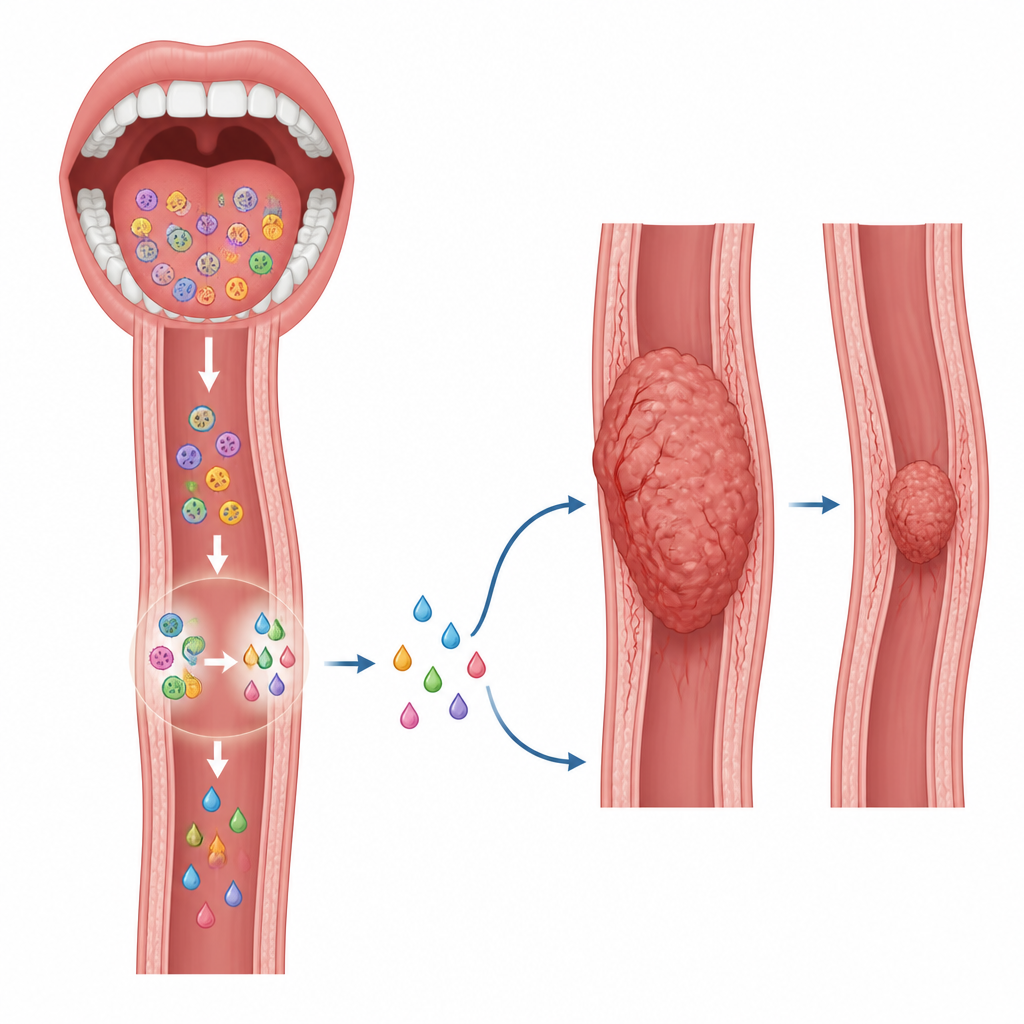
A tiny molecule with a big impact
To see what the microbes were doing, the team grew saliva bacteria from patients and healthy people under low-oxygen conditions and treated cancer cells with the liquid they produced. Only the material from the patient microbes killed esophageal cancer cells, while sparing normal esophageal cells. By scanning thousands of small molecules, the scientists pinpointed valeric acid, a short-chain fatty acid made in high amounts by Veillonella, as the main toxic factor. Pure valeric acid, at levels similar to those measured in patient saliva, reproduced the killing effect on cancer cells more strongly than related fatty acids, marking it as a special anti-tumor metabolite rather than a general byproduct.
How valeric acid enters and disarms cancer cells
Esophageal cancer cells were found to carry higher levels of a transporter protein called MCT1 that shuttles small fatty acids into cells. Cancer cells with more MCT1 took up more valeric acid and were more sensitive to its effects; blocking this transporter reduced both valeric acid entry and cell death. Once inside, valeric acid strongly shut down the cells’ ability to make new proteins. It did this by binding to eEF1A1, a key helper that normally uses chemical energy to add building blocks to growing proteins. Valeric acid attached to the part of eEF1A1 that binds this energy source and blocked its activity. As a result, protein production stalled, faulty proteins piled up, stress signals rose, and the cells accumulated damage and reactive oxygen species, ultimately pushing them toward death.
From dishes and mice to patient-derived tumors
The team tested valeric acid and live Veillonella in several mouse models. Giving mice Veillonella by mouth, or valeric acid in their drinking water, reduced tumor size in both esophageal and under-the-skin tumor implants without obvious harm to major organs or reproduction over three months. Importantly, valeric acid also shrank tumors grown from pieces of human esophageal cancers that had already resisted immunotherapy and chemoradiotherapy. In these patient-derived models, tumor tissue showed reduced protein synthesis, looser and less collagen-rich supporting tissue, and changes in cancer cells and fibroblasts that pointed to a less aggressive microenvironment. 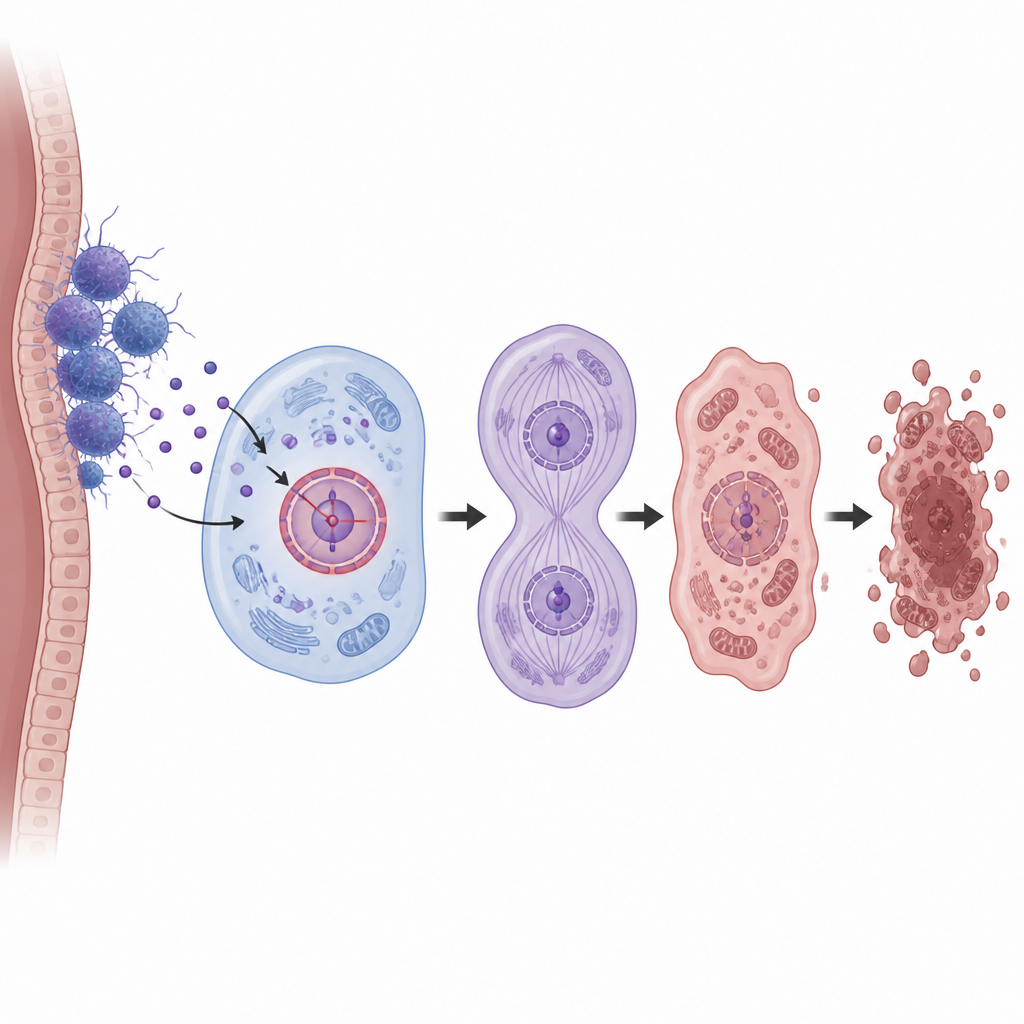
What this means for future cancer care
This work suggests that a natural product of common mouth bacteria can act as a selective brake on esophageal cancer by cutting off the cells’ ability to build new proteins. Rather than proving an immediate therapy, the study highlights valeric acid as a potential “postbiotic” treatment and shows that oral microbes can sometimes protect, not just harm. It also underscores that simply counting microbes is not enough; their functions and metabolites must be tested directly to understand how they shape cancer risk and response to treatment.
Citation: He, Y., Peng, H., Li, L. et al. Valeric acid from oral microbiome suppresses esophageal cancer growth by disrupting eEF1A1 -mediated translational output. Nat Commun 17, 4530 (2026). https://doi.org/10.1038/s41467-026-71209-1
Keywords: oral microbiome, esophageal cancer, valeric acid, cancer metabolism, postbiotic therapy