Clear Sky Science · en
Wastewater surveillance reveals patterns of antibiotic resistance across the United States
Why the water down the drain matters
Every time we flush a toilet or drain a sink, tiny traces of our lives flow into local sewers. Hidden in this everyday wastewater are clues about one of medicine’s biggest challenges: germs that no longer respond to the drugs meant to kill them. This study shows how sampling sewage from across the United States can reveal where antibiotic resistance is most common, what community conditions are linked to it, and how this information could help protect public health.
Taking the pulse of a nation through sewage
The researchers collected samples from 163 wastewater treatment plants spread across 40 states, together serving about seven percent of the U.S. population. Instead of looking at the liquid alone, they focused on the solids, which tend to concentrate genetic material from bacteria. Using a highly sensitive technique that can count tiny amounts of DNA, they measured 11 genes known to help bacteria resist important antibiotics, including drugs used when other treatments fail. They also measured a common bacterial marker so they could express resistance as “per unit of bacteria,” making it possible to compare sites fairly across the country. 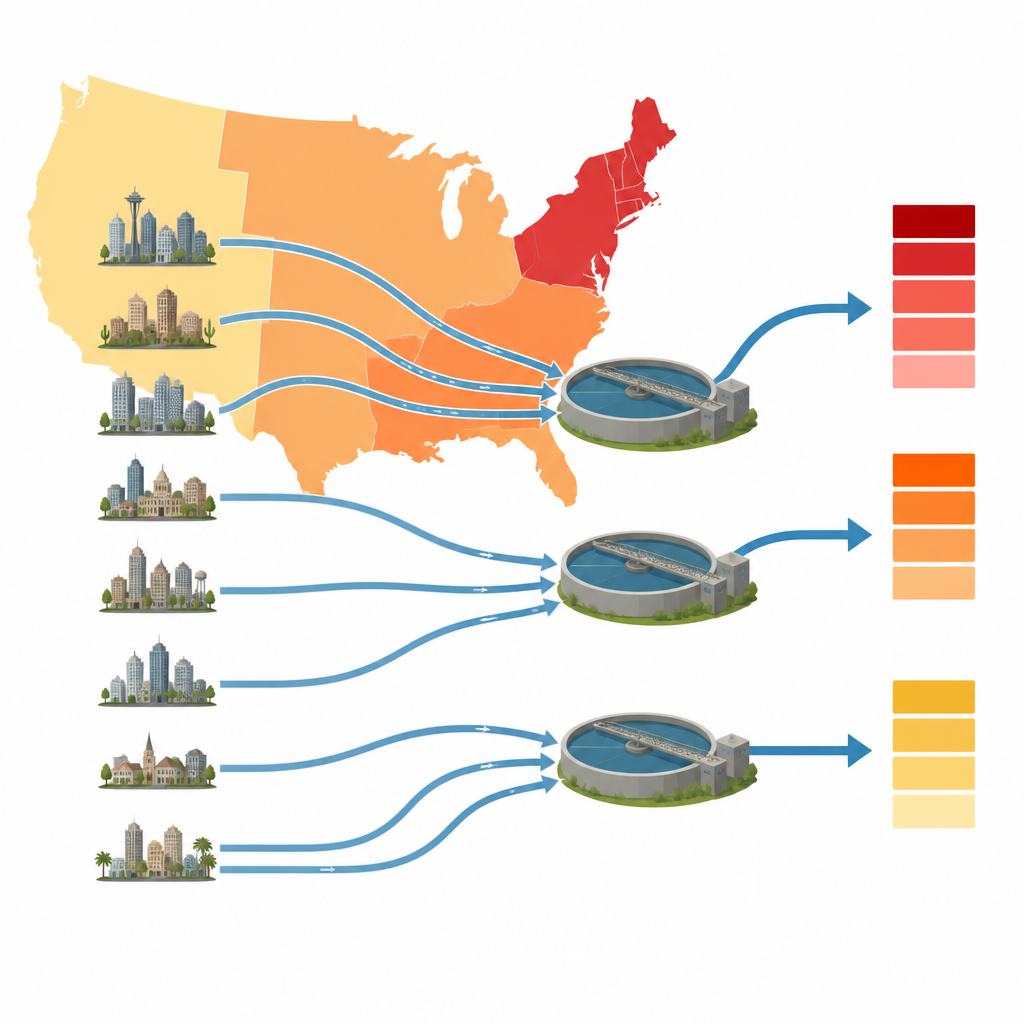
Where resistance runs high
Resistance genes showed up almost everywhere, but not all places were equal. Several genes, such as those that resist a widely used class of drugs called beta-lactams and a common antibiotic called tetracycline, appeared in every sample at relatively high levels. Others, including genes tied to last-resort drugs used for severe infections, were more patchy: some sewersheds had no detectable signal, while others had much higher levels. When the team combined data across all genes into summary “burden” scores, they found that wastewater in the South tended to carry a higher overall load of resistance than in the Midwest, and that resistance to the antibiotic colistin was higher in the South and West than in other regions.
Links to housing, health care, and travel
To understand why some communities had more resistance than others, the scientists combined their wastewater measurements with public data on local living conditions, health care access, animal farming, and transportation. They found that places where more residents lacked health insurance or spent a large share of their income on housing tended to have higher levels of several resistance genes. Crowded homes, lower education levels, and limited English skills also tracked with higher resistance in sewage. By contrast, the amount of antibiotics prescribed by doctors showed only weak connections to resistance levels. Airports stood out: communities with major airports, higher population density, and more urban development had higher levels of certain genes, including ones linked to colistin and powerful hospital-only drugs, hinting that international travel helps spread resistant bacteria.
Turning patterns into maps
Using a type of computer model that can learn from data, the team tested whether these social and environmental factors could predict resistance levels in wastewater from county to county. The models performed moderately well for some of the most worrying genes, such as those conferring resistance to carbapenem antibiotics and colistin, explaining up to nearly half of the variation in where these genes were most abundant. The most influential predictors across genes were measures of housing strain, lack of insurance, urban setting, limited English proficiency, and certain racial and ethnic population shares. These models allowed the researchers to generate maps that highlight parts of the country where sewage is likely to carry higher levels of resistance genes, within the range of conditions seen in their sampling set. 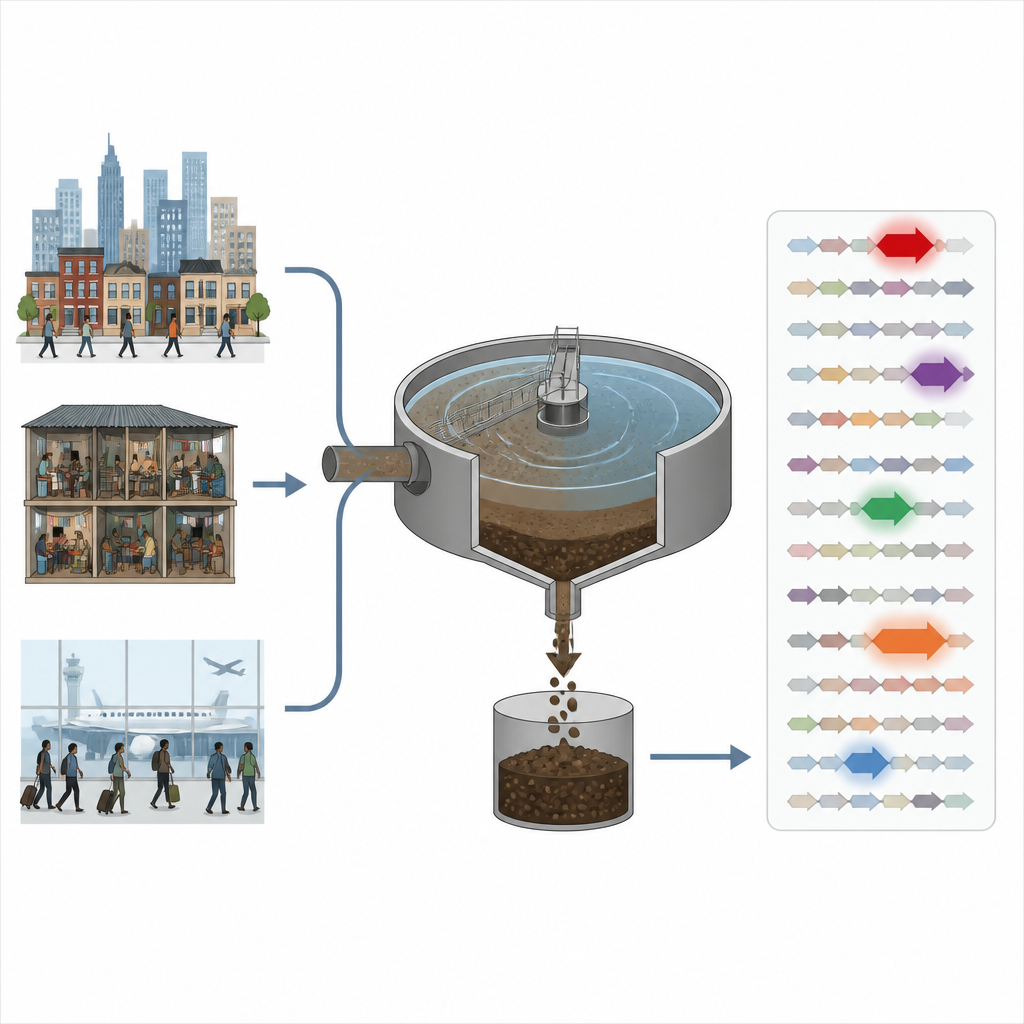
What this means for communities
For non-specialists, the key message is that antibiotic resistance is not just about how doctors write prescriptions or how patients take pills. It is also shaped by broader community realities such as crowded housing, barriers to health care, and patterns of global travel. By treating wastewater as a pooled “health sample” from entire cities and towns, this study provides a national snapshot of where resistance genes are concentrated and how they relate to social vulnerability. The findings suggest that reducing antibiotic resistance will require more than careful drug use in clinics; it will also depend on improving living conditions, expanding access to care, and paying attention to how people and microbes move across borders.
Citation: Kim, S., Zulli, A., Chan, E.M.G. et al. Wastewater surveillance reveals patterns of antibiotic resistance across the United States. Nat Commun 17, 4680 (2026). https://doi.org/10.1038/s41467-026-71195-4
Keywords: wastewater surveillance, antibiotic resistance, sewage monitoring, public health, social vulnerability