Clear Sky Science · en
The global phylogeography of rapidly expanding multidrug resistant Ural lineage 4.2 Mycobacterium tuberculosis
Why this matters for everyone
Tuberculosis may sound like a disease of the past, but it still kills more people each year than any other infection. Even more worrying, some tuberculosis bacteria have learned to survive many of our best medicines, making the disease much harder and longer to treat. This study tracks one such tough strain as it quietly spreads across countries, showing why global cooperation and modern genetic tools are vital to keep drug resistant tuberculosis in check.
A global hunt for a stealthy strain
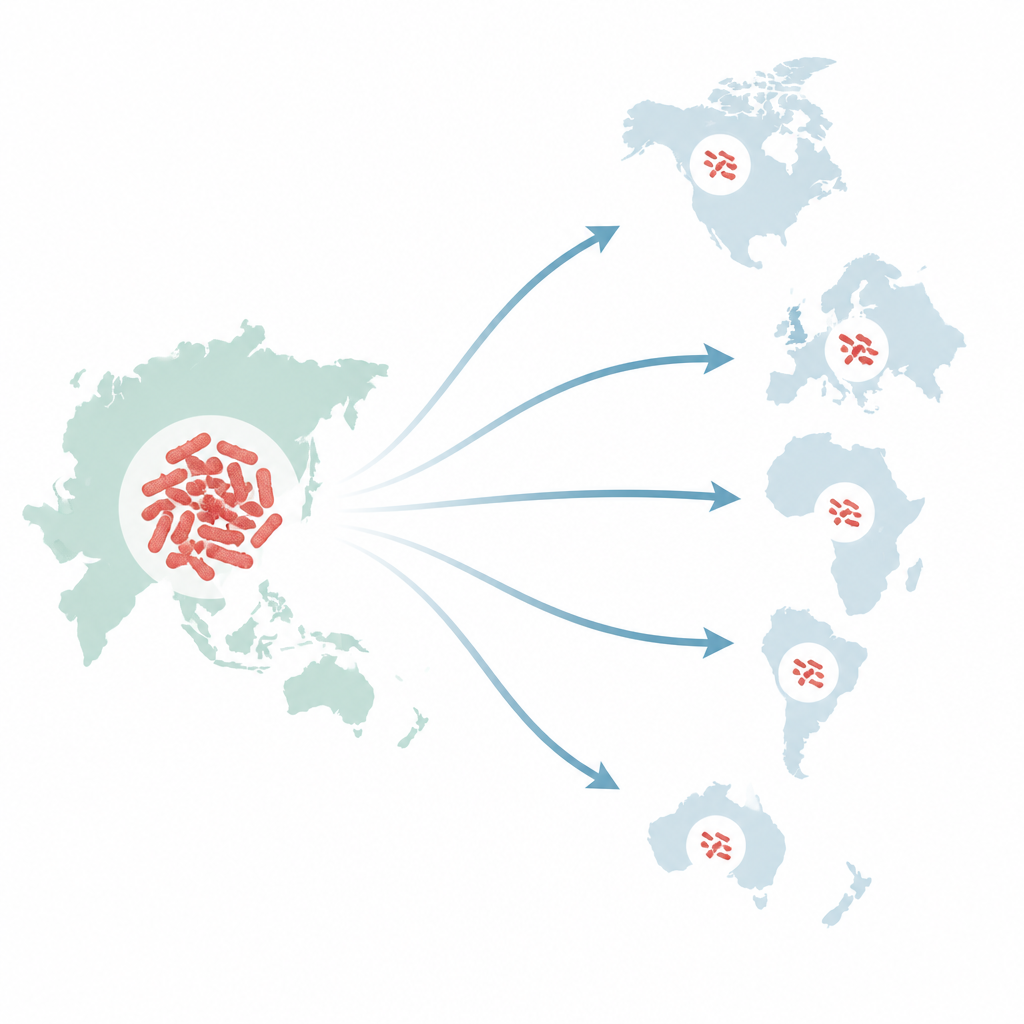
The researchers began by gathering a huge collection of genetic data from tuberculosis bacteria stored in public databases. They examined about 200,000 whole genome sequences and focused on one family of bacteria called the Ural lineage, known to be linked with multidrug resistant disease in Eastern Europe and Central Asia. From nearly 6000 Ural samples, they singled out a group of 1604 closely related bacteria that shared the same pattern of drug resistance and genetic changes, forming a distinct branch that they call lineage 4.2.1.2.
Tracing where it started and where it went
Using the tiny differences in DNA as a kind of timestamp, the team built evolutionary family trees that estimate when this strain arose and how it moved between countries. Their analysis suggests that lineage 4.2.1.2 first appeared around 1971, most likely in Russia. From there, it spread many times into neighboring Moldova and, to a lesser degree, to other parts of Eastern Europe and Central and Western Asia. Later, Moldova became a secondary hub, sending the strain onward into Western and Southern Europe, especially Germany. This picture differs from earlier, smaller studies that had pointed to Moldova as the original source.
How the strain became so hard to treat
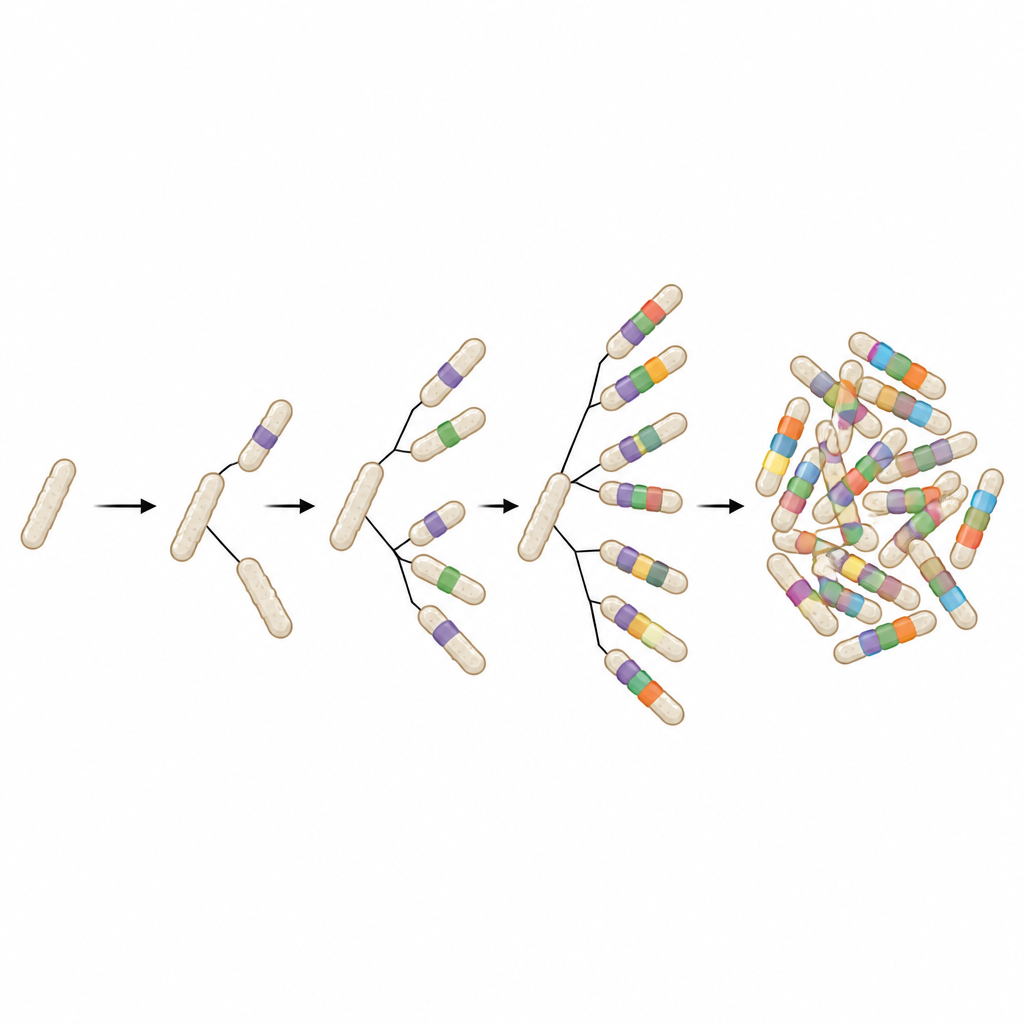
The scientists then asked how this strain built up its resistance to key tuberculosis drugs. By comparing DNA changes along the branches of the family tree, they could estimate when important mutations first appeared. They found that resistance to two cornerstone drugs, isoniazid and rifampin, emerged in the 1970s, and these mutations are now present in nearly every member of the lineage. Resistance to older drugs like streptomycin also arose early and became almost universal. In contrast, resistance to newer medicines such as fluoroquinolones, linezolid, and bedaquiline appeared later and only in scattered subgroups, suggesting more recent and repeated attempts by the bacteria to outsmart second line treatments.
Measuring how quickly it is spreading
To understand how successful this strain is at transmission, the team used a measure based on how densely each branch of the family tree splits, which reflects how often infections lead to further cases. Lineage 4.2.1.2 showed higher values on this measure than several other similar Ural lineages of comparable age, meaning it is expanding faster. Within this lineage, bacteria sampled in Moldova tended to have especially high values, consistent with local outbreaks described in previous work. Still, the strain also shows signs of active spread in Russia and other nearby countries, underscoring that it is not limited to a single hotspot.
What this means for public health
For a non specialist, the take home message is that a tough, multidrug resistant form of tuberculosis has not stayed put in one country but has spread widely across parts of Europe and Asia over the last fifty years. It carries long standing resistance to the main tuberculosis drugs and is adding new defenses as newer medicines are used. Simple rapid tests can tell doctors that a patient has drug resistant tuberculosis, but they cannot reveal which particular strain is involved or how it is moving between countries. The authors argue that routine whole genome sequencing of tuberculosis bacteria is essential so that health authorities can track dangerous strains like lineage 4.2.1.2 in near real time and respond before they become even more entrenched.
Citation: Chitwood, M.H., Rancu, I., Song, Y. et al. The global phylogeography of rapidly expanding multidrug resistant Ural lineage 4.2 Mycobacterium tuberculosis. Nat Commun 17, 4654 (2026). https://doi.org/10.1038/s41467-026-71193-6
Keywords: multidrug resistant tuberculosis, genomic surveillance, bacterial evolution, phylogeography, Ural lineage 4.2.1.2