Clear Sky Science · en
Potential well engineering for self-adaptive dielectric response polymer dielectrics
Smarter insulation for crowded electronics
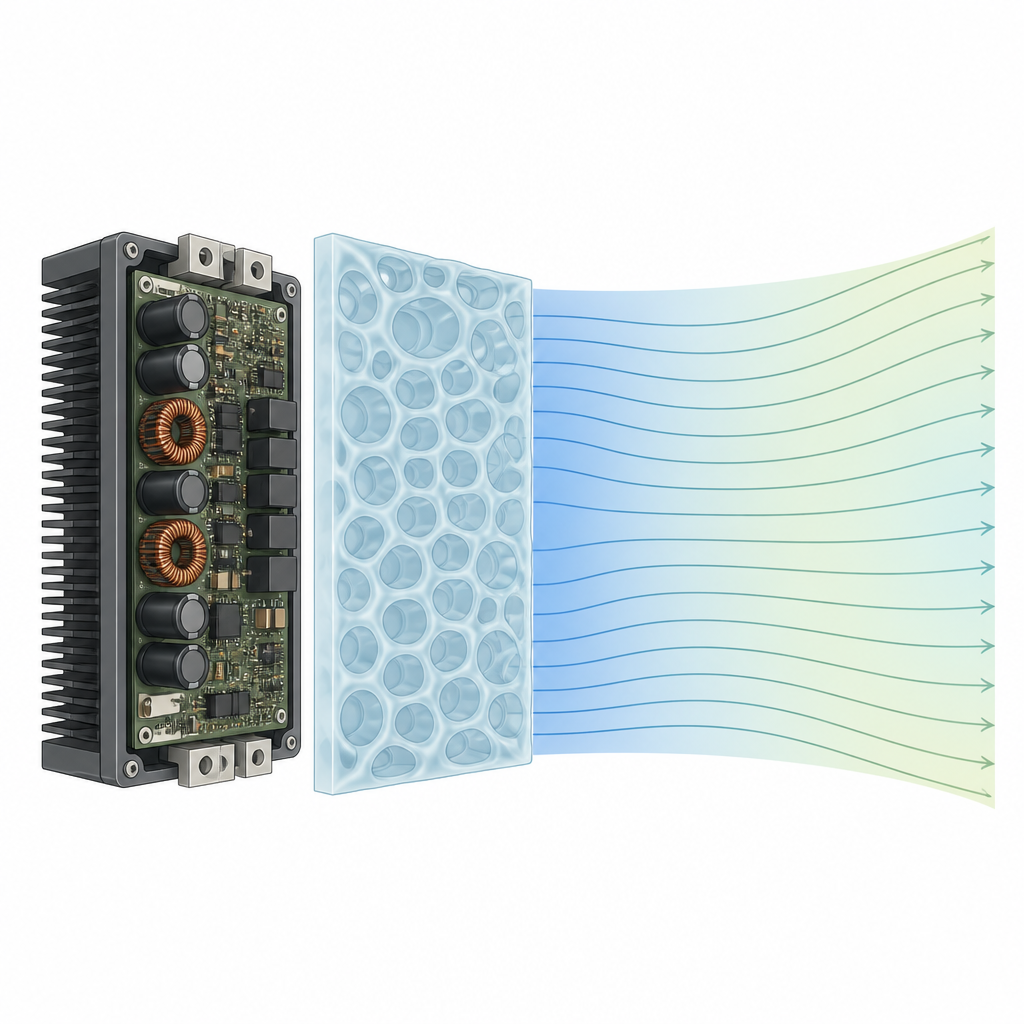
Modern power electronics, from electric cars to fast chargers, cram more components into smaller spaces than ever before. That means the insulating plastics that keep high voltages safely contained are pushed close to their limits. This study introduces a new kind of “self-adaptive” insulation material that can automatically change how it conducts electricity as the field strength rises, helping electronics stay safer and more reliable under harsh conditions.
Why regular plastics start to struggle
Conventional insulating polymers are designed simply to block current. In tightly packed power modules, however, charges can slowly leak into these plastics and pile up over time. This hidden build up bends the local electric field, creating intense hot spots that may trigger tiny discharges and eventually permanent failure. Existing approaches try to toughen the plastic or mix in semiconductor particles that switch on under high fields, but these particles introduce many tiny interfaces where defects can form. Thermal expansion mismatch between hard particles and soft polymers often creates microscopic weak points that undermine long term reliability.
Trapping and releasing charge in tiny wells
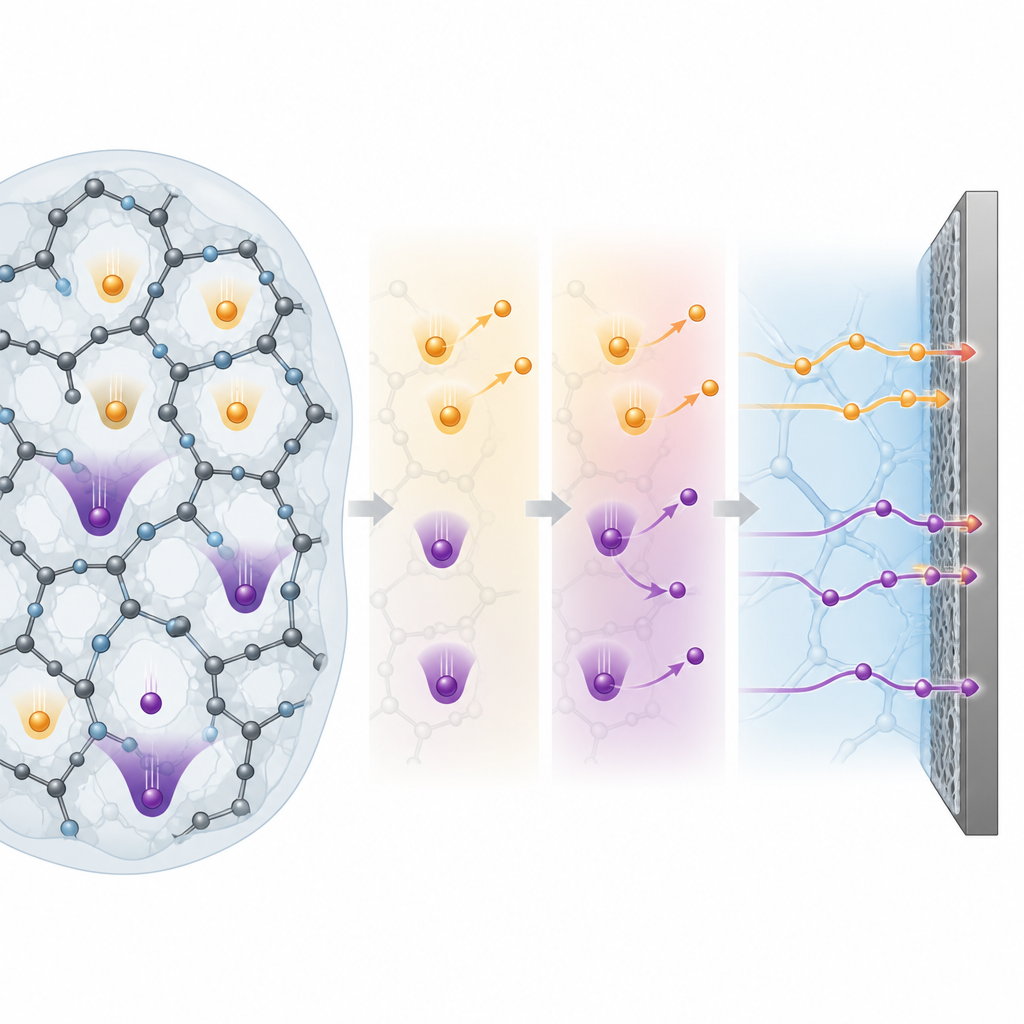
Instead of relying on surface barriers at particle interfaces, the researchers turned to “potential wells” inside the bulk of the material. In simple terms, these wells are energy pockets that can temporarily hold charge carriers. At low electric fields, charges fall into these pockets and stay put, so the material behaves like a good insulator. When the electric field becomes strong enough, the trapped charges gain energy, climb out of the wells, and move rapidly through the material. This built in switch between blocking and conducting creates a nonlinear response: conductivity rises sharply only once a threshold field is reached, allowing the insulation to adapt to changing stress.
Recycling foam into a high tech framework
The team built this behavior into a surprisingly familiar starting material: waste melamine foam, the sort used in household sponges and building sound insulation. By heating the foam in nitrogen, they converted it into a light, porous skeleton made of graphitic carbon nitride. This three dimensional network provides continuous pathways for charges to move, while also offering many sites where potential wells can form. By soaking the original foam in simple solutions containing boron or phosphorus compounds before heating, they doped the resulting carbon nitride with these elements. Boron acts like an electron hungry site that deepens the wells, while phosphorus donates extra electrons that create shallower wells. Importantly, the dopants integrate directly into the lattice, avoiding the problematic interfaces seen in traditional filler based designs.
Dialing in behavior for different jobs
When these doped frameworks were infused with epoxy resin to make composite plastics, their electrical behavior could be tuned with surprising precision. Measurements showed that all composites stayed highly insulating at low fields but then switched to a conducting state once the field crossed a specific threshold. Boron rich samples required higher fields to switch and showed steeper rises in conductivity, consistent with deeper wells that hold carriers tightly until they are strongly pushed out. Phosphorus rich samples switched at lower fields, making them better at quickly draining away static charge in sensitive electronics. Computer simulations, along with quantum mechanical calculations of the electronic structure, confirmed that boron increases electron localization while phosphorus promotes easier charge motion, matching the observed switching behavior.
Performance and durability under real stresses
To see whether this concept would work in practice, the researchers tested how fast the materials could drain charges from electrostatic discharges, a common hazard for microchips and power devices. The composites adjusted their conductivity according to the applied field, rapidly bleeding off charge only when needed. Boron doped versions were especially robust, combining a very wide safety margin before breakdown with strong self adaptive conduction at high fields. The materials also withstood repeated electric pulses, mechanical pressure and long hours at elevated temperatures while largely retaining their switching behavior, which is crucial for long term use in power modules that run hot.
Toward safer and greener power hardware
In everyday terms, this work shows how to turn discarded melamine foam into a smart insulating plastic that “knows” when to stay blocking and when to let charges flow away. By engineering tiny energy wells inside a continuous framework, the material can smooth out dangerous field spikes without relying on fragile interfaces. Because the depth and number of these wells can be set through simple chemical doping, manufacturers could tailor insulation for everything from static protection in delicate chips to rugged high voltage power equipment, improving reliability while finding new value in a common waste material.
Citation: Zhang, D., Wang, Q., Xie, C. et al. Potential well engineering for self-adaptive dielectric response polymer dielectrics. Nat Commun 17, 4441 (2026). https://doi.org/10.1038/s41467-026-71184-7
Keywords: self adaptive dielectrics, polymer insulation, carbon nitride foam, power electronics packaging, charge trapping