Clear Sky Science · en
Lattice strain-mediated MoSe2 enable superior piezocatalysis activity for upcycling of organic pollutants
Turning Dirty Water into Useful Gas
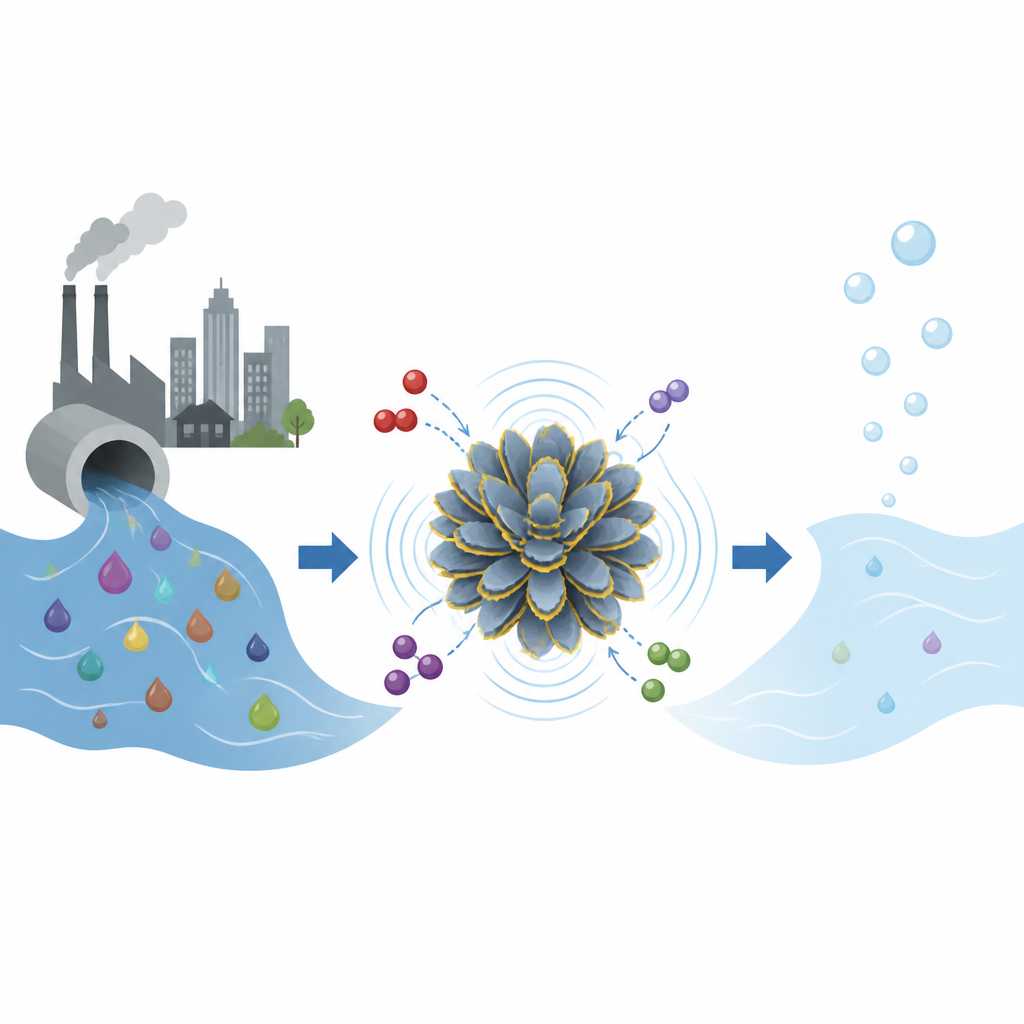
Wastewater is usually treated just to remove harmful chemicals, often turning them into carbon dioxide that escapes into the air. This study explores a smarter way: cleaning polluted water while turning the carbon in those pollutants into carbon monoxide, a useful industrial gas, instead of wasting it. The researchers design a special material that wakes up under gentle vibration and helps steer this clean-up and recycling process at the same time.
Why Wastewater Still Wastes Resources
Modern advanced treatments can break down stubborn chemicals in water, but they often send the carbon straight into the atmosphere or trap it in sludge. That misses a chance to recover energy and raw materials. The team behind this work focuses on phenol, a common and toxic industrial pollutant, as a stand-in for many organic chemicals found in real wastewater. Their goal is to remove phenol completely from the water while capturing its carbon in the form of carbon monoxide, which can be directly fed into processes such as making fuels and plastics. Achieving this in a single step without expensive extra metals has been a major challenge.
A Flower-Like Catalyst That Responds to Vibration
The researchers build their key ingredient from molybdenum and selenium, forming tiny “nanoflowers” made of many thin sheets. This material, called MoSe2, has a piezoelectric effect: when it is shaken by ultrasound in water, electrical charges briefly appear on its surface. Those charges can act like tiny sparks that help along chemical reactions. To boost this effect, the team gently stretches the crystal lattice of MoSe2 by a simple chemical treatment, creating what they call lattice strain. This strained version, LS-MoSe2-II, keeps its structure but develops a stronger internal electric field, more exposed metal sites, and better separation of the charges that form during vibration.
How Pollutants Become Clean Water and Useful Gas
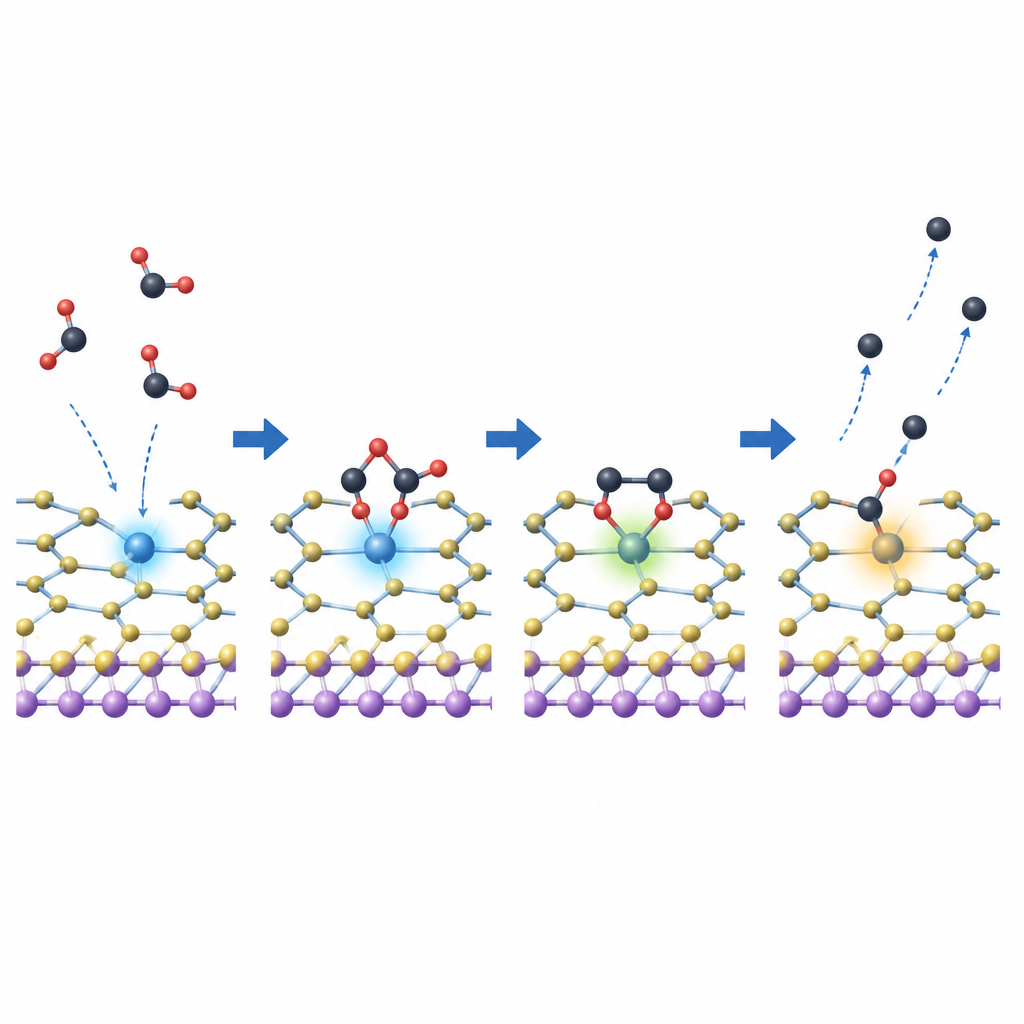
In their system, three players work together: the strained MoSe2 catalyst, an oxidizing additive called peroxymonosulfate, and ultrasound. First, the oxidizing additive, activated by both the catalyst and the vibration, attacks phenol and breaks it down into carbonate and carbon dioxide dissolved in the water. Rather than letting this carbon stay as waste, the strained catalyst surface pulls in these carbonate and carbon dioxide molecules and holds them in the right orientation. Extra electrons generated by the vibrating crystal then help transform these captured carbon species into carbon monoxide gas, which leaves the surface as bubbles while the water becomes cleaner.
A Faster, Gentler Route for Carbon Conversion
Many existing systems rely on very reactive hydrogen atoms to reduce carbon compounds, a route that can waste energy and favor unwanted hydrogen gas instead of carbon monoxide. By tuning the internal strain of MoSe2, the researchers change how strongly the surface grips water and carbon species. The strained material binds carbonate and carbon dioxide more strongly but holds water more weakly, which suppresses hydrogen gas formation. Instead, the carbon is reduced through a more controlled proton-coupled electron transfer pathway, passing through a key intermediate known as COOH on the surface before releasing carbon monoxide. Computer simulations confirm that strain lowers the energy barriers for forming and releasing this intermediate, explaining the much higher activity and selectivity.
From Cleaner Water to Lower Environmental Burden
Beyond test solutions, the strained catalyst successfully treats a range of real-world pollutants, including dyes, antibiotics, microplastics, and industrial wastewater, while still producing carbon monoxide. Toxicity tests in zebrafish embryos and bacteria show that water treated with the strained system is far less harmful than untreated phenol or water processed by a less optimized catalyst. A life cycle assessment suggests that this approach can cut overall environmental impacts by reducing emissions and recovering a useful gas instead of simply destroying pollutants. In simple terms, the work points toward future treatment plants that not only clean water but also gently recycle its hidden chemical value.
Citation: Zhong, Q., Sun, Y., Yang, SG. et al. Lattice strain-mediated MoSe2 enable superior piezocatalysis activity for upcycling of organic pollutants. Nat Commun 17, 4659 (2026). https://doi.org/10.1038/s41467-026-71183-8
Keywords: piezocatalysis, wastewater treatment, MoSe2 catalyst, carbon upcycling, carbon monoxide production