Clear Sky Science · en
Robust antibiotic sensitization of pathogenic Pseudomonas aeruginosa via negative hysteresis in the cell envelope
Turning the tide against hard-to-treat infections
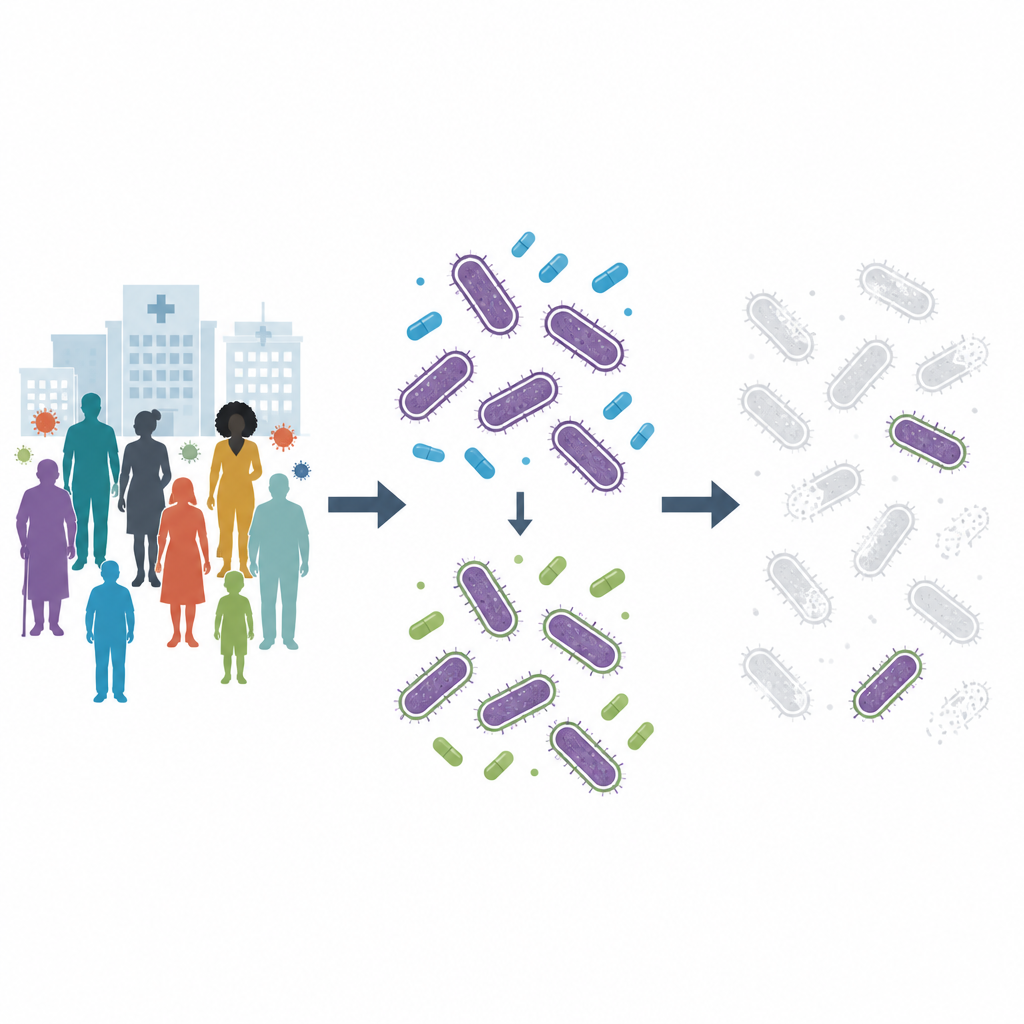
Antibiotic-resistant infections are a growing worry for hospitals and patients worldwide, especially when they are caused by the stubborn bacterium Pseudomonas aeruginosa. This study explores a treatment trick in which giving one antibiotic first can temporarily soften up these bacteria so that a second antibiotic works much better. Understanding this timing effect could help doctors rescue drugs that no longer seem to work and design smarter treatment plans against life-threatening lung infections.
A two-step hit on a tough hospital germ
Pseudomonas aeruginosa is a major cause of lung infections in people with cystic fibrosis, chronic obstructive lung disease, and in intensive care units. It resists many drugs and quickly adapts to new ones, making therapy difficult. The researchers focused on how the order of drug use in time, rather than just which drugs are combined, can change treatment success. They investigated what happens when bacteria first meet a beta-lactam antibiotic, a class that attacks the cell wall, and are then exposed to gentamicin, an aminoglycoside that must enter the cell to kill it.
Priming bacteria to become more vulnerable
Using detailed kill-curve experiments, the team showed that even short, low-dose exposure to a beta-lactam such as carbenicillin can "prime" Pseudomonas cells so that gentamicin is far more effective afterward. This time-dependent sensitization, called negative hysteresis, depended strongly on the direction of the switch: beta-lactam followed by gentamicin enhanced killing, while the reverse order often made cells more protected. The priming effect appeared quickly, within minutes, but faded again over about two bacterial generations, pointing to a temporary change in cell physiology rather than permanent genetic damage.
A pattern that holds across many strains
To see whether this effect is just a laboratory curiosity or something more general, the authors screened a large panel of Pseudomonas strains collected from different environments and patients, as well as lab-evolved lines resistant to several antibiotics. Across this diversity, switches from various beta-lactams to gentamicin repeatedly produced strong sensitization. Remarkably, some strains that were already resistant to the priming beta-lactam still became more vulnerable to gentamicin when exposed at doses adjusted to their resistance level. Mixed bacterial populations from patients with chronic lung disease also showed the effect, indicating that it can arise in complex, real-world infections.
Stress on the cell envelope opens the door
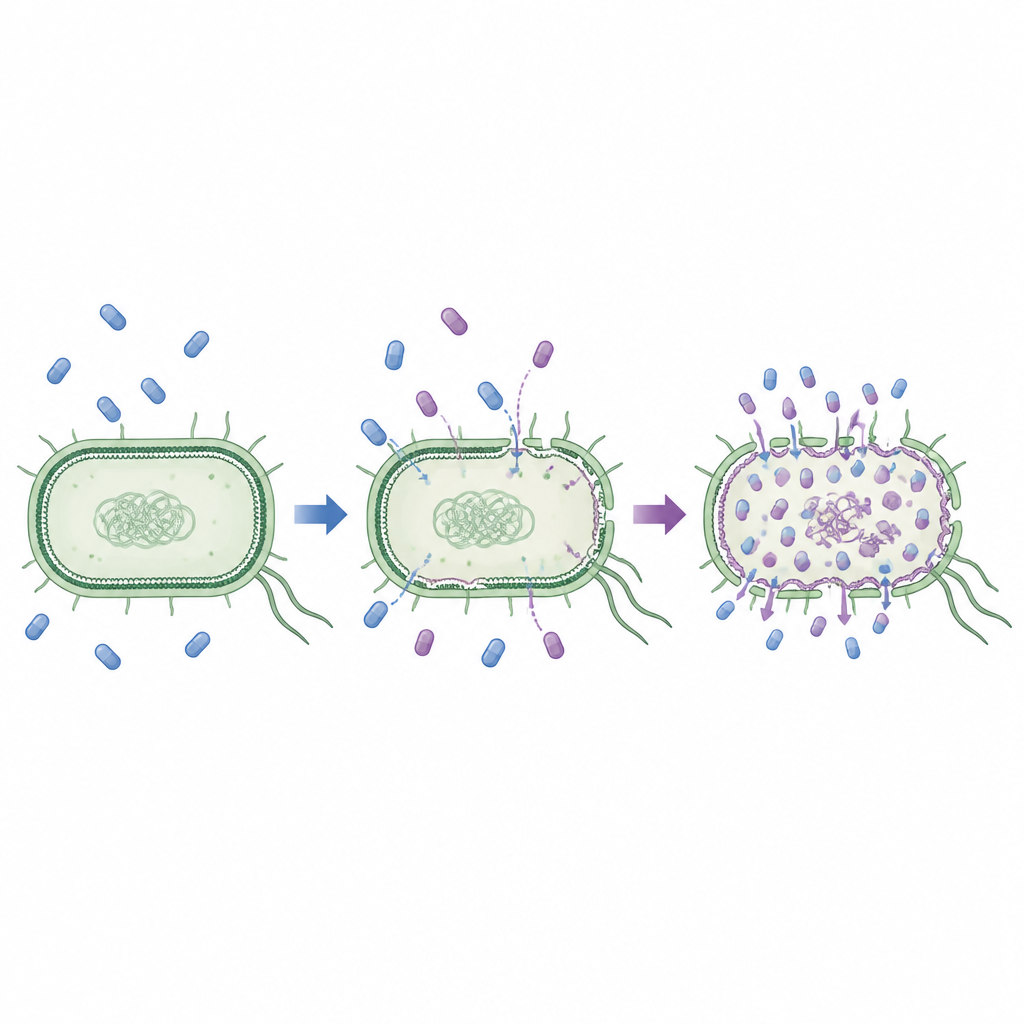
At the heart of the phenomenon is the cell envelope, the layered shell that protects Pseudomonas. Beta-lactam exposure stresses this envelope and activates a built-in alarm system called Cpx, which senses damage in the membrane. By creating targeted mutants and reading out global gene activity, the researchers showed that this stress system helps control whether cells become sensitized. When specific changes in the Cpx sensor protein locked this system in a constantly active state, the bacteria no longer showed negative hysteresis and took up less gentamicin. Measurements of membrane properties and drug levels inside the cells supported a simple picture: beta-lactam pre-treatment reshapes the envelope so that gentamicin flows in more readily and kills more efficiently.
Designing smarter antibiotic schedules
The work suggests that the timing and order of antibiotics can be just as important as the choice of drugs. By exploiting negative hysteresis, clinicians might one day use beta-lactams not only to weaken bacteria directly but also to open a window in which aminoglycosides work better, even against some resistant strains. Because the effect is strong yet short-lived, treatment plans would need carefully staggered dosing rather than long gaps between drugs. While more clinical testing is needed, this study points to a practical way to boost existing antibiotics by harnessing the bacteria’s own stress responses.
Citation: Buchholz, F., Upterworth, L.M., Tueffers, L. et al. Robust antibiotic sensitization of pathogenic Pseudomonas aeruginosa via negative hysteresis in the cell envelope. Nat Commun 17, 4487 (2026). https://doi.org/10.1038/s41467-026-71178-5
Keywords: antimicrobial resistance, Pseudomonas aeruginosa, antibiotic combinations, sequential therapy, gentamicin