Clear Sky Science · en
Determinants of chromosome-specific telomere lengths among 2573 All of Us participants
Why the protective ends of our DNA matter
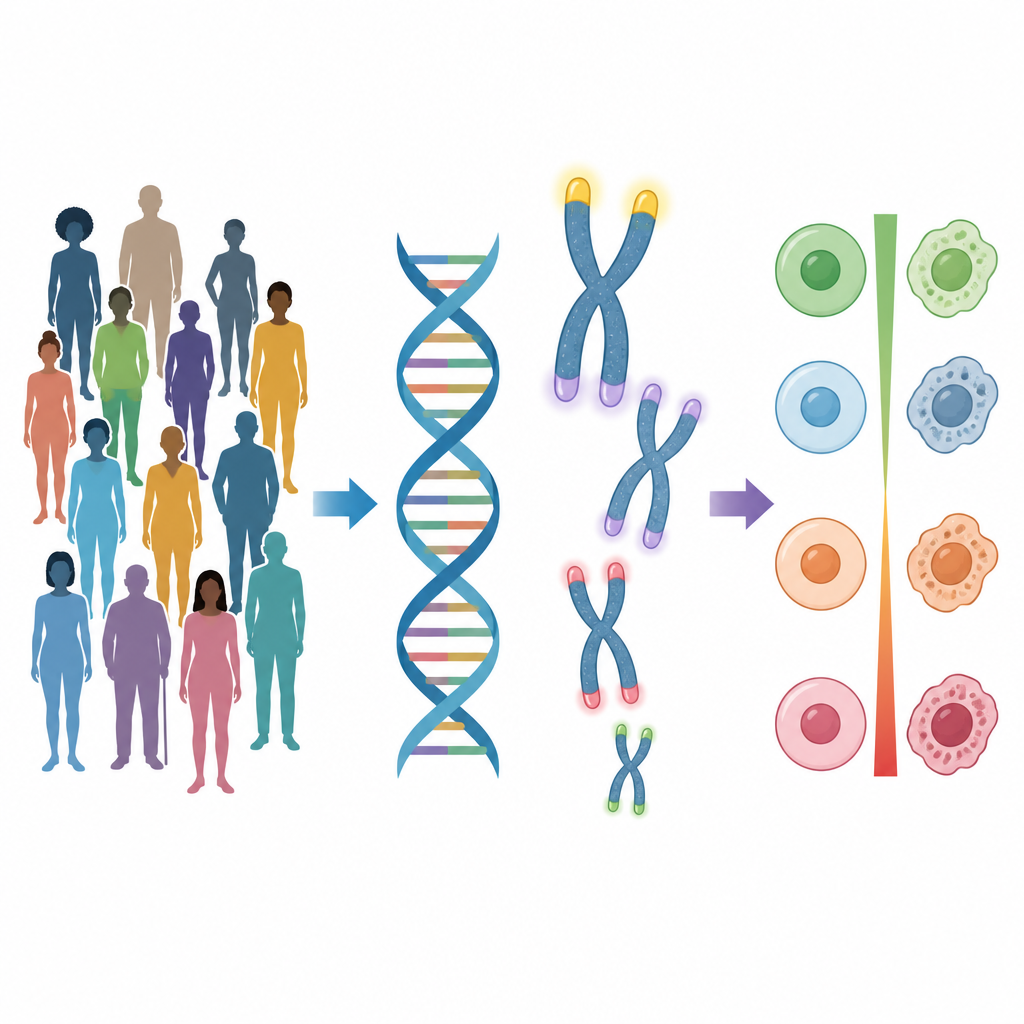
Each of our chromosomes ends in a tiny protective cap called a telomere, often compared to the plastic tip on a shoelace. These caps slowly wear down over time and have been linked to aging and disease. Most research, however, has treated telomeres as if they were all the same, averaging their length across the whole genome. This study asks a more detailed question: how long are telomeres at each individual chromosome end, how do they differ from person to person, and what can those differences tell us about aging and health?
Looking closely at chromosome ends in many people
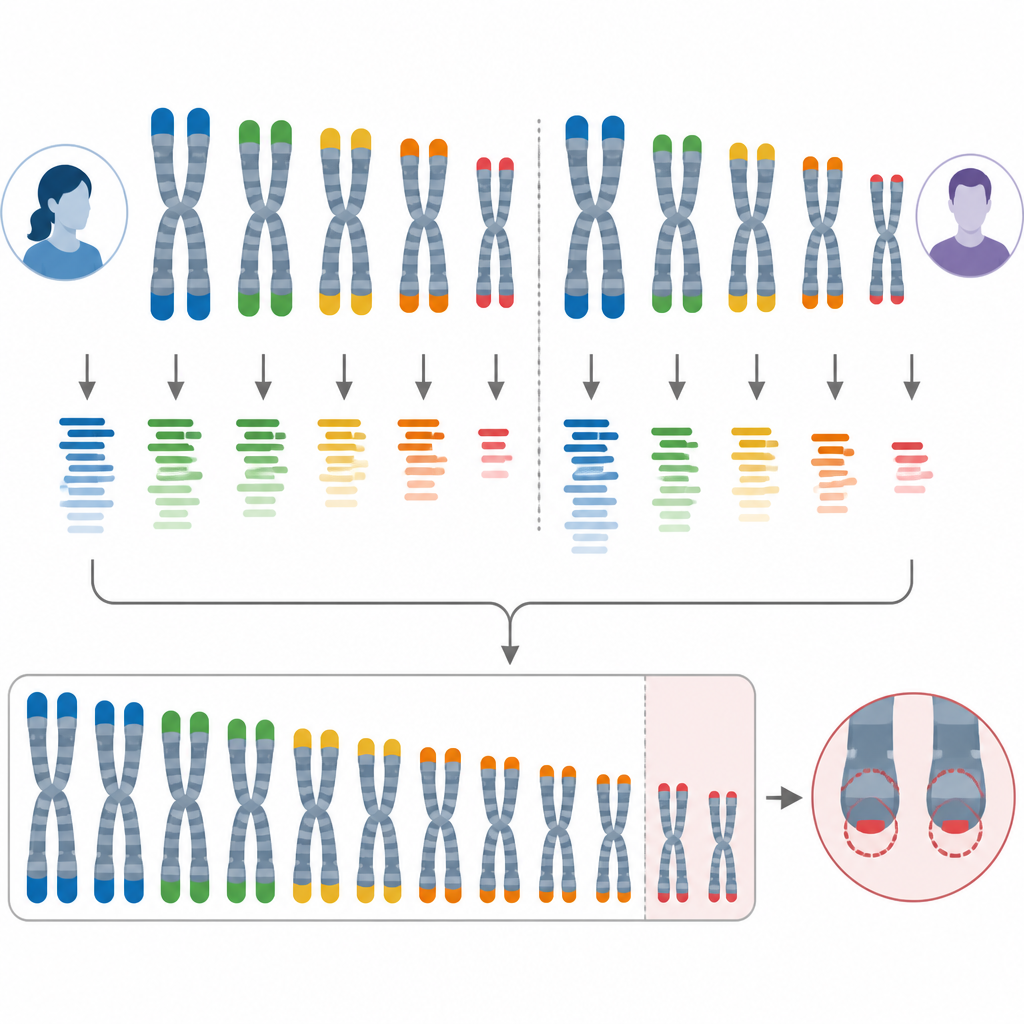
To probe this question, the researchers used blood samples from more than 2500 volunteers in the National Institutes of Health All of Us program, a large and diverse health study in the United States. Instead of relying on older, lower-throughput lab methods, they turned to long-read DNA sequencing, which produces stretches of genetic code long enough to span from the body of a chromosome out through its telomere. Specialized software then grouped and aligned these long reads to estimate the length of telomeres at nearly every chromosome arm in each person. The team also drew on electronic health records and lifestyle information, such as age, body mass index and smoking habits, to explore how biology, behavior and technology each shape the telomere picture.
Not all chromosome tips are created equal
When the team compared telomeres across all chromosome arms, they found striking differences. Some chromosome ends tended to have longer caps, while others were consistently shorter, and this pattern held up across different sequencing runs and platforms. The ranking of which arms were long or short closely matched that seen in a smaller earlier study, suggesting these differences are a stable feature of human biology. Telomere length also varied widely from person to person. Individuals with generally long telomeres tended to have longer caps at nearly every chromosome end, while those with short overall telomeres were short across the board.
Age, lifestyle and ancestry leave their marks
Using statistical models, the researchers teased apart how much of the variation in telomere length comes from different sources. Technical details of the sequencing, such as the platform and depth of coverage, explained a sizable share, underscoring the need for careful quality control. After accounting for these factors, about one quarter of the remaining variation was linked to biological influences. A substantial fraction depended on which chromosome arm was being measured, and another large share depended on the individual, largely independent of age. This supports the idea that people may be born with a tendency toward generally short or long telomeres that persists through life. Age was clearly important: telomeres were shorter in older participants at every chromosome end, with longer arms showing stronger age-related shortening. Smaller but consistent patterns suggested that people of African ancestry, women, and never smokers tended to have longer telomeres across arms than other groups.
Telomere caps and common diseases
The study also asked how chromosome-specific telomere patterns relate to chronic conditions recorded in medical records, focusing on cardiovascular disease and type 2 diabetes. At the level of individual chromosome arms, no clear links emerged, possibly because the number of cases was still modest for such fine-grained analysis. When the team looked instead at each person’s average telomere length and at their single shortest telomere, they saw suggestive but not statistically firm trends: people with longer telomeres, especially longer shortest telomeres, tended to have lower odds of cardiovascular problems such as high blood pressure. These hints echo earlier work and point to the potential value of paying special attention to the very shortest telomeres in a person’s cells.
What this work means for aging and health
For non-specialists, the key message is that the simple idea of “one telomere length per person” hides a complex landscape. Telomere caps differ from chromosome to chromosome, and many of these differences appear to be set early in life and then slowly eroded with age. Long-read sequencing now makes it possible to map this landscape in large, diverse groups of people. Although this study did not prove strong links between chromosome-specific telomeres and disease risk, it shows that the necessary measurements are feasible and informative. As similar data accumulate, especially with better coverage and more health events, they may help clarify how particular patterns of telomere wear and tear contribute to aging and common diseases, and how these patterns interact with our genes, environments and lifestyles.
Citation: Jain, N., Luo, J., Yang, Y. et al. Determinants of chromosome-specific telomere lengths among 2573 All of Us participants. Nat Commun 17, 4579 (2026). https://doi.org/10.1038/s41467-026-71172-x
Keywords: telomere length, chromosomes, aging, long-read sequencing, All of Us cohort