Clear Sky Science · en
Glass scallop genome reveals key adaptations to deep-sea environments and ectosymbiosis
Life in the dark ocean
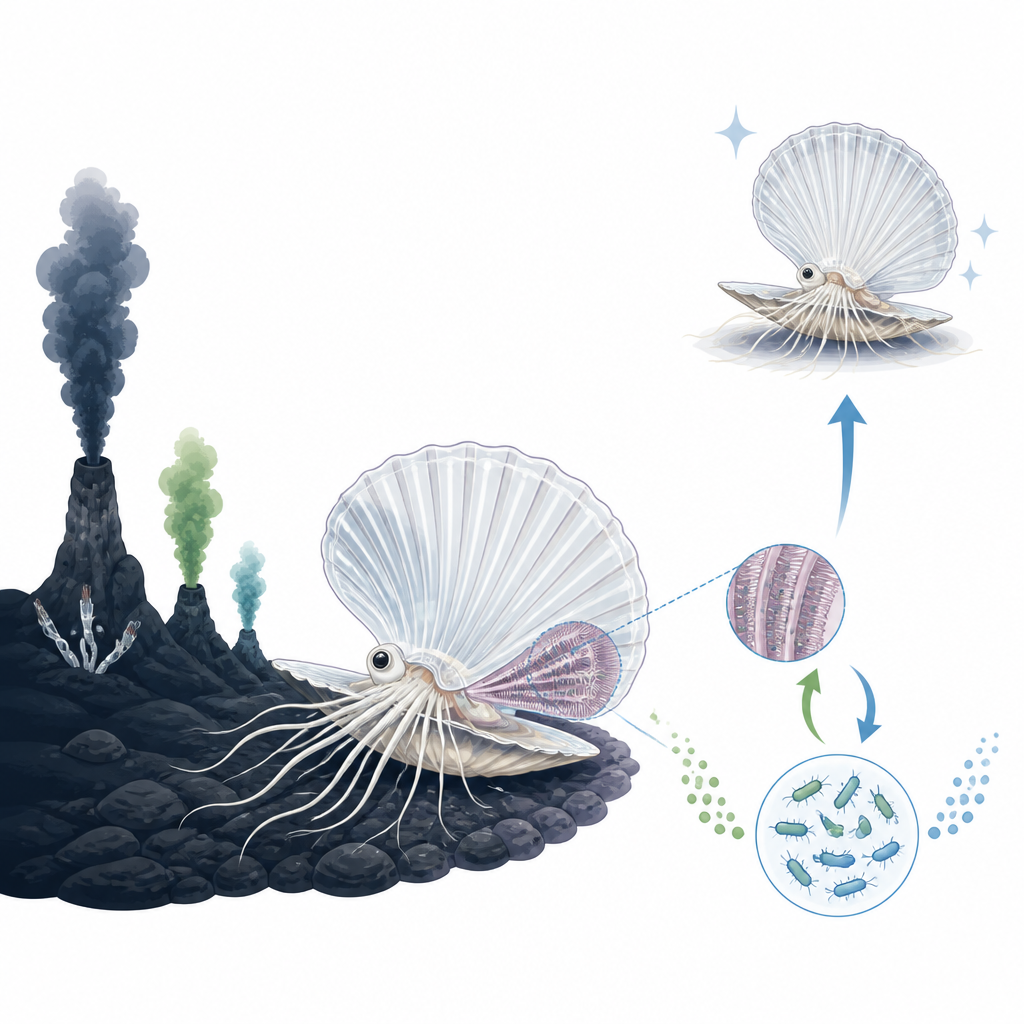
Far below the reach of sunlight, the seafloor is cold, high‑pressure, and laced with toxic chemicals. Yet some animals not only survive there but flourish by teaming up with microbes that turn these chemicals into food. This study decodes the full genetic blueprint of the “glass scallop,” a delicate deep‑sea species with see‑through shells, to reveal how it has adapted to permanent darkness and to living with helpful bacteria that coat its gills.
A fragile scallop with powerful partners
The glass scallop, Catillopecten margaritatus, lives at hydrocarbon seeps on the deep seafloor, where fluids rich in sulphide leak from the sediments. Unlike most scallops, this species hosts sulphur‑oxidising bacteria on the outside of its gills. Using long‑read DNA sequencing and 3D chromosome mapping, the authors assembled a high‑quality genome made up of 19 chromosomes, the same number found in familiar shallow‑water scallops. Fossil‑calibrated evolutionary analyses show that the lineage leading to glass scallops split from common scallops more than 400 million years ago, long before this particular partnership with bacteria evolved. That means their deep‑sea lifestyle and their symbiosis are relatively recent chapters in a much older scallop story.
Trading eyesight for touch and chemical sensing
In sunlit waters many scallops have dozens of shiny blue eyes along their shell edges. The glass scallop, by contrast, has no eyes at all, but sports long, delicate tentacles around its mantle. The genome retains most of the genetic toolkit used to build eyes, yet key light‑sensing genes are missing or barely active. At the same time, large families of genes involved in detecting chemicals and microbes are expanded and strongly switched on in mantle tissue. Together with patterns of gene activity linked to responding to stress and environmental signals, these features suggest that the glass scallop has shifted from seeing its surroundings to feeling and “smelling” them through a highly sensitive mantle surface.
Lightweight shells tuned to a harsh sea
Shells are built by the mantle using calcium and trace elements from seawater. By comparing shell chemistry with that of a shallow‑water scallop, the researchers found that the glass scallop incorporates much less calcium, especially in its right valve, which is noticeably thinner. Ratios of strontium to calcium are also lower, consistent with the cold temperatures of its seep habitat. At the same time, the shells are enriched in metals such as iron, manganese, magnesium, barium, chromium and copper, reflecting the metal‑rich fluids that bathe the seafloor. Genomic and chemical evidence together indicate that this scallop invests less energy in heavy armour, producing thin, fragile shells that are better suited to low‑carbonate, corrosive deep waters, while its shell composition records the chemical fingerprint of the seep environment.
Managing friendly bacteria and toxic sulphide
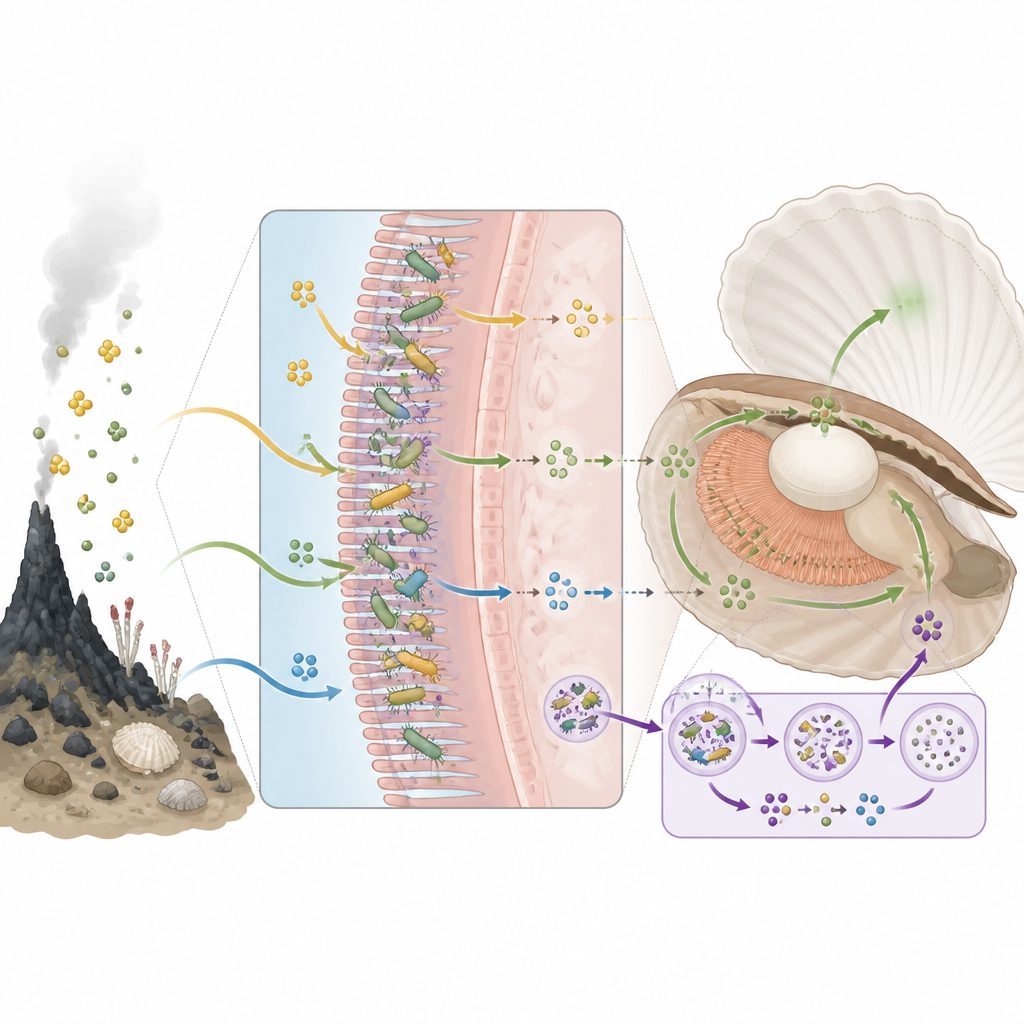
Because each generation acquires bacteria from the surrounding seawater, the scallop must distinguish helpful partners from harmful microbes. Gene‑expression networks in gill tissue highlight suites of immune genes, including receptors that recognise bacterial surface molecules and lectins that help bind and organise microbes on the gill surface. Several immune‑related gene families are unusually large and particularly active in the gill, implying fine‑tuned control of which bacteria are welcomed and how they are kept in check. The seep fluids and the bacteria themselves rely on sulphide, a compound that can poison animal cells. The scallop counters this with enzymes that chemically convert sulphide into safer forms; one key detox enzyme shows signs of adaptive change and is strongly expressed in the gills. Additional gene expansions support the production and transport of small sulphur‑containing molecules that help mop up reactive sulphur and may even feed the bacteria.
Feeding both its guests and itself
The partnership is not one‑sided. Previous work showed that the bacteria cannot make certain metabolic building blocks or several amino acids and vitamins. The new genome confirms that the scallop can supply many of these missing ingredients and carries altered versions of core metabolic enzymes that likely boost the flow of key intermediates to its partners. At the same time, the scallop gains food in return. The gills express high levels of genes involved in swallowing and digesting particles inside cells, including families of digestive enzymes that are poised to break down bacteria. The digestive gland tells a complementary story: it is packed with genes for handling oxidative stress and detoxifying foreign chemicals, and DNA from that organ points to a diet that includes bits of other seafloor animals. These findings show that the glass scallop is “mixotrophic,” drawing energy both from its microbial farmers and from more traditional prey.
How a glass shell thrives in the deep
By combining genome sequencing, gene activity profiles and shell chemistry, this study paints a detailed picture of how a seemingly delicate scallop can flourish in a dark, toxic, nutrient‑poor world. It has shed its eyes, tuned its mantle for sensing and defence, lightened its shell to save energy, evolved precise immune tools to host sulphur‑eating bacteria, and built a robust system for detoxifying sulphide while sharing nutrients back and forth with its partners. At the same time, it keeps its own digestive options open. Together, these traits reveal how flexible relationships with microbes help animals expand into some of the most extreme habitats on Earth, and they provide a genetic roadmap for understanding how other shellfish may move from life without symbionts to intricate, mutually beneficial alliances.
Citation: Lin, YT., Han, W., Perez, M. et al. Glass scallop genome reveals key adaptations to deep-sea environments and ectosymbiosis. Nat Commun 17, 4713 (2026). https://doi.org/10.1038/s41467-026-71169-6
Keywords: deep-sea scallop, chemosynthetic symbiosis, glass scallop genome, sulphide detoxification, bivalve adaptation