Clear Sky Science · en
Mapping human pre-rRNA processing and modification at single nucleotide resolution using long read nanopore sequencing
How cells build their protein factories
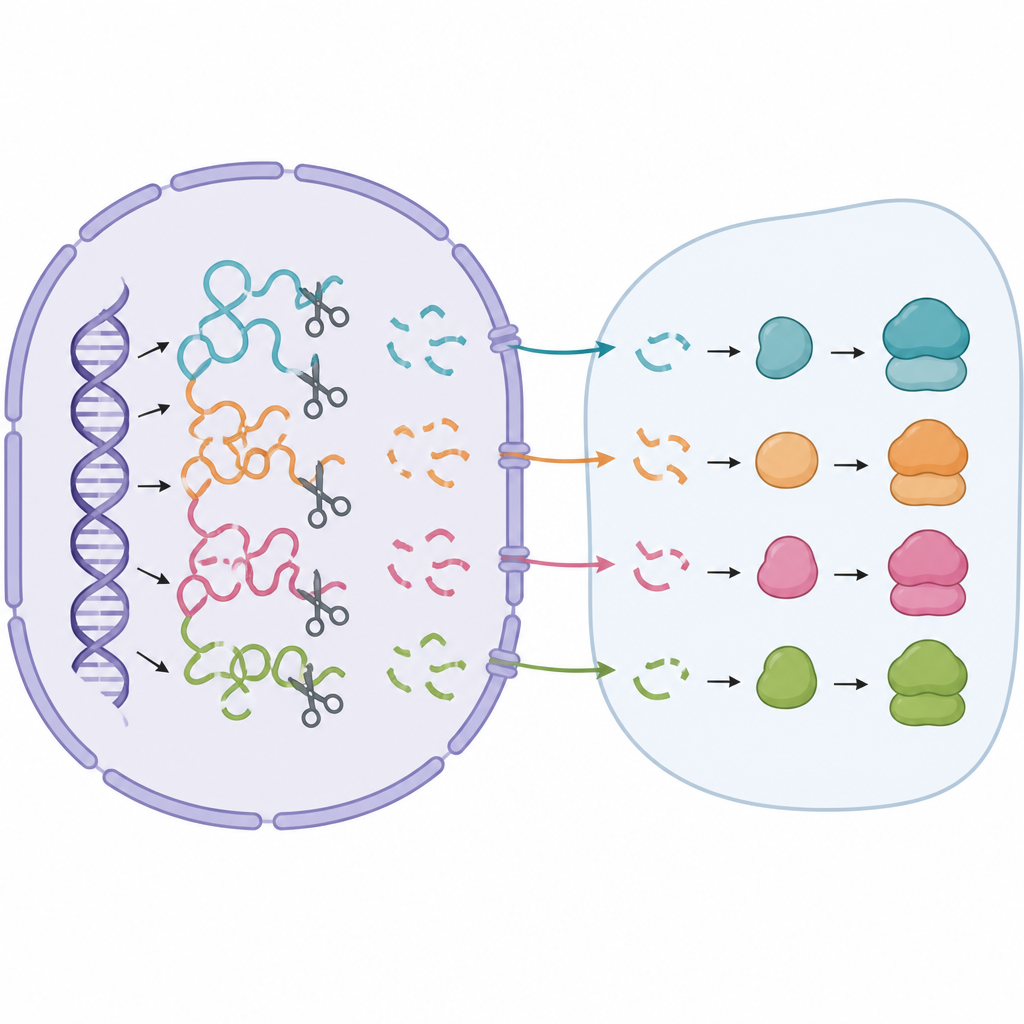
Every second, our cells assemble vast numbers of ribosomes, the tiny machines that turn genetic information into protein. When this manufacturing line falters, it is linked to developmental disorders and cancer, yet many of its steps have remained blurry. This study introduces a way to watch how cells carve and fine‑tune the RNA pieces that make up ribosomes, following each molecule almost nucleotide by nucleotide.
A new way to read long RNA molecules
The authors developed NanoRibolyzer, a method that combines nanopore long‑read sequencing with custom data analysis to track immature ribosomal RNAs inside human cells. Instead of relying on older approaches that see only a handful of abundant intermediates, NanoRibolyzer sequences individual long RNA molecules and aligns them to a reference precursor called 47S. By capturing both nuclear and cytoplasmic RNA, the method separates early steps that occur deep in the cell nucleus from late steps that finish in the cytoplasm, revealing a far richer landscape of intermediate molecules than was previously accessible.
Seeing RNA cutting and trimming in two dimensions
To make sense of the huge variety of RNA fragments, the team used two complementary strategies. A supervised approach compares each read with known precursor forms, giving a quantitative overview similar to an ultra‑detailed Northern blot. More innovatively, an unsupervised approach plots every sequenced RNA by its starting and ending positions on the 47S map, creating a two‑dimensional picture of how the precursor is chopped and trimmed. In these maps, dense "hubs" mark common intermediates, while continuous lines mark exonucleases that nibble from the ends one nucleotide at a time. This visualization exposes not only well‑known intermediates but also many short‑lived species and degradation products that had escaped detection.
Redefining processing paths and molecular fingerprints
Using this dual view, the researchers refined the exact cut sites in human pre‑rRNA to single‑nucleotide precision and discovered previously unknown cleavage points and precursor forms, including new variants of the very first transcript. They then depleted key helper proteins involved in different stages of the pathway and watched how specific intermediates accumulated. Each disrupted factor produced a characteristic pattern of RNA fragments, especially within the spacer regions that are normally removed. Some factors, such as URB1 and the ribosomal protein RPL3, produced remarkably similar patterns, hinting that such "processing fingerprints" could serve as molecular markers of particular defects in ribosome assembly.
Following chemical marks on growing RNA
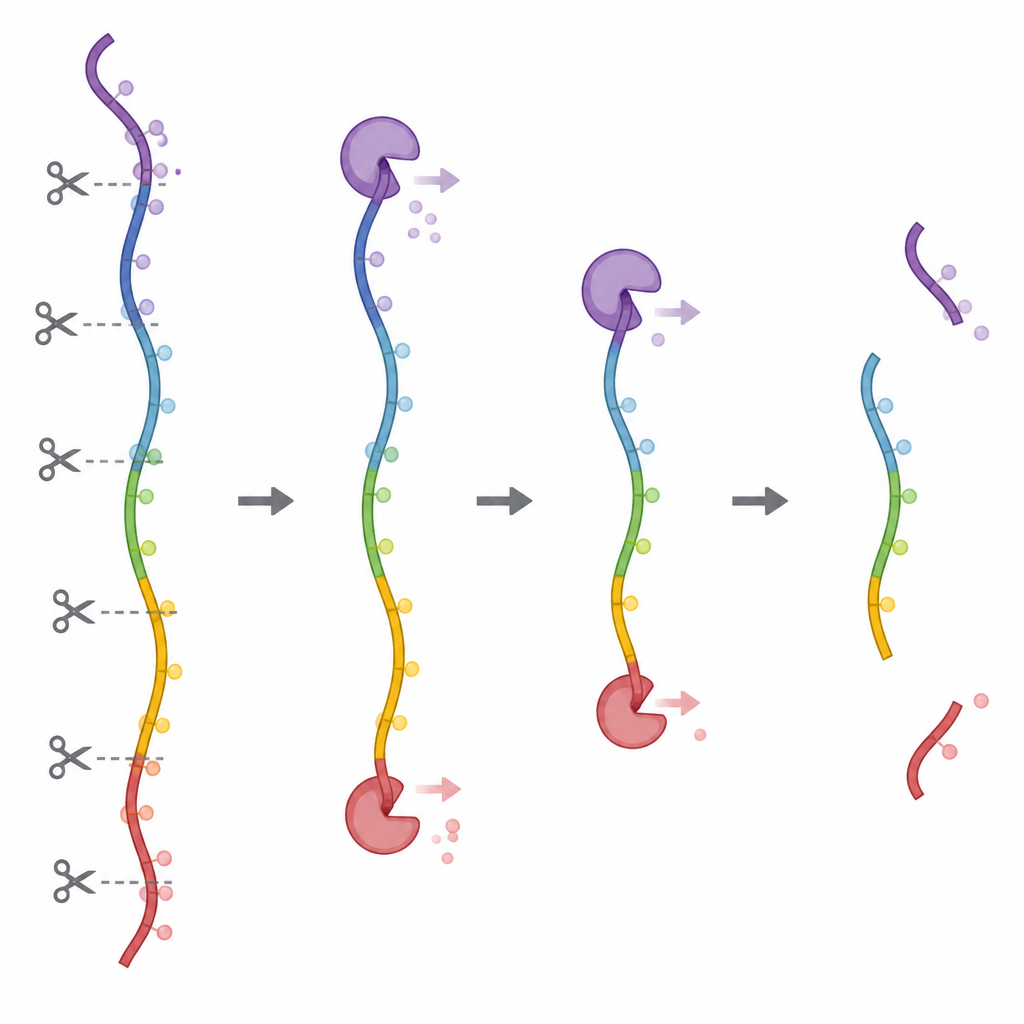
NanoRibolyzer also tracks chemical modifications that decorate ribosomal RNA and fine‑tune ribosome performance. By sequencing native RNA directly, the authors measured signals associated with pseudouridine and several methylated bases on specific precursors in nucleolar, nucleoplasmic, and cytoplasmic fractions. They found that many modification sites are already present on the primary 47S molecule, indicating that chemical editing begins very early. At the same time, certain abnormal intermediates, long known to appear when processing goes wrong, were noticeably under‑modified. This suggests a tight coupling between proper chemical decoration and successful progression along the maturation pathway.
Why this matters for health and disease
In plain terms, this work turns a once coarse snapshot of ribosome production into a high‑resolution movie. NanoRibolyzer shows when and where each cut is made, how faulty helpers reshape the pattern of fragments, and how chemical marks evolve along the way. Because defects in ribosome biogenesis are linked to inherited blood diseases, developmental syndromes, and tumors, being able to read these processing and modification signatures in detail opens the door to better diagnostics and a deeper understanding of how disturbed RNA assembly contributes to human disease.
Citation: Pastore, S., Wacheul, L., Lehmann, L. et al. Mapping human pre-rRNA processing and modification at single nucleotide resolution using long read nanopore sequencing. Nat Commun 17, 4658 (2026). https://doi.org/10.1038/s41467-026-71164-x
Keywords: ribosome biogenesis, pre-rRNA processing, nanopore sequencing, RNA modification, pseudouridine